

Why and How Does Israel Seek to Escalate War in Lebanon and Iran?
SadaNews - Israel has renewed, through its officials, the threat of military force against Iran and Lebanon, despite the ceasefire in both countries, and amid ongoing diplomatic efforts for a round of US-Iran talks in the Pakistani capital, Islamabad, as well as direct discussions between Tel Aviv and Beirut, with reports indicating progress on both tracks.
While Americans and Iranians claim they are continuing efforts to reach an agreement despite obstacles across many fronts, Israeli statements focus on escalation and the potential return to war, claiming that their objectives have not been achieved.
In this context, Israeli radio cited military and political sources stating that the army is on high alert in anticipation of the collapse of the ceasefire with Iran.
A military official, according to the daily "Maariv," mentioned that Israel and the United States are prepared for the sudden breakdown of the ceasefire with Iran, adding that "Iranian energy facilities will be among the targets should fighting resume."
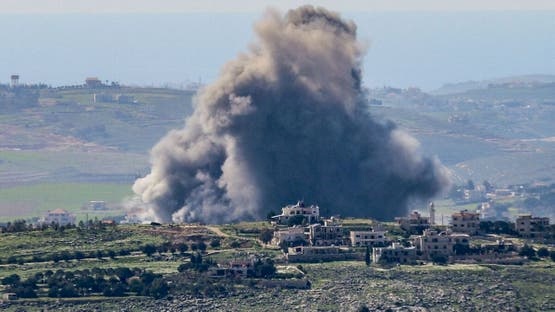
In parallel with these statements, Israeli Prime Minister Benjamin Netanyahu stated that the Israeli army will continue its operations in southern Lebanon, while the Israeli army announced yesterday, Saturday, that it has established a yellow line in southern Lebanon, similar to the line it established in the Gaza Strip.
Eyes are on the Israeli security cabinet meeting set to convene tonight to discuss developments regarding the Strait of Hormuz crisis and the ceasefire in Lebanon, as confirmed by Israeli radio.
Mixing the Cards
Just as Israel escalated against Palestinians in the Gaza Strip and committed genocidal massacres under the pretext of not achieving its war goals, it is attempting to continue its war against Iran and Lebanon because calm and stability do not serve its interests, analysts and observers believe.
In this context, academic and Israeli affairs expert, Muhammad Halsa, notes that Israel did not wish for a US-Iran agreement and is using Lebanon to mix the cards, even after US President Donald Trump asked not to disrupt this stage.
Israel believes that war has not achieved its ultimate goals of overthrowing the Iranian regime, and Halsa states that its argument today, while addressing the Americans, is that Iran's hardline stance is due to the war not reaching a decisive point; therefore, it works towards the return to war.
Halsa adds that Israel believes that continuing its escalation in Lebanon and fueling tensions will push Iran to adopt a more hardline position and set new conditions, thus hindering the negotiating path between Washington and Tehran.
The Israeli academic and expert predicts that Netanyahu will later contact the US president to incite him back into fighting, claiming that the US naval blockade against Iran is ineffective.
Moreover, academic and Israeli affairs expert Mahmoud Yazbek sees that the ceasefire in Iran has sparked an internal debate in Israel, raising questions about the effectiveness of the war if this is the outcome, pointing out that the political and military leadership has prepared contingency plans ready to be implemented when allowed to achieve the primary goal, which is to overturn the Iranian regime.
Another Phase
Iran does not rule out the possibility of the US and Israel returning to wage war against it, and some of its officials have stated that they are prepared to face attacks.
Abbas Aslani, a researcher at the Middle East Center for Strategic Studies, describes the ceasefire agreement between Washington and Tehran as fragile, saying that what it considers the US strategy related to imposing a naval blockade on Iran exacerbates the situation, indicating a new phase that might witness further attempts by the US at sea, potentially raising the level of escalation between the two countries.
Aslani, talking to Al Jazeera, believes that a return to war this time—if it happens—will not resemble the previous war that broke out on February 28, but "might open new fronts in the region, which poses a risk."
However, the Iranian spokesperson states that last-minute diplomatic efforts might succeed in avoiding any escalation, although that remains merely a possibility due to the significant gaps on the negotiation table between Washington and Tehran.
It is noted that Iran has reclosed the Strait of Hormuz yesterday, coinciding with heightened diplomatic rhetoric and complications in negotiations with the United States.
Iranian Parliament Speaker Mohammad Baqr Qalibaf has confirmed that the disagreements with the US side remain substantial, particularly concerning the two files of the Strait of Hormuz and Iran's nuclear program, alongside other related issues.
Source: Al Jazeera
 Follow the latest Sada News via Google News
American Escalation Using B-1 Bomber Against Targets of the Iranian Revolutionary Guard

Iranian Revolutionary Guard Targets Al-Adairi Camp and Ali Al-Salem Air Base in Kuwait

Massive Fire in Spain Forces Residents of 34 Villages to Evacuate

Public Prosecution in Damascus Demands Death Penalty for Wisam Al-Assad

Saudi Arabia: Targeting of Tanker in the Red Sea and Safety of Its Crew

Jordanian Army Intercepts 4 Iranian Missiles and 4 Drones

Death of a Moroccan Man During His Arrest in Italy Sparks Calls for Investigation
