

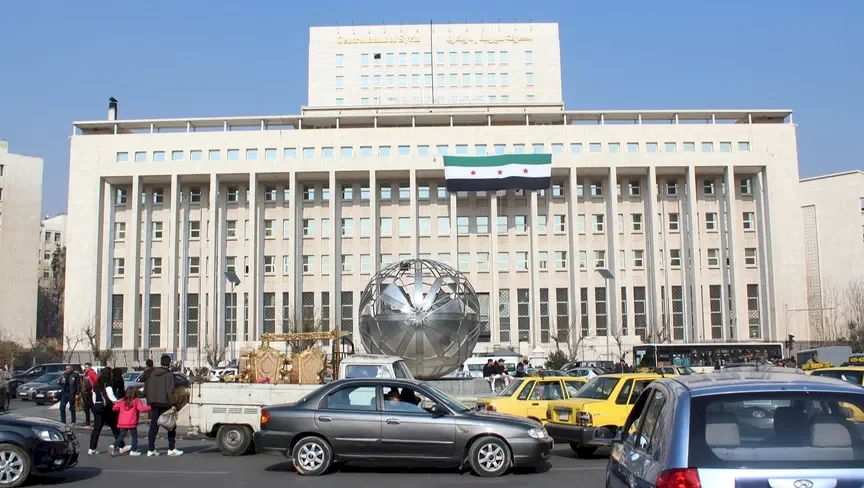
Syria and Turkey Near Direct Banking Channel and Currency Exchange Agreement
SadaNews Economy - Syria is nearing a deal with Turkey to establish a correspondent banking account between the central banks of the two countries, in a move aimed at facilitating cross-border payments and enhancing trade, while exploring a potential mechanism for currency exchange between the two sides.
The Governor of the Central Bank of Syria, Abd al-Qadir al-Hasriya, stated according to what was reported by "Reuters" that the agreement is in its final stages, expecting that the cooperation will later include integrated payment systems and more organized financial settlements, amid increasing coordination between the financial institutions in both countries.
This step comes at a time when companies are complaining about the lack of direct payment channels between Syria and Turkey, pushing them to rely on cash or traditional remittance offices, which constitute one of the main obstacles to expanding trade and investment in the country.
Establishing a correspondent banking account will allow for smoother execution of transfers and financing of commercial operations, reducing costs and risks associated with informal payments.
This is part of broader efforts to reintegrate the Syrian financial system into regional and international channels after years of isolation. Syria has begun steps to return to the global financial transfer system "SWIFT," and some international banks have started dealing with Syria after a hiatus of over a decade.
The Central Bank of Syria has also opened accounts at several central banks, including the Federal Reserve, the Bank of Canada, and the Central Bank of the UAE, in a step aimed at ending financial isolation and facilitating international banking transfers.
Al-Hasriya stated in his remarks to "Reuters" that he expects this Syrian-Turkish cooperation to expand and take on an increasingly formal framework, reaffirming the acceleration of cooperation between the two sides, "particularly between the Central Bank of Syria and the Turkish authorities."
He also anticipated that both the state-owned "Ziraat Bank" and the private "Aktif Bank" would soon begin their operations in Syria, enhancing the presence of Turkish financial institutions in the local market.
This step reflects the accelerating economic relations between the two countries, as Turkey's exports to Syria rose by about 60% to $3.5 billion last year, while Syria's imports amounted to approximately $235 million.
The two countries aim to raise the volume of trade between them to about $10 billion in the medium term, which requires a more efficient financial structure to support trade and investment flows.
Damascus is working to rebuild its banking ties with countries in the region, as Al-Hasriya had previously mentioned in an interview with "Sharq" that it is possible to establish a Syrian-Egyptian bank, as part of activating payment channels and enhancing financing and trade settlements between the two countries.
Economic relations between Syria and several Arab countries have been gaining momentum since the beginning of the year, with moves to re-engage in investment and reconstruction projects.
 Follow the latest Sada News via Google News
London Stock Exchange Enters the Era of 24/7 Trading

Shamaran Petroleum: Suspension of Oil Production in Duhok Fields in the Kurdistan Region o...

Dollar Steadies Near One-Week High Amid War Developments

Trump Imposes Tariffs on Canadian Imports... Ottawa Vows to Respond

Oil Prices Drop After Reports of Mediation Efforts Between the U.S. and Iran

Gold Price Rises Supported by Increased Buying Amid Lower Prices

Due to "Hazardous and Counterfeit Products".. Europe Fines "AliExpress" $627 Million
