

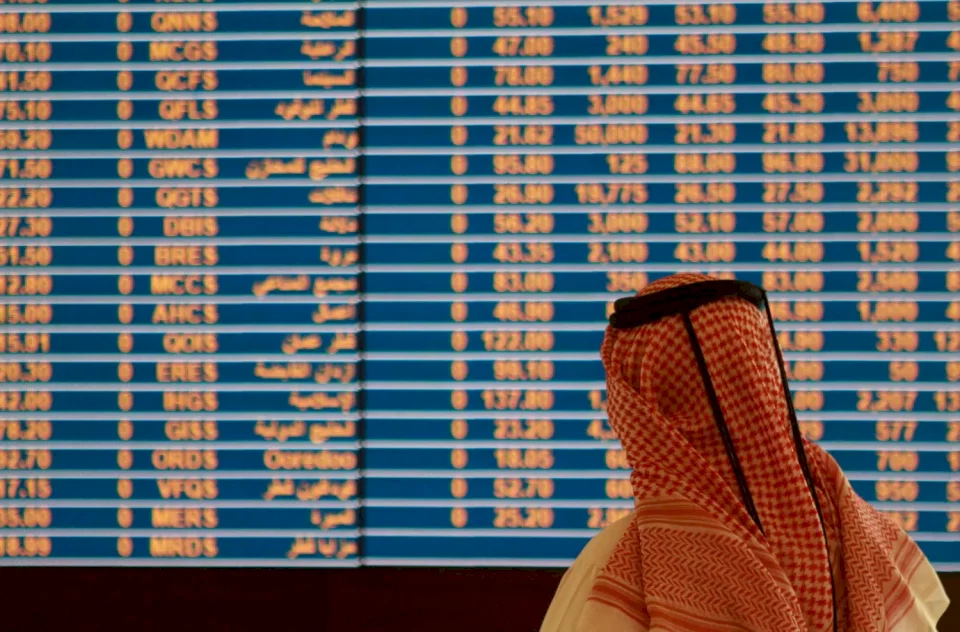
Gulf Stock Markets Surge After Ceasefire in Iranian War
SadaNews - Stock markets in the Gulf rose in early trading on Wednesday following the announcement of a temporary ceasefire between the United States and Iran, granting markets a period of calm after sharp disruptions fueled by the conflict in the Middle East.
The main Saudi Stock Market Index "TASI" rose by 2% at the start of the session, reaching 11,282 points, supported by the banking sector, led by the two largest Saudi banks, "Al Rajhi Bank" and "National Commercial Bank".
Majid Al-Khaldi, the senior financial analyst at "Al-Eqtisadiya" newspaper, expects individual investors to return to the Saudi stock market, which will enhance liquidity. In his remarks to "Asharq", he noted that stocks in the energy and petrochemical sectors appear more likely to achieve gains over the next two weeks, in light of improved supportive data and the stability of the ceasefire and the opening of the Strait of Hormuz.
Liquidity Has Been Targeting Leading Stocks Since the Beginning of the Year
On his part, Hisham Abu Jame, the chief advisor at "Naif Al-Rajhi Investment Company", mentioned in an interview with "Asharq" that liquidity has been directed towards leading stocks since the beginning of the year, with expectations that this trend will continue due to the attractiveness of their valuations, particularly in the banking, telecommunications, health, and retail sectors.
Regarding company results, Abu Jame estimates that the war will have a clear impact on the results of the first quarter of 2026. He also anticipates a rise in demand for oil and petrochemical products, as countries seek to rebuild their inventories, predicting that oil prices will remain in the range of $90 to $95.
The activity of the non-oil private sector in Saudi Arabia contracted for the first time in over five and a half years due to the Iranian war, which led to supply chain disruptions and delayed spending decisions in March.
Market Repricing Drives Trading Despite Declining Energy
Mary Salem, a financial analyst at "Asharq", clarified that trading behavior in the Saudi market is influenced by several interconnected factors, primarily the repricing of companies and the economy, along with the redistribution of liquidity among sectors.
She added that these factors support the formation of upward waves in the market, despite the pressures faced by some energy sector stocks, including "Saudi Aramco", noting that the local market has shown notable resilience compared to some markets that reacted strongly to the ceasefire, as it managed to register gains even during the conflict.
On another front, the general index in the Dubai Financial Market rose by as much as 8.5%, marking its largest daily gains since December 2014. The general index of the Abu Dhabi Securities Exchange (ADX) recorded gains of 3.5%, the highest daily rate since March 2024.
The first market index on the Kuwait Stock Exchange rose by 2%. The Qatar Stock Index increased by 3.1%. The Bahrain stock market climbed by 0.95%. The Muscat Stock Market Index in the Sultanate of Oman also increased by 0.25%.
This comes amid a global uptrend in stock markets, thanks to improved risk appetite, while oil prices have dropped at the fastest pace in nearly six years.
West Texas Intermediate crude fell by as much as 19% after U.S. President Donald Trump approved a suspension of bombing Iran, a step that could help resume oil flows through the Strait of Hormuz. Tehran indicated that safe passage through the waterway would be possible during this period. Meanwhile, the global benchmark Brent crude retreated by 14% to $93.90 per barrel.
Bets on Curbing Inflation and Supporting Growth
The MSCI Asia-Pacific Index surged by 5.1% to its highest level in five weeks, with traders betting that lower oil prices would help curb inflation and support economic growth. U.S. futures contracts for Wall Street indices rose more than 2.7%, while European contracts jumped by 5.3%. U.S. bonds rallied as pricing pressures eased, encouraging investors to rebuild bets on interest rate cuts by the Federal Reserve. Conversely, the dollar index fell by 1% after being a preferred haven during the conflict, while gold prices rose.
The proposed ceasefire, announced just hours before the deadline set by Trump to escalate bombings on Iran, helped revive risk appetite after a wave of turmoil that pushed stocks down and brought several indices into correction territory since the war broke out six weeks ago. Analysts believe that the continuation of the upward wave across various assets will depend on confirming the durability of the ceasefire and restoring energy flows through the Strait of Hormuz to their normal levels, according to Bloomberg.
 Follow the latest Sada News via Google News
London Stock Exchange Enters the Era of 24/7 Trading

Shamaran Petroleum: Suspension of Oil Production in Duhok Fields in the Kurdistan Region o...

Dollar Steadies Near One-Week High Amid War Developments

Trump Imposes Tariffs on Canadian Imports... Ottawa Vows to Respond

Oil Prices Drop After Reports of Mediation Efforts Between the U.S. and Iran

Gold Price Rises Supported by Increased Buying Amid Lower Prices

Due to "Hazardous and Counterfeit Products".. Europe Fines "AliExpress" $627 Million
