

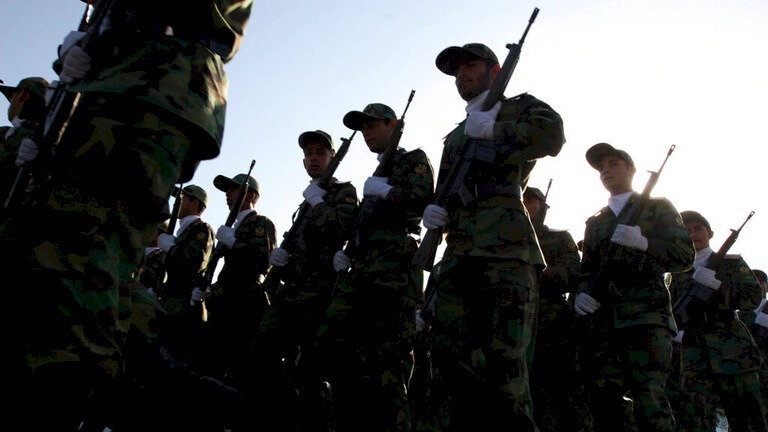
Report: 7 Strategic Mistakes Weakened the Revolutionary Guard Against America
SadaNews - The Iranian Revolutionary Guard is facing what analysts and military officials describe as a "critical phase" in its history, following a series of operational and informational failures that have revealed a decline in its regional influence and a weakening of its deterrent capacity in the face of recent U.S. military operations, according to the American Hudson Institute.
Operational Failures and Technological Superiority
The recent rescue operation of an American soldier in mountainous areas southwest of Iran highlighted significant gaps in Iranian intelligence and surveillance.
Military experts indicate that the Revolutionary Guard's failure to secure such a "propaganda asset" reflects a qualitative superiority of U.S. special operations and inadequacies in surveillance systems where Tehran and Beijing have invested billions of dollars.
The Seven Strategic Mistakes
According to the Hudson Institute, analysts identify seven strategic mistakes made by the Revolutionary Guard that have led to the deterioration of its position.
Hormuz Strait: Attempts to apply pressure through the Hormuz Strait failed to deter the U.S. administration, as Trump asserted that the security of energy in the strait is an international responsibility, not an exclusively American duty.
Time Factor: One of the mistakes of the Revolutionary Guard was the poor assessment of time, relying on a strategy of attrition.
Pace: The Revolutionary Guard believed it could control the pace of escalation, but Trump expanded his options, preventing the Guard from reorganizing or anticipating the next move.
Betting on the "Arab Street": The Revolutionary Guard miscalculated its ability to mobilize Arab populations against the joint U.S.-Israeli operation.
Information Warfare: The Revolutionary Guard attempts to win the public opinion battle through fictitious narratives even while losing on the battlefield. However, the propaganda apparatus collides with a grim internal reality of rampant inflation and economic collapse.
Betting on China: China's cautious position has also played a role in the process, as despite the technical support, Beijing expressed reluctance to risk an economic confrontation with Washington to save Iran's faltering military structure.
Collapse of the Proxy Network: Coordinated U.S.-Israeli operations have dismantled Iran's "strategic depth," starting from exhausting Hezbollah in Lebanon, leading to a collapse of influence in Syria and reducing the capabilities of the Houthis in Yemen.
The Hudson Institute confirms that the Revolutionary Guard finds itself today faced with two options: either comply with the new international conditions or face the risk of institutional collapse, stripped of its tools of power.
 Follow the latest Sada News via Google News
Morocco Hosts Formative Exercise for International Stabilization Force in Gaza

Sheikh Holds Meeting with Security Leaders to Follow Up on Current Developments

Hebrew Channels: The Likelihood of Israel's Participation in the Attack on Iran is Increas...

Netherlands Sets September Deadline for Ban on Settlement Products

12 Martyrs in Gaza Strip since Dawn Today

A Series of Important Decisions Taken.. The Cabinet Discusses Developments in the Deterior...

Organizations of the Temple Prepare for the Largest Raid on Al-Aqsa on What is Called the...
