

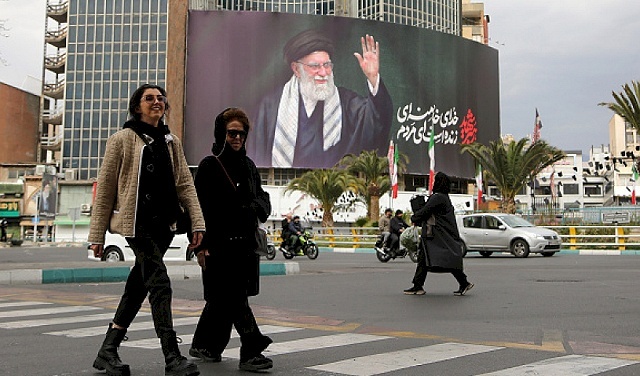
Assessment by U.S. Intelligence Does Not Anticipate Collapse of the Iranian Regime
SadaNews - Three informed sources reported that U.S. intelligence analyses have shown that the Iranian leadership remains largely intact and is not at risk of collapsing in the near future, following approximately two weeks of U.S. and Israeli military operations against Iran.
The sources confirmed that recent intelligence reports, completed in the past few days, indicate that the regime still controls Iranian public opinion.
One source noted that a "large number" of reports provide consistent analyses indicating that the Iranian leadership is not at risk of collapse, despite increasing political and economic pressures, including the sharp rise in oil prices.
However, U.S. President Donald Trump hinted that he would end the "largest" U.S. military operation since 2003 "soon," while indicating the difficulty of finding an acceptable exit if hardline leaders remain in their positions.
The reports emphasize the cohesion of the ruling religious institution in Iran despite the assassination of Supreme Leader Ayatollah Ali Khamenei on February 28, the first day of U.S. and Israeli strikes. A senior Israeli official also indicated that Israelis could not be certain that the war would lead to the collapse of clerical rule.
Since the outbreak of the war, the U.S. and Israel have launched strikes on a wide range of Iranian targets, including air defenses, nuclear sites, and senior leadership.
The strikes have resulted in the assassination of dozens of high-ranking officials and some senior leaders of the Iranian Revolutionary Guard, the elite military force that controls large sectors of the economy.
Despite this, intelligence information indicates that the Revolutionary Guard and the interim leaders who took power after Khamenei's death still control the country, while the Assembly of Experts, a body of senior clerics, appointed Mojtaba, Khamenei's son, as the Supreme Leader of the country.
At the same time, Iranian Kurdish factions in neighboring Iraq are consulting with the U.S. about the possibility of attacking Iranian security forces in the west of the country.
Abdullah Mohandesi, the leader of the Komala Party of Iranian Kurdistan, explained that tens of thousands of young men are ready to take up arms against the government if they receive U.S. support, and that some units of the Revolutionary Guard have evacuated bases and barracks out of fear of U.S. and Israeli strikes.
However, recent U.S. intelligence assessments have questioned these groups' ability to continue fighting, explaining that they lack firepower and sufficient numbers.
The Kurdish groups have requested U.S. officials and members of Congress to provide them with weapons and armored vehicles, but President Trump has ruled out allowing them to enter Iran, reflecting the complexity of the situation on the ground and the limited prospects for a rapid change in the country's leadership.
 Follow the latest Sada News via Google News
Death of a Moroccan Man During His Arrest in Italy Sparks Calls for Investigation

Due to Trump's Sanctions.. Canada Cancels Joint Ceremony with the US for Bridge Opening

Trump: We will make great progress with Beirut.. Aoun: It is time for Lebanon to be stable

The Lebanese Army Deploys in the South and Comes Under Gunfire; Israel Clarifies

Bezhkian: Directives from the Leader to End the State of No War, No Peace

Meeting Between Aoun and Trump Expected Alongside 'Experimental Areas'

Saudi Arabia condemns the Houthi threats to navigation and pledges to protect its ships
