

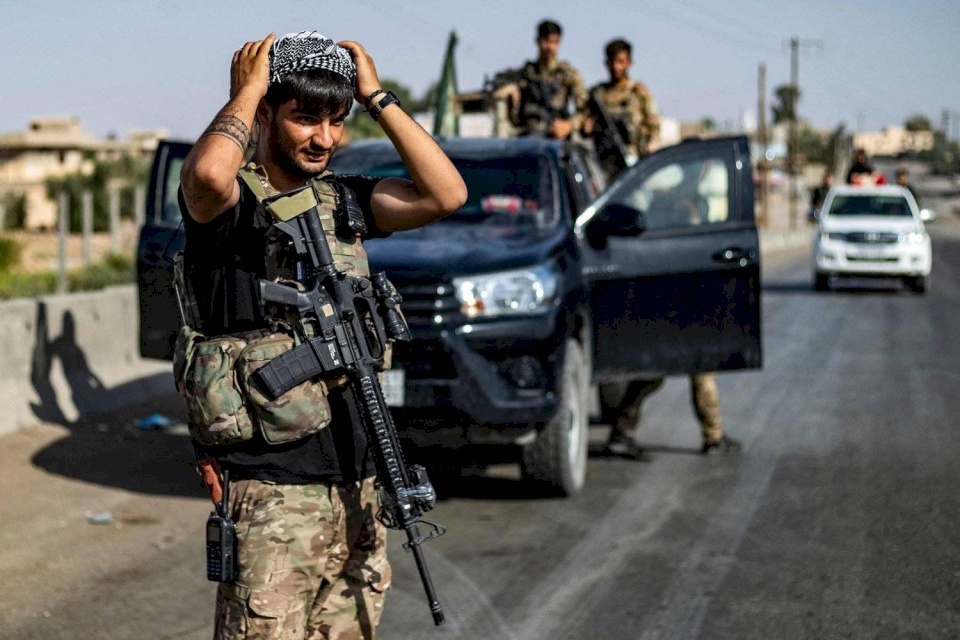
Syrian Army Takes Control of Tabqa and Euphrates Dam, Advances Towards Raqqa and Deir ez-Zor
SadaNews - The Syrian army announced, shortly after midnight on Saturday-Sunday, that it has established control over the strategic city of Tabqa and the Euphrates Dam in the north of the country, a move that reflects the expansion of the authority's influence in Damascus amid its confrontation with the Syrian Democratic Forces (SDF) that have managed the area autonomously for over a decade.
Syrian Information Minister Hamza Mustafa also stated early on Sunday via the "X" platform that the Syrian army has established control over the strategic city of Tabqa in the Raqqa countryside, including the Euphrates Dam, the largest dam in the country.
In the same context, the Syrian army's operations authority confirmed full control over the Tabqa military airport, continuing the advance towards the city of Raqqa.
The Syrian army, in coordination with groups from the tribes, has begun a military operation against SDF positions east of the Euphrates River in Deir ez-Zor province, alongside military reinforcements arriving in the area. It was noted that artillery targeted SDF positions in the eastern countryside of Deir ez-Zor.
The Syrian Ministry of Information reported that government forces entered the city from several axes, seized the Tabqa military airport and the largest hydroelectric power facilities in the country, confirming that Tabqa represents a vital transportation hub on the axis connecting Aleppo to eastern Syria.
This advance followed the army's announcement of having taken control of vast areas of eastern Aleppo countryside after the SDF agreed to withdraw from them, as part of a previous agreement to integrate self-management institutions into the Syrian state. However, both parties later exchanged accusations of violating the agreement, with each side reporting clashes and casualties.
In contrast, the United States, through the Central Command (CENTCOM) commander, called for the cessation of any offensive actions in the area and urged preventing escalation between government forces and Kurdish forces, while the self-administration imposed a curfew in Raqqa province in anticipation of deteriorating conditions.
This development comes simultaneously with Syrian President Ahmad al-Shar'a issuing a decree granting the Kurds unprecedented cultural and national rights, including recognition of the Kurdish language as a national language, designating Nowruz as an official holiday, and granting citizenship to Syrians of Kurdish origin.
Despite the self-administration welcoming this step, they have described it as insufficient, demanding the enshrinement of rights in a democratic constitution that guarantees decentralization and power-sharing.
In light of these developments, the control of Tabqa and the Euphrates Dam appears to be a pivotal moment in redrawing the map of influence in northern Syria, amidst ongoing efforts by Damascus to strengthen its sovereignty and continuous tensions with Kurdish forces regarding the future of governance and administration in the region.
 Follow the latest Sada News via Google News
Saudi Arabia condemns the Houthi threats to navigation and pledges to protect its ships

Houthi Movement Announces Ban on Maritime Navigation Against Saudi Arabia

Earthquake of 5.5 Magnitude Hits Western Iran

To Enhance His Support for "Increasing Children"... Vance Announces the Birth of His Fourt...

Death of a Mosque Imam in Armed Attack in Southeastern Iran

Rubio Reveals Circumstances Surrounding the Death of an American Soldier in Iraq

Reliable Threat.. US Embassy in Jordan: Evacuation of International Airport and Port in Aq...
