

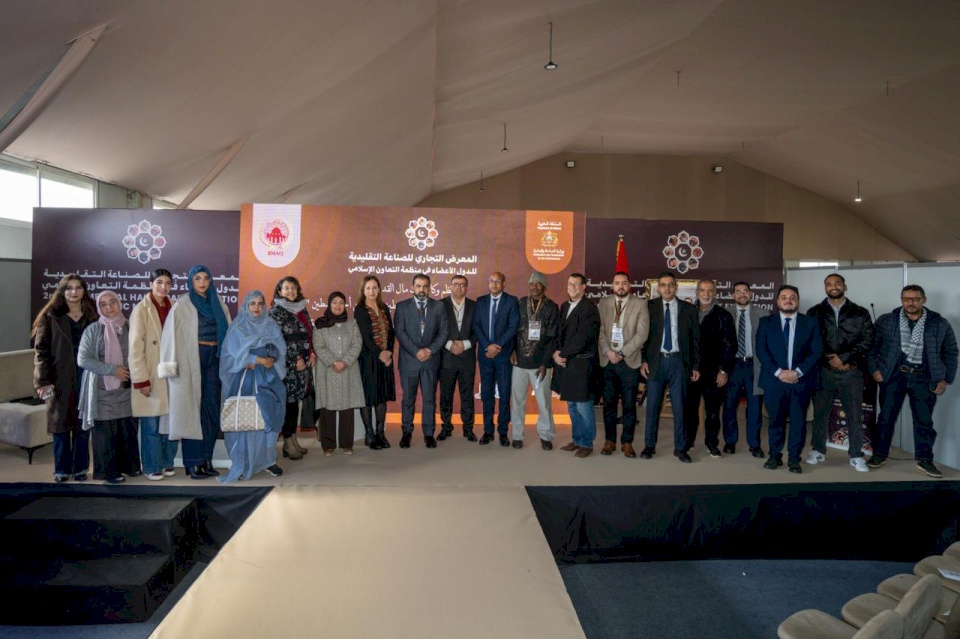
Bayt Mal Al-Quds Ash-Sharif Agency presents its strategy to support the trade sector in Jerusalem for the year 2026 in Casablanca
SadaNews - The Bayt Mal Al-Quds Ash-Sharif Agency presented its strategy to support the trade sector in Jerusalem for its 2026 action plan yesterday, Saturday, in Casablanca, as part of the activities of the second trade fair for traditional industries of member states of the Organization of Islamic Cooperation, which was inaugurated the day before yesterday (Friday) in Casablanca and will continue until December 28, 2025.
The agency presented the elements of this strategy during a workshop held on the topic: "The Bayt Mal Al-Quds Ash-Sharif Agency's program to enhance the capacities of traders in Jerusalem and create sustainable opportunities for the trade sector," attended by the Director General of the Arab Chamber of Commerce and Industry in Jerusalem and the Executive Director of the Palestinian Association of Businesswomen/Asala.
The agency's strategy to support the trade sector in Jerusalem is divided into three axes: social and solidarity marketing of products of Palestinian origin through the (Dalalah) e-marketing platform; technical support, training, and capacity building for traders and artisan associations; and sustainability and encouragement of emerging enterprises in the fields of innovation and renewal through the BMAQ Innovation Hub.
This strategy is based on the agency's references, which operates under the direct supervision of Moroccan King Mohammed VI, Chairman of the Jerusalem Committee, according to a long-term development vision that does not limit itself to temporary support, but aims to enhance the capacities of Palestinian traders and artisans, support and protect local production, create sustainable opportunities for the trade sector, and connect economic actors in Jerusalem with modern value chains.
This vision also stems from the agency’s commitment to solidifying the presence of Palestinian identity and protecting the Arab and Islamic cultural heritage of Jerusalem, through supporting stakeholders in building capacities, promoting commercial and artisan initiatives, integrating digitization in the service of Jerusalem trade, and building supportive economic partnerships within a comprehensive developmental approach titled: "Made in Palestine, made for Palestine."
In this regard, participants in this meeting emphasized that Palestinian traditional crafts "are not merely an economic activity, but form an integral part of the cultural and historical identity of Palestine, which is considered the cradle of successive civilizations," highlighting the "agricultural and rural nature of Palestinian society and the pivotal role played by women in agricultural activities and food manufacturing, and utilizing natural resources such as leaves and wheat ears in making straw, wax, and other traditional products."
In her remarks at the meeting, the Executive Director of the Palestinian Association of Businesswomen/Asala, Rujaiya Al-Rantisi, highlighted the "importance of connecting women with Palestinian traditional crafts, based on the historical background of these crafts and their role in Palestinian society."
Al-Rantisi asserted that women “have always formed a fundamental pillar in agricultural and traditional production, and supporting and economically empowering them constitutes a bulwark against displacement and a pivotal element in enhancing the resilience of Palestinian society and supporting its local economy, especially in light of the difficult conditions imposed by occupation policies."
For his part, the Director General of the Arab Chamber of Commerce and Industry - Jerusalem, Luay Al-Husseini, stressed that ensuring the sustainability of traditional industry in Al-Quds "passes through several integrated fields, primarily the marketing of Palestinian artisanal products, and integrating women into the labor market as a crucial element in enhancing economic sustainability."
Al-Husseini emphasized the "importance of adopting a comprehensive approach that includes providing a bundle of integrated services including financing, training, and providing production tools, along with employing modern technology and social media to develop marketing mechanisms and expand access to markets, highlighting the importance of linking economic activities, especially the tourism sector, with traditional crafts."
 Follow the latest Sada News via Google News
President of the Palestinian Community in Bremen, Samer Aslan, Honors the Ambassador of Pa...

Judge Dr. Maher Khudair Provides a Specialized Briefing for the Immigration Team at the Ca...

Palestinians in Exile Mourn the Great National Struggler and Released Prisoner Maher Youni...

Ambassador Laith Arafa Honors Student Aya Qassem for Her Excellence in the German High Sch...

Ambassador Arfa briefs German parliamentary official on the latest developments in Palesti...

The President Receives a Delegation from the Palestinian Community in the United States

Ambassador Aref Calls for Recognition of the State of Palestine during Meeting with Deputy...
