

National Center: Occupation Authorities Push for New Settlement Projects Changing Reality in Northern West Bank
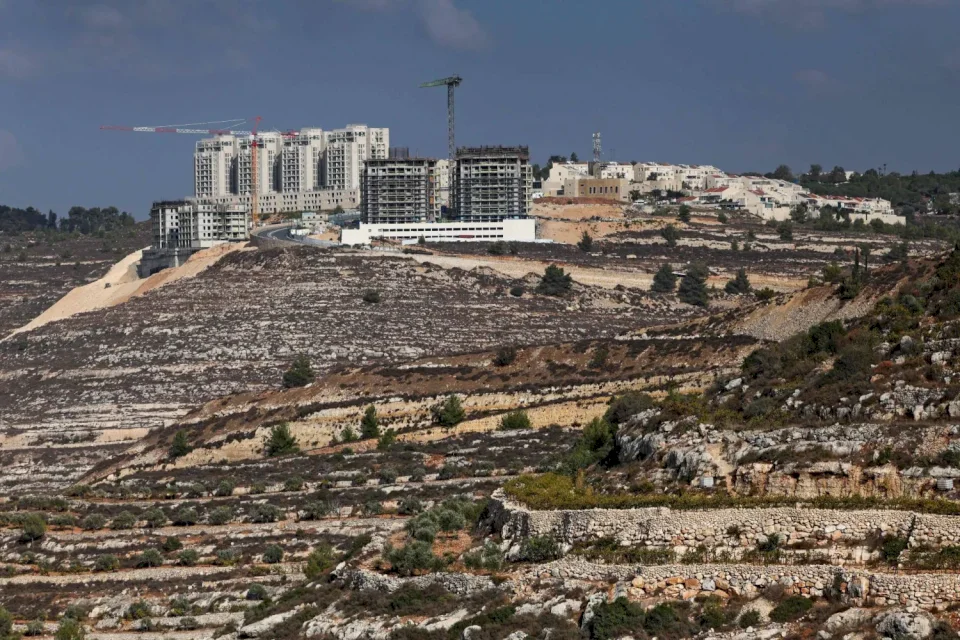
SadaNews - The National Office for Defense of Land and Resistance to Settlement stated in its weekly report that Israeli occupation authorities continue to execute new colonial projects aimed at changing the geographical reality in the northern West Bank through the establishment of new settlements, the expansion of existing ones, and the construction of a network of colonial roads, cutting off the connections of Palestinian towns and villages.
The report clarified that these projects include the establishment and development of 18 settlements, most notably the "Yahnit" settlement on the lands of the town of Arraba in Jenin Governorate, and the "Rosh Ha’ayin Mizrachit" settlement on the lands of the towns of Deir Ballut and Al-Zawiya in Salfit Governorate, in addition to legalizing several colonial outposts and pastoral farms and transforming them into recognized settlements within the structure plan of the Israeli authorities.
It added that the new plans between the governors of Nablus and Jenin include paving a colonial road linking the "Homesh" settlement to the Jordan Valley area, which geographically separates the two governorates, in addition to reinforcing the "Sanour" settlement and expanding the surrounding outposts within a settlement belt that aims to terminate Palestinian geographical continuity in the northern West Bank.
The report indicated that organizational maps and field data revealed a plan to pave a colonial street connecting the "Homesh" and "Shuva Yisrael" settlements to the "Shagit Yehuda" settlement in the Jordan Valley, at the expense of thousands of dunams of agricultural land seized from the lands of the towns of Beit Imerin and Yassid northwest of Nablus, extending to the lands of the towns of Jaba and Siris south of Jenin, which would lead to isolating the city of Jenin from Nablus from the southeastern side.
It drew attention to the so-called "Supreme Council for Settlement" approving a plan to rebuild and expand the "Sanour" settlement to include the establishment of 126 permanent settlement units around the historical castle, in addition to constructing private homes and multi-story buildings funded by the occupation government, as part of efforts to solidify permanent colonial presence in the area.
The report also noted the intensification of expansion works in the "Shaked - Reihan" bloc west of Jenin, which includes the settlements of "Shaked, Hananit, Reihan, and Tal Menashe", by expanding its urban presence at the expense of Area (A) and (B) lands, and linking the "Shavei Shomron" settlement with the bypass road network to facilitate the movement of settlers towards the Jordan Valley and the "Homesh" settlement without passing through Palestinian areas.
It added that the plan also includes paving several colonial roads, including a road linking Mount Ebal to the "Homesh" settlement passing through "Tarsala" and the Sanour camp reaching "Dotan", and a road extending from Mount Salameh in Raba to the "Noya" settlement near the American Arab University then to "Dotan", in addition to a road connecting the settlements of "Ganim" and "Kadim" to the Jalameh military checkpoint, and another reaching these settlements to the "Noya" settlement, as well as a road leading to a new settlement that the occupation authorities plan to establish near the village of Faqou'a.
The report noted that the occupation continues to implement an accelerated plan to control Mount Ebal, north of Nablus, by establishing a pastoral and residential colonial outpost in preparation for transforming it into a permanent settlement, as part of a plan aimed at isolating the city and controlling its vital peaks.
It clarified that settlers established the first nucleus of this outpost in March 2026, in collaboration with the so-called "North West Bank Settlement Council" and the colonial "Amanah" movement, while operations continue to bring in mobile homes (caravans) and heavy machinery to consolidate the colonial presence and expand the infrastructure, implementing the Israeli "Cabinet" decision issued in May 2025, which called for legalizing and establishing 22 new colonial sites in the West Bank, with Mount Ebal being one of the most prominent.
It indicated that the occupation uses the Biblical narrative promoted by Israeli archaeological associations about the existence of an "altar" in the "Biranot" region on the mountain, to justify converting the site into a Jewish religious and tourism landmark, which allows for seizing large areas of surrounding land under the pretext of "protecting antiquities".
Moreover, control over Mount Ebal, which is the highest peak in the Nablus mountain range, provides the occupation with military oversight over the city of Nablus and the surrounding northern and eastern villages, and is linked with a project to pave a network of colonial roads extending towards the "Homesh" and "Sanour" settlements, enhancing control over the northern West Bank and securing the movement of settlers away from Palestinian areas.
In this context, the report explained that the occupation authorities continue to target the Al-Buqia area east of Tubas by destroying water lines that supply thousands of dunams of agricultural land, as part of implementing the "Crimson Thread" project, which aims to establish a military road and a separation wall on citizens' lands.
It added that the occupation's bulldozers have continued for months to carry out leveling works, destroying agricultural lands planted with trees and vegetables, and damaging water networks, threatening the livelihoods of hundreds of farmers and pushing them towards forced displacement for the benefit of colonial expansion.
The report noted that initial data indicates that about 24,000 dunams, owned by approximately 300 farmers, are threatened with drought and damage, equivalent to a quarter of Al-Buqia area, totaling 96,000 dunams, while the rest of the valley's lands are at risk as leveling operations continue. It confirmed that the "Crimson Thread" project represents an advanced step to isolate the Jordan Valley from the rest of the West Bank and tighten Israeli control over it.
The report reminded that the newspaper "Haaretz" revealed in November 2025 that the project includes establishing a military road and a separation wall extending 22 kilometers long and 50 meters wide, from the village of Ein Shibli in the central Jordan Valley to the Tayaseer military checkpoint, after issuing confiscation orders for 1,042 dunams of citizens' lands, and starting the leveling works that will lead to isolating thousands of additional dunams.
On the financial side, the report stated that the extremist Israeli Finance Minister Bezalel Smotrich is seeking to approve a new package of financial allocations estimated in hundreds of millions of shekels for the benefit of the settlements before the current government's term ends, with part of them being solidified to remain in effect and binding for future governments, according to what "Haaretz" reported.
The report clarified that Smotrich's plan involves increasing allocations for the so-called "Jewish Identity" by 200 million shekels within a program extending until 2028, ensuring the continued flow of these funds even after the end of the current government's term. These allocations add to previously approved budgets during the current year, including 82 million shekels for the "Jewish Identity Directorate" affiliated with the office of the occupation prime minister, and 60 million shekels for the "Jewish Culture" item, in addition to hundreds of millions of shekels allocated to the ministries of heritage, traditions, and national missions.
Furthermore, the report indicated that Smotrich is also pushing to expand the privileges granted to the settlements through two new decisions aimed at expanding the definition of "national preference areas", one of which includes settlements in the Jordan Valley, while the other includes settlements adjacent to the Gaza Strip, enabling them to obtain more economic incentives and tax exemptions.
It pointed out that "Haaretz" reported that a large part of these funds have not yet been spent, as at least one billion shekels still remain in the coalition funds, in addition to 1.3 billion shekels officially allocated for developing projects in local authorities, while part of it is practically used to meet the needs of the coalition government parties.
In this context, the report explained that the early campaign for the Israeli parliamentary elections scheduled before the end of the current year pushed right-wing leaders to escalate their rhetoric about settlement and the West Bank.
It indicated that Smotrich, who also holds a position in the Ministry of Defense and leads the "Religious Zionism" party, announced during a conference for settlement leaders in the West Bank that his goals in the upcoming government term are to expel Palestinians, annul the Oslo agreements, and proceed towards annexing the West Bank, considering this to be "the long-term solution to the conflict".
The report added that Smotrich also called for dismantling the idea of establishing a Palestinian state and changing the political and security reality in the West Bank, expressing his aspirations to transfer what he described as a "colonial revolution" to the Negev and Galilee regions to strengthen the Jewish presence in them.
Additionally, the report stated that former Prime Minister Naftali Bennett also joined this electoral competition, confirming that the (C) designated areas, which constitute about 60% of the West Bank area, "will be part of the State of Israel", while the (A) and (B) areas remain under Palestinian autonomy, indicating his rejection of the establishment of a Palestinian state.
In the context of the weekly field violations documented by the National Office for Defense of Land and Resistance to Settlement, the report noted that the occupation forces and settlers continued their aggressions in various governorates of the West Bank, including incursions, attacks, home demolitions, land leveling, road closures, and vandalism of property, in addition to direct assaults on citizens.
 Follow the latest Sada News via Google News
National Center: Occupation Authorities Push for New Settlement Projects Changing Reality...

Limited American-Iranian Strikes and Vance Warns Tehran

The Occupation Continues Its Violations of the Ceasefire in the Gaza Strip

Occupation forces arrest citizens in the West Bank

The Depleted Arsenal: Why Won't the U.S. Military Stockpile Recover Soon?

Netanyahu: We will remain in southern Lebanon and one of the two experimental areas is out...

Lebanon and Israel Sign a Framework Agreement Under American Sponsorship
