

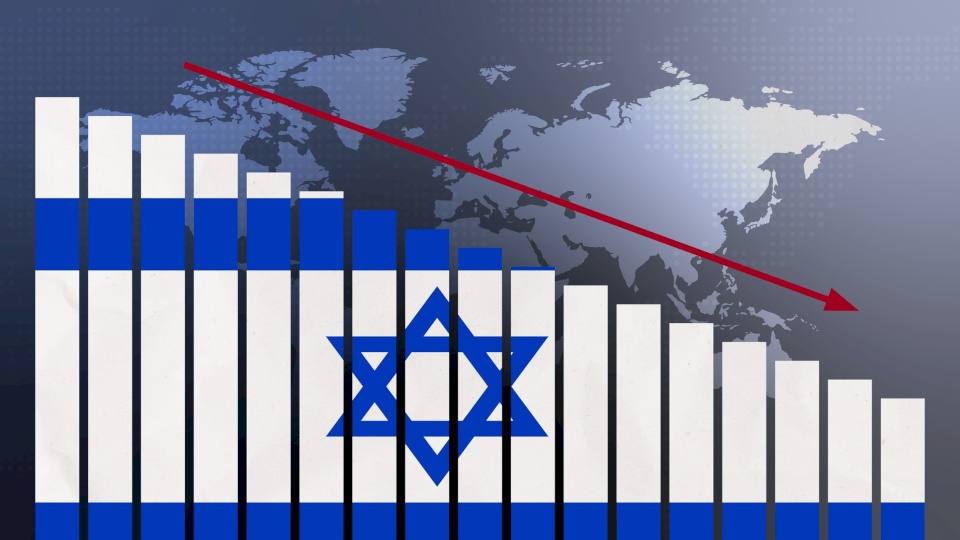
Site 972+: Warnings of an Imminent Collapse of the Israeli Extermination Economy
SadaNews - The Israeli economist Shir Hever, who studies the economic aspects of the Israeli occupation of Palestinian territories, explains how the war mobilization in Gaza has supported a "zombie" economy that appears to be functioning but lacks any future prospects.
Writer Amos Brinson from the Israeli site "972+" conducted an extensive interview with Hever, who serves as the director of the "Justice Alliance between Israelis and Palestinians," discussing various aspects of the Israeli economy.
Below is a summary of Hever's remarks on the deteriorating economic situation in Israel:
The war in Gaza has caused economic shocks and related crises, displacing tens of thousands of families from the border areas with Gaza and Lebanon. Rockets and direct shells have damaged these areas, affecting productivity.
About 300,000 reservists have been mobilized for long periods, leading to a significant labor shortage as many training days invested in these workers have been lost.
The educated middle class in Israel has started considering emigration, and many families and talented individuals have already emigrated due to the impossibility of raising their children there.
Among the signs and indicators of the economic crisis in Israel is that many citizens have moved their savings abroad, fearing inflation, currency depreciation, a downgrade in Israel's credit rating, and increased investment risks.
Revenues have been diverted to fund the war, which has led to a decline in the quality of public services and higher education, bringing Israel closer to a debt trap.
Israel's international reputation has become toxic, facing an unprecedented level of boycotts, divestments, and sanctions.
Zombie Economy: Hever described the Israeli economy as a zombie economy, stating that it is in this condition because it moves but is unaware of its own crisis or imminent end.
The Israeli economy heavily relies on massive military spending and foreign credit without a sustainable future plan.
The government passed a budget that does not reflect the actual reality of expenses, leading to an out-of-control debt situation.
Big deals in the technology sector give a false impression of economic strength, but what is actually happening is that workers in the tech sector own shares, sell them to foreign companies, and transfer the money abroad. Technological innovations and investments in this sector are significantly declining.
How did Hever respond to the stock market boom and the stability of the shekel?
In his explanation of the stock market boom and the stability of the shekel, Hever stated that the increase in reservist soldiers' salaries had a significant impact on the stock market and the stability of the shekel. These soldiers invest their money in stocks because they cannot spend it in Gaza. They are trying to protect their savings by investing in the booming stock market, contributing to an economic bubble.
The Israeli central bank has been managing the crisis by selling large amounts of dollars to give the impression that everything is under control, but this is merely market manipulation.
The decline in living conditions and the increase in poverty rates. The cost of war has greatly affected the majority of families, contributing to the rise in their debts. The "Latet" report - an Israeli NGO that publishes an annual report on various economic and social indicators related to poverty, food insecurity, social inequality, and other issues facing vulnerable groups in Israel - noted that the percentage of people experiencing food insecurity has significantly increased, as many Israeli families now live in distress with rising debts during the war.
When the Ministry of Finance announces the true costs of the war compared to its commitment in the 2025 budget, it is expected that this will lead investors and international institutions to lose trust.
Source: +972
 Follow the latest Sada News via Google News
Soaring Oil Prices Burn the Pockets of the Palestinian Citizen "The Poor"

Millions of Dollars in Losses.. "SadaNews" Reveals Shocking Figures for Traders from Pales...

The Problem of Shekel Overcrowding Worsens.. Fuel Station Owners Threatened with Closure o...

The Palestinian Economy at a Crossroads: 4 Files Awaiting Resolution

The Monetary Authority Mobilizes the International Community to Act Before the Point of No...

Palestine.. Trade Balance Deficit Increases by 15% During May Last Year

The Monetary Authority Keeps the Discount Rate at 25% of Public Sector Employees' Salaries...
