

Haifa
Haifa speaks Arabic
The issue is neither a commercial sign nor an administrative decision regarding the language of the signs. The matter was simpler on the surface, yet more serious in depth: a woman spoke in her mother tongue.
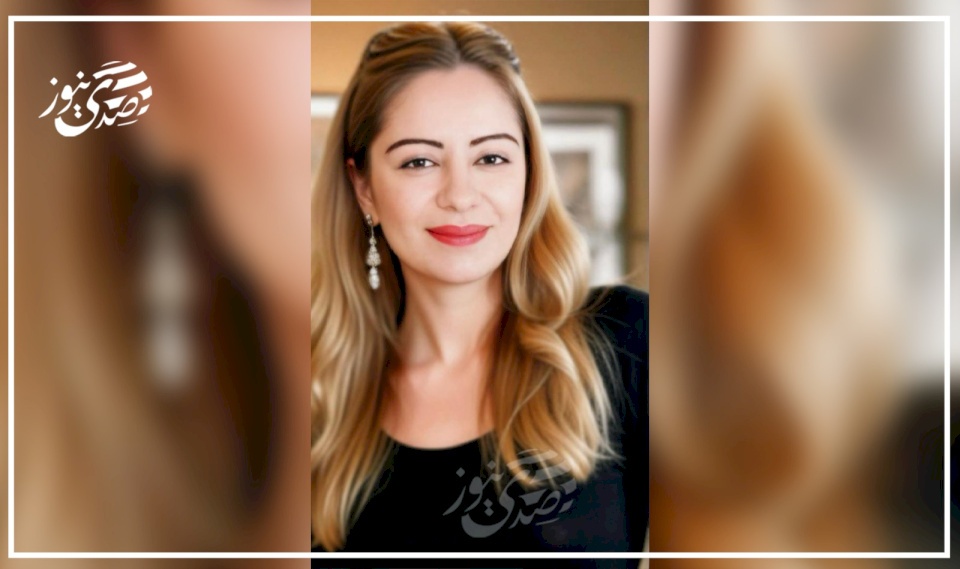
During a city council session, council member Sally Abed stood to speak in Arabic, the language spoken by tens of thousands of the city's residents, which preceded any subsequent definition of identity there. However, what happened next revealed that the discussion was not about politics, but about the language itself.
No one discussed the content of her speech, nor did anyone confront her with administrative or municipal arguments. Instead, Arabic became a direct target of attack. One member shouted at her demanding she go to Gaza, while others called for her to prove her loyalty through military service, as if the language had turned into a means of accusation rather than a means of communication.
Thus, in just a few minutes, the session shifted from an administrative discussion to an undeclared trial of identity.
The language that frightens
This is not the first incident in Haifa, but it is one of the most evident. The city, often presented as a model of coexistence, reveals in such moments that this coexistence has conditions: it is acceptable as long as the Arabic voice is low, delayed, or translated into another language.
In this context, language is not used as a tool for communication, but as a declaration of presence. And when Arabic is spoken within an official institution, it conveys not just an idea, but confirms a simple truth: that its speakers are not just passing guests. This is precisely why the voice becomes bothersome.
From the discussion of signs to questions of belonging
Ironically, the session was discussing the issue of signs in the city, that is, the written language in the public space. However, the real debate quickly slipped from letters to people: who has the right to appear in the public sphere at all?
When Arabic shifts from an officially recognized language to a source of tension and anger, it means that the conflict is no longer over form, but over space itself. The implicit message was clear: you can live here, but do not speak your language too much.
Haifa as we know it…
Haifa is not a monolithic city. It is a city of layers: Arab, Hebrew, Mediterranean, labor, and cultural. In its history, Arabic has not been a margin, but part of its daily voice.
Therefore, what happened cannot be read as an individual incident, but as a revealing moment of how coexistence operates when it turns into a discourse devoid of substance. Cities are also measured by their ability to absorb their differences, not by denying them.
Council member was not attacked for violating a decision, but for breaking an unwritten rule: the acceptable Arab is the silent Arab. When speaking Arabic within an official institution becomes an abhorred act, the voice itself is put under scrutiny, not the political stance.
Why is this moment important?
Because what transpired in the city council transcends Haifa. It reflects a broader question faced by mixed cities: is plurality merely a decorative slogan? Or is it a social contract that allows every individual to be themselves without justification?
If language requires courage to be spoken, then the problem lies not with the speaker, but with the place that fears hearing it.
Haifa does not speak one language, and it has never done so. The city that is frightened by Arabic is not the Haifa known to its people, but a tense version of itself.
 Follow the latest Sada News via Google News
The Palestinian Home... The New Front for Settlement

When the Pharaohs and Atlas Lions Carried the Palestinian Flag... and Gaza Sang

The Paradox of Abundance: 17 Billion Shekels

From Palestine to Geneva: Governing Artificial Intelligence and Redefining Digital Justice...

Yes to Elections, the Question is How and What is the Objective?

Between Political Discourse and People's Pain... When Review Becomes a National Necessity

Gaza: An Unimplemented Agreement and a War Waged Without Announcement
