

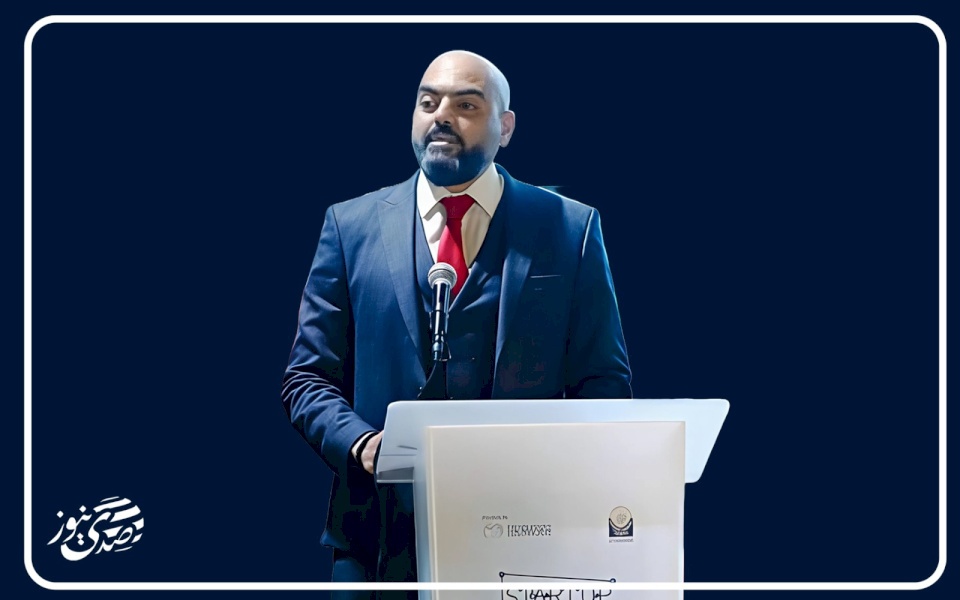
Guardiola Out of Neutrality
Pep Guardiola, the world-renowned football coach, spoke about his support for the Palestinian cause a few days ago during a speech he delivered at a solidarity event for Palestine held in Barcelona, Spain, which allowed him to achieve philosophical and humanitarian goals with a kick that shattered constraints and borders.
Not every silence is neutrality, and not every word is a position. In morally gray times, courage is measured not by the volume of one's voice, but by its timing and the price one may pay. From this very meaning, Guardiola's speech in support of Palestine transcends mere humanitarian expression; it transforms into a conscious cultural and moral act that deserves reflection, rather than mere applause.
Guardiola, coming from Catalonian traditions that view freedom as a value rather than a slogan, and dignity as a daily action rather than a seasonal speech, was not a stranger to this position. Those who understand Barcelona's cultural history, not just as a club but as "more than a club," realize that this voice did not emerge in a vacuum. Catalonia, which has experienced repression, attempts to erase identities, and the burden of political identity, teaches its children that silence in the face of injustice is not a virtue.
In his speech, Guardiola did not use traditional political rhetoric, nor did he hide behind linguistic balances. He stated what ethics say when left alone in the room: that the world is watching, that children are being killed, and that international silence is no longer a failure, but a choice. This simple sentence, in its essence, was enough to unsettle an entire system of justifications.
Global journalism picked up on this unsettlement. It did not treat his remarks as a breach of sports protocol, but as a calculated break of the silence. In European analyses, especially in culturally-sensitive media, Guardiola was presented as a new model of the public intellectual: someone who does not write a statement and does not belong to a party but knows when to say "no." In our time, this is a rare position.
What Guardiola stated was not new to Palestinians, yet it was new to many platforms accustomed to viewing Palestine as a linguistic burden. Suddenly, the issue was no longer the sole domain of activists; it entered the heart of public discourse through the portal of sports, from the mouth of a figure who is difficult to classify or demonize easily. Herein lies the danger and beauty of the position together.
In Spanish culture, particularly in literature and art, there is a constant presence of the idea of "moral testimony"; to say what you have seen, not what you are told to say. From Lorca, who was killed for his poetry, to exiled intellectuals who wrote against fascism knowing the cost, there is a thin thread that connects word and dignity. Guardiola, perhaps inadvertently, walked this fine line.
He did not claim to know the political details, nor did he speak on behalf of anyone, but he rejected the equation between victim and oppressor, and he refused the language of "complexity" often used to justify impotence. This is what disturbed some. Clear positions unsettle gray regimes and reveal the fragility of the discourse of neutrality.
This message of gratitude is not a celebration of a person, but a defense of an idea: that a person should have a voice when silence becomes policy. The Palestinian people, who have long been stripped of their language and narrative, need such voices that do not speak about them, but rather bring them back to the center of the global moral question.
We are not delusional to think that a speech stops a war, but we know that courageous words change the climate in which wars are conducted. Every global voice that refuses normalization with murder broadens the margin of truth and narrows the space for justification.
We know that a single speech does not change the balance of power, but it does change the balance of meaning. And meaning, when it accumulates, slowly presses on the structures of justification. In this sense, Guardiola's words were a symbolic act of resistance, not through slogans, but by reinstating the moral commonplace.
Thank you to Pep Guardiola for choosing to be human before being a coach.
Thank you for retrieving, even for a moment, the idea that fame has a moral function.
And thank you for remembering, from Catalonia, that Palestine is not a distant issue, but a constant test of the conscience of this world.
In a time that rewards silence, he chose to speak.
And that, alone, is an exceptional elite stance.
 Follow the latest Sada News via Google News
What Does the Supreme National Interest Mean for Palestinians? And How Can It Be Achieved?

The Wronged Ramallah

Between Pragmatism and Survival Management: Where Does Hamas Go After the Election of Khal...

Khalil Al-Hayya as President of Hamas.. Continuation of the Founders' Approach

The Annihilation of Sportsmanship

Until When Will the Palestinian Citizen Pay the Price of an Endless Phase?

7-10 Billion Shekels.. The Bill for the Absent Worker from Brussels
