

Between the Visit and Silence: What Does Symbolism Do When the Right to Life Is Suspended?
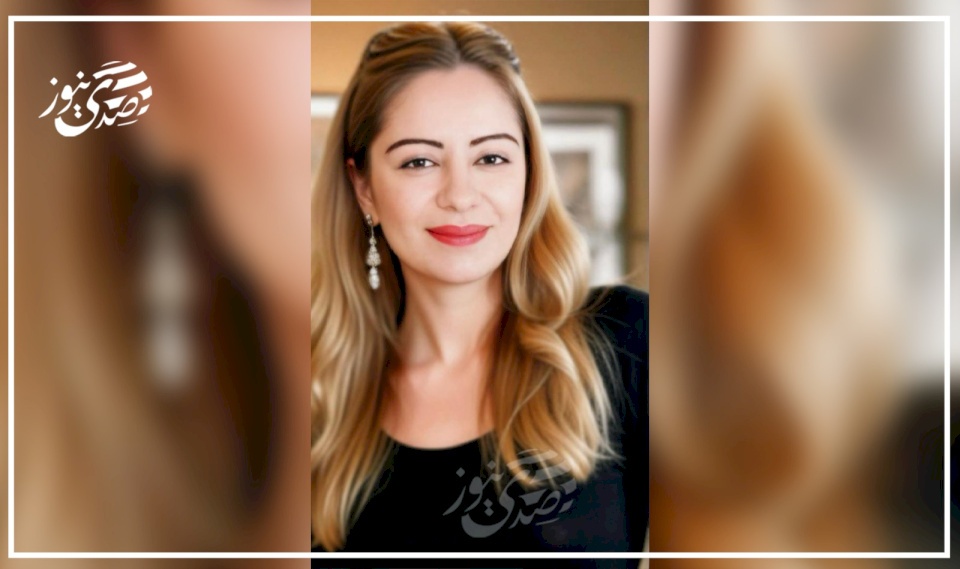
Angelina Jolie's visit to the Rafah crossing was not just an event on the celebrities' calendar, nor merely a photo added to the archive of humanitarian solidarity. The visit came at a suffocating political and humanitarian moment, where the activities of relief organizations in Gaza are suspended, aid entry restrictions are tightened, and civilians are left stranded between a renewed siege and deadly bureaucracy.
Here, the visit becomes more of an ethical question than a news item: what does symbolism do when the right to life is denied? In Rafah, suffering is not only measured by the number of halted trucks but by the time spent waiting. Every hour of delay translates into a shortage of medicine, water, shelter, or warmth. When aid piles up behind a closed gate, relief shifts from a humanitarian act to a hostage of a political decision.
Jolie's visit, as a former UN envoy with extensive experience in refugee issues, brought this contradiction to the forefront: the world sees, but decisions do not move at the necessary speed. The notable aspect of the visit is not the presence of a global star as much as its timing. While restrictions on the work of organizations are justified with security and procedural excuses, humanitarian realities on the ground accumulate: hospitals without fuel, children without treatment, and families without shelter. In this context, the visit reminds us that relief is not a favor, but a legal and ethical obligation, and that the protection of humanitarian workers is not just an administrative detail, but a prerequisite for saving lives.
But the deeper question remains: is symbolism enough? Recent history tells us that visits alone do not open crossings, nor do they lift decisions that suspend humanitarian work.
What symbolism does is break the silence and redirect the spotlight.
However, the light needs real political pressure and international accountability that does not dodge between security and humanity. Here, the value of the visit is determined by its ability to transform attention into action: accelerating aid entry, lifting restrictions on organizations, and ensuring that relief arrives unconditionally, devoid of meaning.
For Palestinians, the humanitarian cannot be separated from the political. The catastrophe is not an emergency; it is the result of a prolonged siege structure and policies managed by the logic of "permanent exception." Suspending the work of organizations at the peak of need is not a neutral measure, but a decision that has a direct human cost.
When workers are asked to submit data that threatens their safety, and when their movement is restricted, humanitarian work itself becomes a battleground. In this struggle, civilians pay the price. Jolie's visit embarrasses this reality; it says that the problem is not a lack of global empathy, but an excess of procrastination. It states that aid exists but is detained and that suffering is not unseen, but ignored.
Yet, the challenge remains: how do we prevent solidarity from becoming a fleeting spectacle? How do we ensure that images are not exhausted while doors remain closed?
The answer begins with redefining priorities; protecting civilians is not a bargaining chip, and delivering medicine and food is not pressure leverage. International responsibility is not measured by the number of statements, but by the international community's ability to enforce respect for humanitarian law.
If a single visit can bring the issue back to the front pages, what is needed is for it to transform into a series of actions: monitoring mechanisms, clear timelines for aid entry, and guarantees for the protection of organizations and workers.
In the end, Gaza is not saved by a visit, nor is a wound closed by an image, but it may rearrange the question: who has the decision, and who pays the price? When a global icon stands before a closed crossing, she does not bear the solution, but she points a finger at the wound.
And the world must decide: will it open the door, or will it settle for watching? Gaza does not need more symbols; it needs a decision. And humanity, above all, deserves to have life reach it without permission.
 Follow the latest Sada News via Google News
Cairo Meeting: From War Management to Engineering the Next Day in Gaza

Gaza... When Survival Becomes a Daily Miracle

When the Daughter of Jaffa Returned to the Sea

The Palestinian Starting Point.. The Grand Questions and the Beginning of Answers
Discussion on the Nature of the Palestinian Political System Between the Dualities of Legi...

الشركة الفلسطينية للمحروقات: من التبعية إلى الشراكة

Palestine: Between International Transformations and Leadership Crisis
