

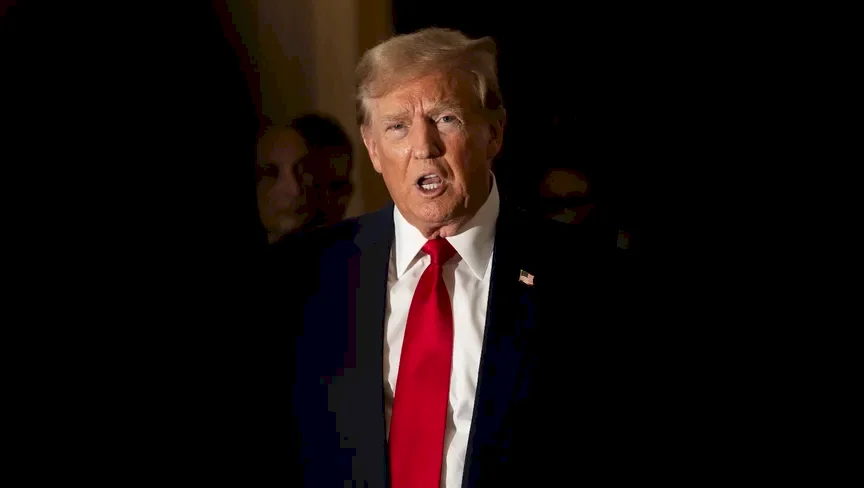
Trump: I Will Sign an Executive Order to Impose Global Tariffs of 10%
SadaNews - U.S. President Donald Trump stated that he has the right to completely suspend trade with any country, criticizing the Supreme Court's decision to overturn tariffs imposed by his administration. He added, "I will likely follow the direction I should have taken from the beginning, indicating his intention to sign an executive order imposing global tariffs of 10%."
During a press conference held today, Friday, after the Supreme Court's decision, Trump described the ruling as "extremely disappointing from some members of the court who do not have the courage and wisdom to make a decision in favor of our country," referring to them as "acting foolishly and in favor of the Democrats, making unpatriotic decisions influenced by foreign interests, ignoring the interests of the United States of America." He added, "Foreign interests have undue influence over the Supreme Court."
Imposing Global Tariffs of 10%
Trump confirmed that he could use other powers related to tariffs, adding, "I will sign an executive order to impose global tariffs of 10%, set to take effect after 3 days," in addition to other tariffs.
He explained that he will seek to apply the basic tariffs under Article 122 of the Trade Act of 1974, which grants the president the power to impose tariffs unilaterally. However, this legal provision, which has not yet been tested, restricts the scope of possible tariffs and sets a maximum duration of 150 days for these tariffs to remain in effect.
In response to questions from reporters about whether the U.S. should refund tariff revenues, Trump said, "I think the matter should be settled through litigation."
He also stated that there is no need to consult Congress regarding additional procedures "since they have already approved this matter," and he threatened to impose tariffs on the automotive industry ranging from 15% to 30%. He also mentioned that he will initiate additional investigations under Articles 301 and 232, which he had previously used to impose tariffs on Chinese exports, automobiles, and metals.
Trump clarified that he has the right to completely suspend trade with any country, stating, "I will now move towards a stricter approach." He added that the Supreme Court's decision "may not significantly limit the president's ability to impose tariffs in the future, but many other federal laws allow the president to impose tariffs and justify most - if not all - of the tariffs mentioned in this lawsuit, including, for example, the Trade Expansion Act of 1962 and the Trade Act of 1974."
He indicated that the Supreme Court "overturned the part related to using the International Economic Emergency Powers Act (IEEPA) only concerning tariffs, thus it did not nullify the tariffs completely, but merely annulled one part of its uses."
He added, "Other countries are very happy (after the decision to overturn the tariffs)... but they will not be too pleased," referencing an alternative plan he might resort to for reinstating the tariffs, saying, "Other strong alternatives concerning tariffs will be employed."
Trump also relied on his effective use of tariffs "over the past year" in a manner that enabled him to combat the influx of fentanyl into the United States, and its role in ending 8 wars, as well as enhancing U.S. national security.
The U.S. Supreme Court voted today, Friday, by a majority of six to three in favor of overturning the comprehensive global tariffs imposed by Trump, undermining his main economic policy and inflicting his most significant legal defeat since returning to the White House.
"A Stain of Shame"
The president's initial reaction to the ruling came during a closed meeting with state governors at the White House, where he described the ruling as "a stain of shame" and vowed to implement an alternative plan, according to Bloomberg, citing a source familiar with the matter who requested anonymity.
The court ruled that Trump overstepped his authority by activating the federal emergency powers act to impose his reciprocal global tariffs, along with targeted import taxes, which the administration claims aim to combat fentanyl smuggling.
The justices did not address the eligibility of importers for a refund of the tariffs, leaving it to a lower court to resolve these matters. If fully allowed, the refund amounts could reach $170 billion, which is more than half the revenue generated from Trump’s tariffs.
The Alternative Plan
On the other hand, White House officials committed to replacing the tariffs with other tools, although it will be difficult to reimpose the import taxes, and the president is likely to face stronger limitations on the scope and duration of tariffs he can impose.
The White House is preparing an alternative plan for Trump’s tariffs ahead of the Supreme Court ruling.
The "New York Times" reported today that Trump intends to use new trade powers in response to the Supreme Court's decision to strike down the tariffs, indicating that the U.S. president is considering imposing new comprehensive tariffs on the United States' trading partners.
U.S. President Donald Trump showcases a large chart titled 'Reciprocal Tariffs' comparing the tariffs different countries impose on U.S. goods with the rates the U.S. will impose - Bloomberg.
Trump has claimed on multiple occasions that his tariff program is essential not only for attracting manufacturing industries to the United States but also as a tool in foreign policy. He stated that threats of tariffs helped him pressure countries to calm armed conflicts, crediting tariff negotiations with attracting billions of dollars in planned foreign investments to the United States.
He also noted in a post on his platform, "Truth Social," yesterday, Thursday, that the U.S. trade deficit dropped by 78% due to the imposition of tariffs on other companies and countries.
Following the Supreme Court's decision, U.S. Treasury bonds declined, led by long-term securities most affected by financial risks in the coming years, raising 30-year Treasury yields by up to 6 basis points to 4.75%, amid fears of a growing government budget deficit and signaling a struggling economy already suffering from high inflation. The dollar also declined, ending its four-day gains.
 Follow the latest Sada News via Google News
London Stock Exchange Enters the Era of 24/7 Trading

Shamaran Petroleum: Suspension of Oil Production in Duhok Fields in the Kurdistan Region o...

Dollar Steadies Near One-Week High Amid War Developments

Trump Imposes Tariffs on Canadian Imports... Ottawa Vows to Respond

Oil Prices Drop After Reports of Mediation Efforts Between the U.S. and Iran

Gold Price Rises Supported by Increased Buying Amid Lower Prices

Due to "Hazardous and Counterfeit Products".. Europe Fines "AliExpress" $627 Million
