

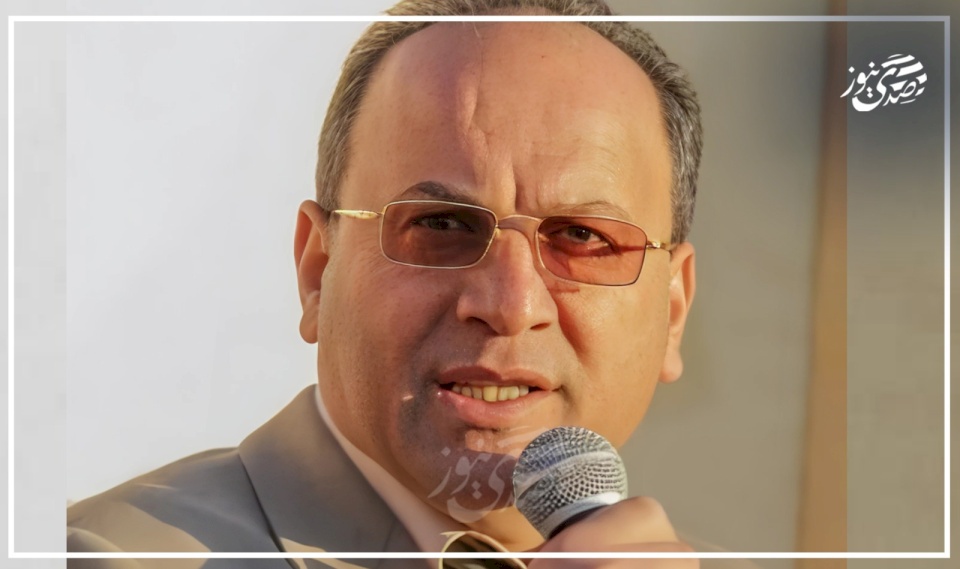
Osama Al-Najjar... From the Lineage of Leaders Shaped by Circumstances
In the history of the Fatah movement, leadership has never been a privilege of those who ascended to the platforms, but rather a characteristic of those who carried the burden, paid the price, and remained loyal to the idea when times changed and faces altered. From this perspective, one can read the biography of Osama Al-Najjar, who was not a fleeting figure in the national or trade union scene but was a living extension of the original Fatah school—one that sees struggle as a commitment, not a slogan; organization as a trust, not an interest; and dignity as a red line that cannot be negotiated.
Just as Khalil Al-Wazir "Abu Jihad" was a man of the field, not a man of rhetoric, Osama Al-Najjar’s awareness was shaped by his role in action. He entered the freedom battle early and faced the occupation without hesitation, moving between prisons for Palestine, steadfast in interrogation, tough in confrontation, believing that freedom can only be seized through patience and perseverance. For him, the experience of detention was not merely a tale of heroism but part of a long road he consciously chose and continued without pretense or noise.
In his organizational experience, Osama Al-Najjar was very close to the school of Salah Khalaf "Abu Iyad" which saw in Fatah the mind and conscience of the revolution. He was not a member of the Revolutionary Council by position but by stance, defending the system, confronting deviation, and rejecting any tampering with the compass—not for personal gain or self-interest, but out of belief that Fatah can only exist through commitment, discipline, and loyalty to its original principles. He did not remain silent when silence was easier, nor did he appease when appeasement was the path to safety. His voice remained clear even when clarity became costly.
In trade union work, Osama Al-Najjar embodied a genuine Fatah understanding of the role of the union, considering it a support for the people, not a façade for influence, and a daily resistance to injustice, not mere crisis management. He was elected unanimously, not because he was the most media-present figure, but because he was the most honest and committed, participating in strikes and sit-ins, leading from the front, and defending the rights of workers in the health sector and beyond without discrimination or narrow calculations. He paid dearly for his positions, losing his job at the UNRWA and being detained because he refused to bow. However, he did not lose his self-respect or the trust of those who elected him. Like the great leaders in Fatah, he chose personal loss over compromising public rights.
Osama was not a follower of a trend or an individual but a leader of the people whom his voice represented. He did not quiet when rights were violated, nor did his shield lower when targeting intensified, reaching the salaries of the prisoners and martyrs and the amendment of curricula. He shared with his comrades the struggle and detention from various governments simply because they refused to be witnesses of falsehood or to let down those who trusted them. He carried three major trusts: Palestine, Fatah, and the unions, and he carried them fully, never selling any of them, regardless of the cost.
Despite this record of struggle and organization, Osama Al-Najjar remained a person close to the people, pure in heart, loving the land, devoted to his family, generous in his presence and home. He lived as he believed: free, upright, and unbending. His dignity was the center of his life, and his positions demonstrated that freedom is not merely a slogan but an action tested in the most difficult moments.
Placing Osama Al-Najjar among the great leaders of the Fatah movement is not flattery or sentimentality but a fair reading of history. He resembles them not because he held their positions but because he carried the same values: steadfastness, integrity, discipline, and a constant readiness to pay the price. With his passing, Fatah loses one of its loyal sons, the trade union movement loses a living conscience, and Palestine loses a rare model of a man who lived the idea in its entirety and did not compromise on it.
Peace be upon his soul and peace upon all those who walked the path of the original Fatah and remained standing. These do not vanish; they become part of the meaning and a compass for future generations.
 Follow the latest Sada News via Google News
Gaza... When Survival Becomes a Daily Miracle

When the Daughter of Jaffa Returned to the Sea

The Palestinian Starting Point.. The Grand Questions and the Beginning of Answers
Discussion on the Nature of the Palestinian Political System Between the Dualities of Legi...

الشركة الفلسطينية للمحروقات: من التبعية إلى الشراكة

Palestine: Between International Transformations and Leadership Crisis

No State, Just a Shack or Tent
