

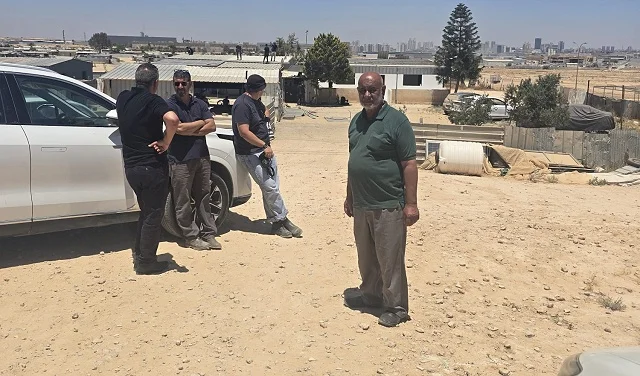
Demolition of About 20 Homes of the Al-Afshaq Family in the Sar Village in the Negev
SadaNews - A wide demolition operation targeting the homes of the Al-Afshaq family took place in the unrecognized village of Sar in the Negev region, southern Israel. The family was forced to carry out self-demolitions of approximately twenty homes, which left a state of concern and anger among the locals and highlighted the suffering of unrecognized Arab villages in the Negev from ongoing demolition orders.
In response, the regional council for unrecognized villages in the Negev expressed its strong condemnation of these actions, affirming that the policy of forcing citizens to demolish their homes by themselves represents a violation of their right to housing and stability, exacerbating the social and humanitarian situations experienced by the affected families.
These statements came during a field visit by the head of the regional council for unrecognized villages, Atiyah Al-Asam, to the village, where he met with members of the Al-Afshaq family and locals, and learned about the consequences of the demolitions and the extent of the damage inflicted on the families.
Al-Asam emphasized that what happened in Sar reflects the continued policy of demolition and pursuit instead of finding fair solutions for housing, planning, and recognizing the villages. He stressed that forcing citizens to demolish their homes themselves is a harsh and inhumane measure.
He added that the plight of the Al-Afshaq family in Sar, along with the demolition operations occurring in the Tel Arad area, necessitates broad public and official action to stop demolition orders and ensure citizens' right to safe housing and dignified living conditions on their land.
The regional council called on all institutions, popular committees, and political and social forces to unify efforts and enhance joint action to confront demolition and uprooting policies and to defend the rights of the Negev residents to their land, housing, and the recognition of their villages.
Solidarity Day with Tel Arad Next Saturday
Amidst the ongoing escalation experienced by Arab villages in the Negev, and the demolition, displacement, and uprooting policies affecting both Tel Arad and Sar, the Higher Steering Committee of Arab Negev, the Forum of Arab Local Authorities in the Negev, and the regional council for unrecognized villages announced a series of steps and field activities to address these developments.
The organizing bodies announced the postponement of the Negev Conference that was scheduled to be held on Saturday, June 20, 2026, to Saturday, July 4, 2026, in light of the field developments requiring focused efforts to support the targeted villages.
They also resolved to declare Saturday, June 20, 2026, as a day of solidarity with Tel Arad, with a central event taking place in the village at 10 AM, to support the resilience of the Al-Nabari clan and their commitment to their right to land, housing, and recognition of their village.
In this context, an emergency meeting of the Negev leadership and the Higher Steering Committee of Arab Negev was decided for Thursday, June 18, 2026, at 5 PM in the village of Sar, in solidarity with families forced to demolish their homes and to discuss forthcoming popular and advocacy steps to confront demolition and uprooting policies.
The Higher Steering Committee of Arab Negev, the Forum of Arab Local Authorities, and the regional council for unrecognized villages affirmed that what is occurring in Tel Arad and Sar constitutes a serious escalation that requires the broadest public and popular movement in defense of the Arab citizens' right to land and housing, and a rejection of displacement and pressure policies targeting Arab villages in the Negev.
The three institutions called on the public in the Negev to participate widely in the solidarity day with Tel Arad and to rally around the struggle of the locals in Tel Arad and Sar and other targeted villages, confirming unity of position and adherence to the collective rights of the Negev residents.
 Follow the latest Sada News via Google News
Demolition of About 20 Homes of the Al-Afshaq Family in the Sar Village in the Negev

Israeli Supreme Court Rejects Appeal for Release of Doctor Hussam Abu Safiya

Israeli Authorities Demolish Al-Araqib for the 245th Time

Jaffa: Young Arab Woman Seriously Injured in Shooting Crime

Serious Injury to a Man Following a Violent Incident on Street 85 Near Ramah

Lod: Protest Demonstration Against Crime, Extortion, and Neglect Policy

Young man killed in shooting crime in Kafr Kanna
