

Report: Disputes Within Trump Administration Over Nuclear Memorandum of Understanding with Iran
SadaNews - Insider sources have revealed that there are disputes within President Donald Trump's administration regarding the memorandum of understanding signed with Iran, after intelligence assessments raised doubts about Tehran's willingness to make the nuclear concessions that Washington seeks to include in any final deal.
According to the sources, CIA Director John Ratcliffe informed President Trump and several senior officials that the information gathered by intelligence agencies raises serious questions about Iran's true intentions during the next phase of negotiations.
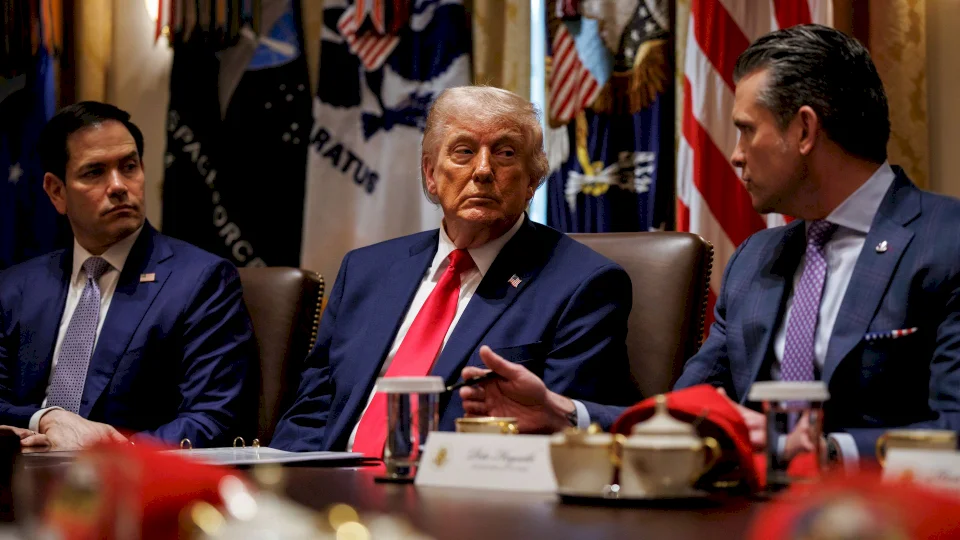
The reservations were not limited to Ratcliffe, as Secretary of State Marco Rubio and Secretary of Defense Pete Hegseth expressed similar concerns during internal discussions regarding the announced understanding with Tehran. In contrast, Vice President J.D. Vance and U.S. envoys Steve Whitkoff and Jared Kushner supported proceeding with the agreement and continuing negotiations.
According to the sources, Trump held a series of high-level meetings before announcing the memorandum of understanding, during which officials reviewed intelligence reports indicating a disparity between what Iranian officials were discussing internally and what they conveyed to intermediaries and the U.S. side.
During those meetings, Ratcliffe and Rubio believed that the available data raised doubts about Tehran's readiness to accept the nuclear measures demanded by Washington. One source stated that intelligence assessments indicate a gap between what Iran discusses internally and what it commits to in the framework of the agreement.
In contrast, the White House defended the memorandum, asserting that the U.S. president listened to various opinions before making his decision.
A U.S. administration official stated that Trump "listens to all viewpoints, but he is the final decision-maker," adding that the memorandum meets the red lines that Washington has set for years, primarily preventing Iran from acquiring nuclear weapons or maintaining stockpiles of highly enriched uranium, as well as preventing it from using global maritime routes as leverage.
The nuclear provisions contained in the memorandum depend on the success of both parties in reaching a more detailed agreement during a negotiation period extending for 60 days, with the possibility of extending it by mutual consent.
Friday's Meeting
Vice President J.D. Vance and envoys Whitkoff and Kushner are expected to hold a meeting on Friday with Iranian Parliament Speaker Mohammad Baqer Qalibaf and Foreign Minister Abbas Araghchi, with the presence of mediators from Qatar and Pakistan, to discuss the next phase of negotiations.
Despite the lack of publication of the full text of the preliminary agreement consisting of 14 clauses, an informed source said that Iran could gain more than it is currently offering under the memorandum unless a final agreement is later reached that meets U.S. objectives regarding the nuclear program.
The memorandum stipulates maintaining the status quo in the Iranian nuclear program during the negotiation period, in exchange for the U.S. refraining from imposing new sanctions or sending additional troops to the region.
It also includes a mutual commitment to discuss the future of enrichment operations and stockpiles of enriched nuclear materials within the framework of the final settlement. If a comprehensive agreement is reached, Washington will begin lifting sanctions according to an agreed-upon timeline, as well as withdrawing the forces it deployed to the region during the war.
The issue of frozen Iranian funds is one of the most sensitive issues, as the memorandum stipulates making these funds available for use upon the implementation of the agreement. However, U.S. officials have confirmed that any release of assets will be subject to the principle of "performance for rewards," linked to the extent of actions taken by Tehran on the ground.
The document also stipulates the reopening of the Strait of Hormuz in the near term, with an Iranian commitment to ensure the safe passage of commercial ships for 60 days without fees, in exchange for a gradual easing of U.S. imposed restrictions on shipping traffic.
Reasons for Criticism
Critics of the agreement within the U.S. administration believe that Tehran may benefit from the gains provided by the current memorandum of understanding without subsequently making the nuclear concessions demanded by Washington. In contrast, U.S. officials assert that any economic or financial benefits Iran receives will be tied to verifiable steps, noting that the next few weeks will reveal how serious Tehran is in adhering to its commitments.
These disputes reflect that the memorandum of understanding has not ended the debate within the Trump administration regarding how to deal with Iran, but rather opened a new discussion about whether Tehran is indeed ready to make substantive concessions, or if it seeks to buy time and gain economic and political advantages before resolving the more sensitive nuclear issues.
 Follow the latest Sada News via Google News
Settlers Storm 'Joseph's Tomb' East of Nablus

Wall Street Journal: Trump Strategically Retreats Before Iran

Report: Disputes Within Trump Administration Over Nuclear Memorandum of Understanding with...

نتنياهو.. أطول رئيس وزراء في تاريخ إسرائيل يترشح مجدداً

Trump: The nuclear agreement is intact.. and reports of funding for Iran are "false"

Exchange Rates of Currencies Against the Shekel on Tuesday (June 16)

Weather: Rise in Temperatures and Very Hot Conditions
