

Have You Tried 'Above the Clouds' Coffee? The Secret of the Yemeni Bean That Captured Attention in Malaysia
SadaNews - If you want an authentic flavor, delightful taste, and captivating aroma in your coffee cup, look for beans from coffee trees grown at an altitude exceeding 2200 meters above sea level. This environment is almost exclusive to Yemeni coffee farms and the mountains of Yafa and Abyan.
There, as Yemeni coffee expert Ahmed Al-Shoubli states, you will find beans that offer a chocolate flavor in Yafa coffee, with quality scoring above 85 points on the global quality scale, placing Yemeni coffee at the pinnacle of specialty coffee worldwide.
However, Qaddafi Hamza, the representative of the Chinese company 'Golden Choice' in Malaysia, reminds us that Arabic coffee (Arabica) is no longer exclusive to Yemen, as his company imports this variety from Guatemala, Mexico, Argentina, Indonesia, and other countries.
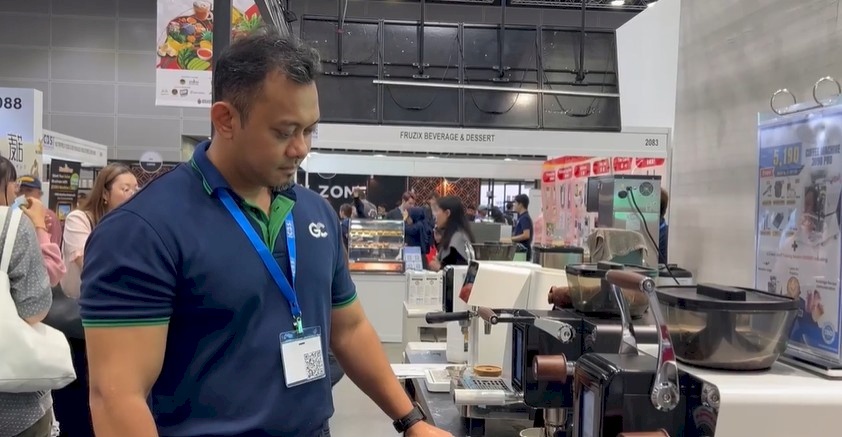
Al-Shoubli and Qaddafi met under one roof at the Malaysian Food Expo in Kuala Lumpur days ago, where the high attendance of coffee companies attracted attention, with hundreds of brands occupying about half of the expo space.
Cafes 'All in One Place'
Coffee experts and marketers believe that this industry has seen a boom in size, shape, and content in recent years, as sipping coffee with 'companionship' is no longer the only stereotype for its drinkers.
Countless blends have emerged, and cold coffee mixed with various flavors catering to all tastes has become prominent, from Generation Z, who pay for the 'cup's appearance and location' before the taste, to classic coffee enthusiasts who prefer it in a quiet corner of the cafe or at a gaming table.
Thus, 'all-in-one' cafes have appeared, which Qaddafi Hamza refers to as he showcases dozens of coffee-based recipes, with milk or almond milk, coconut milk, or various fruit flavors, in an attempt to offer coffee that fits every palate.
Yemeni Coffee: Global Quality and Marketing Dilemma
Coffee experts almost unanimously agree that Yemeni coffee boasts striking global quality, but the problem, according to Al-Shoubli, lies in marketing and building a brand that can enable it to compete in the global market.
He is supported by Rifaat Al-‘Ariqi, the coffee sector official at the Small and Micro Enterprises Development Agency in Yemen, who believes that enhancing the position of Yemeni coffee requires:
- Increasing the participation of local companies in global coffee exhibitions, especially following the success of registering Yemeni coffee with the International Coffee Organization in 2010.
- Training and developing the skills of all workers in the coffee production chain.
- Establishing a special authority to regulate the quality of Yemeni coffee.
- Strictly adhering to global quality standards across all stages of the chain, from farms to consumers, including sorting, storage, roasting, packaging, and export.
Al-‘Ariqi points out that Yemeni coffee exports currently account for no more than 10% of total production, and a considerable part of it is exported informally, indicating that it does not meet international quality standards.
Regarding production costs, he clarifies that Yemeni coffee faces additional challenges, foremost among them the increased expenses due to farmers' reliance on manual labor, and the difficulty of introducing agricultural machinery into rugged mountainous areas, making competition with coffee from other countries primarily based on quality and unique flavor.
From Qat to Coffee
Coffee cultivation spans 17 Yemeni provinces, yielding about 40 tons in 2025, according to Al-‘Ariqi, who confirms that coffee cultivation areas are expanding at the expense of qat farms.
He notes that this year witnessed the planting of a thousand coffee trees in one month, with the number of trees planted last year exceeding 100,000, indicating a rising awareness among Yemeni youth regarding the importance of replacing qat with coffee as a more economically viable crop, supported by the Saudi Fund for Development and the Islamic Development Bank.
Yemeni coffee is no different from others in facing challenges related to climate and rising global temperatures, and other factors affecting both the quantity and quality of production, as experts discussed the common challenges pressuring the global coffee industry.
Coffee Preparation Devices
Statistics from the 'World Coffee Portal' indicate that the coffee sector in Malaysia grew by 28% last year, with the number of retail outlets reaching 3,330 and an estimated trade volume of about 210 million dollars.
Today in Malaysia, it is almost impossible to find a shopping center without a coffee corner, in addition to ready-to-drink coffee fridges spread in most public places.
Shafiq Amin, the marketing officer at a coffee equipment company, confirms that the last ten years have seen unprecedented growth in demand for coffee preparation devices, explaining that his company's sales increased by 15% this year compared to last year, with about 60% of the devices sold going to homes, followed by coffee machines in workplaces, "as workers need to refuel with caffeine in their offices and workplaces," he states.
Boycott and the Rise of Chinese and Local Brands
Qaddafi Hamza believes that emerging brands - especially Chinese and local - have begun to replace many global brands, with boycotts of companies cooperating with Israel accelerating the growth and spread of these brands.
He adds that building a coffee brand used to take years, "but in just a few years, we've seen the emergence of companies that were previously unknown, alongside a decline of others with global reputations,” citing the closure of several branches of 'Starbucks' in Malaysia, following accusations of complicity with the Israeli occupation and genocide crimes in Gaza.
He points out that serving alcohol in some cafes or mixing coffee with alcohol in certain global brands was an additional factor that reinforced the boycott and encouraged consumers to turn to emerging local and Asian companies, which he believes offer quality on par with Western products, but provide alternatives that are closer to the consumer's culture and values.
Source: Al Jazeera
 Follow the latest Sada News via Google News
FIFA Referees Committee, Led by Colina, Clarifies Cases from Egypt vs. Argentina Match

The Egyptian Federation Files Official Complaint Against Referee Letexier

Do You Know How to Comfort Someone Who is Crying? Here's What to Say and Do in Tough Momen...

"Backrooms": From Digital Legend to Cinematic Phenomenon

Prediabetes.. The Silent Bomb Carried by Millions Without Their Knowledge

From Sweden 1958 to the Epic of Egypt 2026.. Argentina's History with World Cup Comebacks

After the South Africa Precedent.. Nigeria Investigates the Encroachment of Technology Com...
