

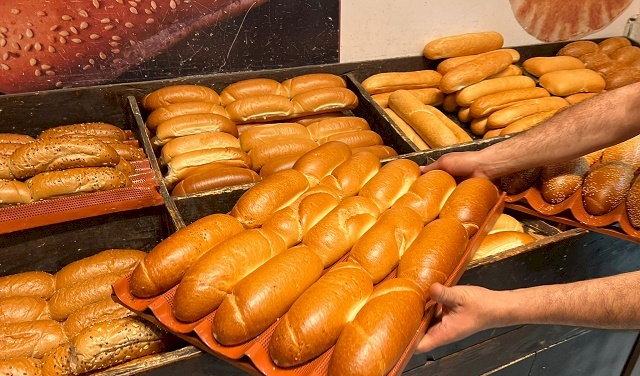
Umm al-Fahm: Rise in Bread Prices Deepens Family Suffering Amid Soaring Costs
SadaNews - The decision to raise bread prices at several bakeries in the city of Umm al-Fahm has sparked a wave of dissatisfaction and anger among consumers, especially as this is a staple item most consumed on Arab family tables. Some citizens believe that this increase is an inevitable result of the global wave of inflation, fueled by rising energy, gas, and transportation costs, which in turn pressures bread prices, exacerbating the hardship for middle-income and needy families.
In contrast, opinions are divided regarding the justifications for the price hike. Some consumers empathize with bakery owners facing increased operating costs and taxes, while others warn that some bakery owners are excessively exploiting the situation.
Ibrahim Abu Shuqra from Umm al-Fahm stated, "It is true that bread prices have risen in some shops, but at the same time, shop and bakery owners are facing heavy burdens due to the overall wave of inflation, forcing them to adjust their prices in an attempt to keep pace with rising costs, particularly gas which is essential for any bakery's operation and is experiencing a sharp increase amid global crises due to the war."
He added, "The bakery in my neighborhood has not raised prices despite the inflation we are witnessing, attempting to ease the burden on citizens, especially families with modest and average incomes, amid living conditions that are pressing on everyone."
In a related context, Abu Shuqra criticized some shops that exploit the inflation wave to raise prices, saying, "Some bakery owners took the opportunity to raise prices excessively even though bread is a basic necessity for every household, which has caused harm to simple citizens."
For her part, Um Fahima Mohajna from Umm al-Fahm expressed, "Honestly, I haven't noticed a significant increase in bread prices because the shops I deal with have not raised their prices yet, but we do feel an increase in other products like milk, cheese, dairy, eggs, cleaning materials, and vegetables."
Mohajna explained that "the rise in bread prices casts shadows on citizens, especially large families that consume significant amounts of it daily, as well as low-income families already suffering under overall rising costs."
She emphasized the need to economize spending, stating, "It is important for families to cut back on expenses and only buy essential and necessary items since seeing bread thrown on house walls pains me greatly, especially since it is a blessing that should not be wasted. We should buy according to our needs without exaggeration, appreciating the efforts of spouses who work hard in tough jobs to support their families."
She concluded her remarks with a message to shop owners, saying, "It is essential for merchants to empathize with citizens and avoid monopolizing goods; inflation affects them, indeed, but its impact on simple and needy families is much harsher."
In a conversation with Mr. As'ad Mohajna from Umm al-Fahm, he said, "The inflation we are witnessing is not limited to bread alone but encompasses various aspects of life, which is clearly reflected on citizens, particularly middle-income families."
Mohajna recalled an incident that occurred a few days ago while he was at one of the bakeries, where he reported, "A heated argument took place between a customer and a bakery owner over the price increase, with the owner dismissively responding: 'Anyone who doesn't like the price can stop buying it.' The debate ended in this unfortunate manner, especially when it comes to bread, which is a basic need and not a luxury item, highlighting the extent of anger and tension among residents amid rising prices."
He pointed out that the rise in bread prices has become the dominant topic of discussion among citizens, adding: "Personally, I used to buy bread monthly for around 110 shekels, and today the same amount costs 150 shekels. This is a noticeable increase that harms primarily simple and needy families, as the issue isn't limited to bread alone but is part of a wave of inflation sweeping the country."
He concluded by stating that "what we are witnessing in the country is an imbalance between inflation and citizens' wages, creating economic crises among the populace."
Source: Arab 48
 Follow the latest Sada News via Google News
Two killed in Haifa and Rina raise the death toll of murder crimes in the Arab community t...

Indictment in the Murder of Basel Farouni in Nazareth: The Target was Another Person

Two Killed in Haifa and Rina Raise the Toll of Murder Crimes in Occupied Territories to 14...

8 Dead Since the Start of the Week.. Two Young Men from Basmat Tab'un and Sha'ab Murdered...

8 Dead Since the Beginning of the Week.. Two New Crimes in Basma Tabor and Shfar'am

Supreme Court Reduces Prison Sentence of Tareq Dawour from Akka by One Full Year

Worker seriously injured after falling from the roof of a building in Netanya
