

Iraqi Begins Foreign Tour Including Pakistan.. What Are the Implications of the Timing?
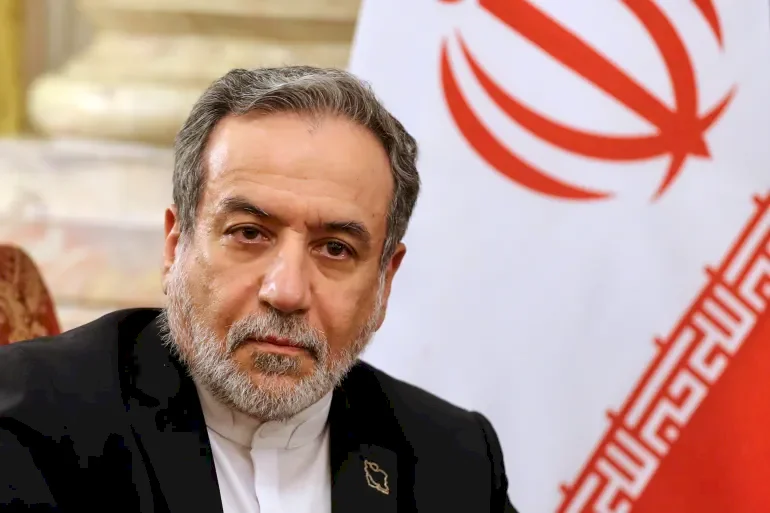
SadaNews - The Iranian news agency (IRNA) reported that Foreign Minister Abbas Araghchi will begin today, Friday, a foreign tour to Islamabad, Muscat, and Moscow.
The agency stated that this visit aims to "conduct bilateral consultations and discuss the current developments in the region, in addition to the latest updates regarding the war that the United States and Israel are waging against Iran."
A Pakistani government source reported that Araghchi will meet with Prime Minister Shahbaz Sharif, in the presence of Army Chief Asim Munir, in the capital Islamabad.
Implications of the Timing
Al Jazeera's correspondent in Islamabad, Farah al-Zaman Shauqi, reported that the significance of this visit lies in its timing, coming just days after the scheduled date to host the second round of Iranian-American talks. She pointed out a kind of "disappointment" from Pakistan that was evident in a post by the Minister of Information, following what appeared to be a delay in the Iranian response or a refusal to participate in that round, despite efforts made by Islamabad, which included a three-day visit by the Pakistani Army Chief and the Minister of Interior to Tehran before the supposed negotiation date.
According to Al Jazeera's correspondent, the anticipated discussions for Araghchi with his counterpart and Pakistani officials might aim to pave the way for renewing communication with the American side, amidst signs of actual preparations for the second round of negotiations, which may take place face-to-face or directly as occurred in the first round.
She noted that these movements come as part of attempts to "repair" the relationship with the Pakistani mediator and to bring viewpoints closer, especially since they were preceded by two phone calls conducted by the Army Chief and the Pakistani Foreign Minister with Araghchi, during which the necessity of dialogue and de-escalation was affirmed, with Iranian praise for the role Islamabad plays in this regard.
Al Jazeera's correspondent in Washington, Fadi Mansour, confirmed that this diplomatic movement between Islamabad and Tehran is the highest of its kind since the second round of negotiations stumbled.
The Pakistani Foreign Ministry stated in a press release that the aforementioned talks addressed issues related to a ceasefire and the negotiations planned to be held in Islamabad between Washington and Tehran.
The statement mentioned that the Pakistani Foreign Minister emphasized the need for ongoing communications to resolve outstanding issues, in what appears to be urging the Iranian side to sit at the negotiating table despite points of contention with Washington and the continued American blockade of Iranian ports.
These communications come after consultations conducted by the Pakistani government at the ambassadorial level, and after remarks by President Donald Trump about divisions in the Iranian leadership.
Unified Iranian Position
Meanwhile, the head of the Expediency Discernment Council in Iran, Sadeq Amoli Larijani, stated, "Our officials stand in solidarity with their people to claim their rights until their last breath."
He added that the American president "seeks to incite division among our officials to cover up his repeated defeats," and continued, "Trump should know that there is no disagreement among us regarding facing America and the Zionist entity."
On Thursday, the Iranian Supreme Leader, Mojtaba Khamenei, stated that "the enemy targets the unity and national security of Iranians," commenting on Trump's statements in which he claimed that Tehran suffers from "power struggles."
He added in a post on the social media platform X that "the unity that formed among the people has caused a fracture within the enemy ranks," emphasizing the importance of that unity in weakening the enemies of his country.
Earlier, Trump published on his platform, Truth Social, a post claiming that Iran suffers from "power struggles" and is having "great difficulty in determining its leader," pointing to the "insane internal struggle between hardliners who are doing poorly on the battlefield, and moderates who are not so moderate but are respected," according to his expression.
American Preparedness
Last Tuesday, Trump announced that the United States agreed to extend the ceasefire with Iran indefinitely at Pakistan's request, pending a unified proposal from Tehran.
Consequently, the White House suspended the planned visit of Vice President J. D. Vance to Islamabad last Tuesday for a second round of talks, while Tehran refused to conduct any more talks, indicating that it would not send any delegation to Pakistan unless the United States lifted its blockade.
 Follow the latest Sada News via Google News
Iranian Media: Tehran's Decision on the Agreement is "Under Review"

Occupation forces storm the central vegetable market "Hesbeh" east of Nablus (Video)

"Ministry of Development": No truth to the announcement of registration for financial aid...

Qatari Negotiators Head to Tehran to Finalize Agreement to End War

Monitoring the Fall of Two Drones from Lebanon in Western Galilee

Ben Gvir Threatens: A Thousand Hezbollah Killed for Every Hair of an Israeli Soldier

Smotrich Calls for Demolition of Buildings in the Southern Suburb of Beirut
