

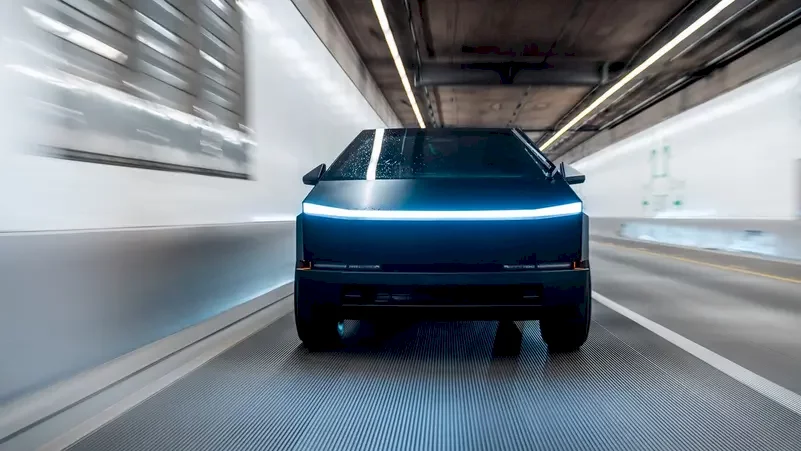
Tesla Expands Driverless Robotaxi Service to Dallas and Houston
SadaNews - In a new move reflecting the acceleration of the autonomous driving race, Tesla announced the launch of fully autonomous robotaxi rides, without human supervision, in the cities of Dallas and Houston in the state of Texas, marking the first time this service has been offered outside Austin and the San Francisco Bay Area.
This announcement comes just days before Tesla reveals its financial results for the first quarter of 2026, scheduled for April 22, in a timing seen as a proactive marketing push amid rising investor questions about the size of the fleet and future expansion plans.
New Expansion Within the Plan to Reach 7 Cities
Tesla stated through its official "Robotaxi" service account that the service is now available in Dallas and Houston, along with maps detailing operational areas within the two cities.
This expansion is part of a broader plan previously revealed by the company, aiming to launch robotaxi service in 7 U.S. cities during the first half of 2026, including Dallas, Houston, Phoenix, Miami, Orlando, Tampa, and Las Vegas, as part of a strategy to accelerate the spread of commercial autonomous transportation.
Despite the announcement, Tesla has yet to disclose the size of the fleet or the pricing of the rides, or whether the vehicles have backup monitors, only confirming that the service operates fully independently.
CEO Elon Musk commented on X by saying: "Try Tesla Robotaxi in Dallas and Houston."
Limited Operational Scope Compared to Austin
According to the published maps, the operational range in Houston covers approximately 25 square miles in the northwest of the city, while in Dallas it includes select areas such as Highland Park and parts of downtown and neighboring upscale neighborhoods.
Despite the expansion, these areas are still much smaller than the operational range in Austin, which expanded over nearly a year to about 245 square miles, indicating that the service is undergoing a studied experimental phase and gradual expansion.
Tesla data shows that the service recorded nearly 700,000 paid rides in Austin and the Bay Area by the end of January 2026.
Direct Competition with Waymo
This expansion puts Tesla in direct competition with Waymo, a subsidiary of Alphabet, which has been operating its fully autonomous services in Dallas and Houston since February through a partnership with Avis.
Waymo operates thousands of autonomous vehicles in several U.S. cities, providing hundreds of thousands of rides weekly in a fierce race to dominate the commercial autonomous transportation market.
Industrial Support for Future Ambitions
Tesla aims to enhance its manufacturing capabilities to support the robotaxi network, with plans to start producing a Cybercab vehicle specifically designed for autonomous transport during 2026 at its factory in Texas.
The company is also working on expanding the production of Tesla Semi trucks and Megapack energy storage systems, as part of a vision aimed at building an integrated system that combines transportation and energy.
Anticipation for Crucial Financial Results
This development comes at a time when markets are anticipating Tesla’s financial results for the first quarter of 2026, which analysts expect to range between $21.4 and $21.9 billion, with a particular focus on the company’s performance in the field of autonomous driving.
With this expansion, Tesla enters a bolder phase in the race for self-driving cars in a market that is still taking shape amid commercial ambitions, regulatory challenges, and rapid technological advancements.
 Follow the latest Sada News via Google News
After Deschamps' Departure... Zinedine Zidane Tops the Candidates to Lead France

Mbappe Surpasses Messi and Becomes the All-Time Top Scorer in the World Cup

England Defeats France and Achieves Largest World Cup Achievement Since 1966

Messi Refused to Play for Spain and Missed 3 World Cups

Publishers Sue Google for Allegedly Using Books to Train Artificial Intelligence

Google Expands Capabilities of Google Search Console to Support Social Media Accounts

The Mediterranean Table... An Ancient Diet Revealing Its New Secrets for Health and Longev...
