

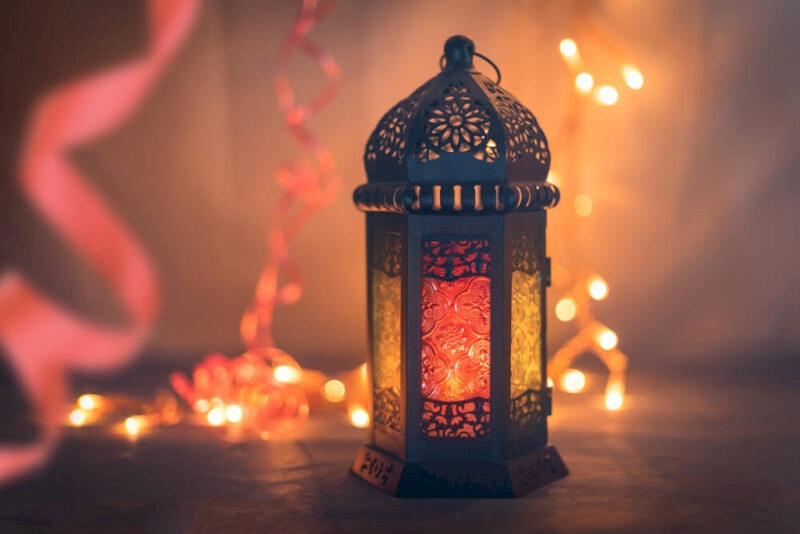
From the Heart of Cairo.. The Ramadan Lantern, a Tale of an Undying Symbol
SadaNews - Every year, with the sighting of the crescent moon of Ramadan, the streets and alleys are adorned with vibrant colors, filling the atmosphere with joy and celebration. Among the most prominent symbols associated with this blessed month over the centuries is the Ramadan lantern, which has transformed over more than a thousand years from a mere "mashka" for lighting into the primary icon of Ramadan festivity.
This lantern is not just a decoration hung up or a toy carried by children; it is a rich historical heritage, carrying a story that extends through time. So how did the story of the lantern begin? Who sparked its tale with Ramadan?
The Beginning of the Lantern.. From the Heart of Cairo
Most historical accounts suggest that the Ramadan lantern originated in Egypt, specifically during the Fatimid era, over a thousand years ago.
It is said that on the fifth of Ramadan in the year 358 AH / 969 AD, the Egyptians were poised to welcome the Fatimid caliph Al-Mu'izz li-Din Allah, who was coming to establish his new capital "Cairo." Al-Mu'izz arrived at night, and men, women, and children flocked to the edges of the Western Desert (in Giza) in a magnificent procession carrying torches and lanterns to light the way and express joy and welcome. From that moment on, the lantern began to earn its special place in the collective Egyptian consciousness, and the custom spread to make the lantern a traditional Egyptian rite to welcome the holy month.
In another account, some sources indicate that the Fatimid caliphs would go out at night to scout for the crescent moon of Ramadan, accompanied by scholars and jurists, while children would emerge in their processions carrying small lanterns to light the way while singing songs in celebration of the month. Thus, this scene was repeated every year, deeply rooting itself in the collective memory and becoming a joyous symbol associated with the blessed month.
Over time, the lantern transformed from a practical tool into a festive symbol, and children began to wander the streets carrying their lanterns, singing Ramadan songs and filling the neighborhoods with joy.
Is the Lantern of Egyptian Origin?
It can be said that the Ramadan lantern in its traditional form and its association with the holy month indeed began in Egypt, then it spread to other Arab and Islamic countries, becoming part of the shared Ramadan heritage.
Although lanterns as lighting devices were known in various civilizations, dedicating them to Ramadan and transforming them into a symbol of popular joy is what distinguished the Egyptian experience.
The lantern is no longer exclusive to Egypt; it has spread to most Arab countries and become part of Ramadan heritage. Today, we see it in enormous sizes adorning squares in Arab countries, and it is even celebrated in festivals in Australia and Europe.
The lantern production craft in Egypt has witnessed significant development throughout the ages, evolving into a traditional craft that carries a rich history and renewed creativity.
The Evolution of the Lantern Through the Ages
During the Fatimid era, lanterns were made simply from metals and glass, illuminated by candles or oil. Over time, the craftsmanship of lanterns evolved during the Mamluk era, where Egyptian artisans began to add intricate decorative touches to the lanterns, such as geometric engravings and Arabic inscriptions.
In the Ottoman era, this craft flourished further, and lanterns were manufactured in various shapes and sizes, incorporating colors and stained glass into their designs, making them even more beautiful and splendid.
In the twentieth century, lantern production transformed into a widespread popular craft, especially in old Egyptian neighborhoods like Sayyida Zainab, Al-Ghuriya, and Al-Hussein, where small workshops became famous for producing handmade lanterns made of tin and glass.
The traditional lantern relied on candles, then evolved later to work with electricity while retaining its heritage form.
A Light Carrying the Memories of History
In recent years, new forms of lanterns have emerged, some made from plastic, and others powered by batteries that emit sounds and Ramadan songs, greatly appealing to children. Additionally, imported lanterns have entered the Egyptian markets, influencing traditional handmade production; however, the handmade Egyptian lantern still retains its heritage value and special status.
Despite the evolution of shapes and materials, lantern production in Egypt remains a living testament to the craftsmanship of Egyptian artisans and their ability to transform a simple piece into a symbol of joy and identity.
Thus, throughout the centuries, the Ramadan lantern has remained more than just a light dispelling darkness; it has become a light that carries within it the memory of history, the warmth of childhood, and the spirit of the holy month. Every time a lantern lights up on a Ramadan night, it illuminates a part of the heritage, identity, and everlasting joy.
 Follow the latest Sada News via Google News
World Cup: Morocco achieves the first Arab victory while Turkey loses for the second time,...

"Google" Launches "Android 17" with App Bubbles and Stronger Data Protection

"Electronic Nose" Detects Food Spoilage and Allergens Using Artificial Intelligence

6 Foods That Enhance Your Health as You Age

Why Don't We Feel Full Sometimes Despite Eating?

It's Not Walking... A Study Reveals the Most Effective Exercise for Protecting Women's Hea...

Chewing Gum After These Foods Lowers Blood Pressure
