

Rising Gold and Silver Prices Globally: What Could Halt Their Surge?
Economy SadaNews - Over the centuries, gold has been a safe haven during times of political and economic instability, as its status as a highly valuable and easily transportable and sellable commodity provides a sense of security amidst turmoil.
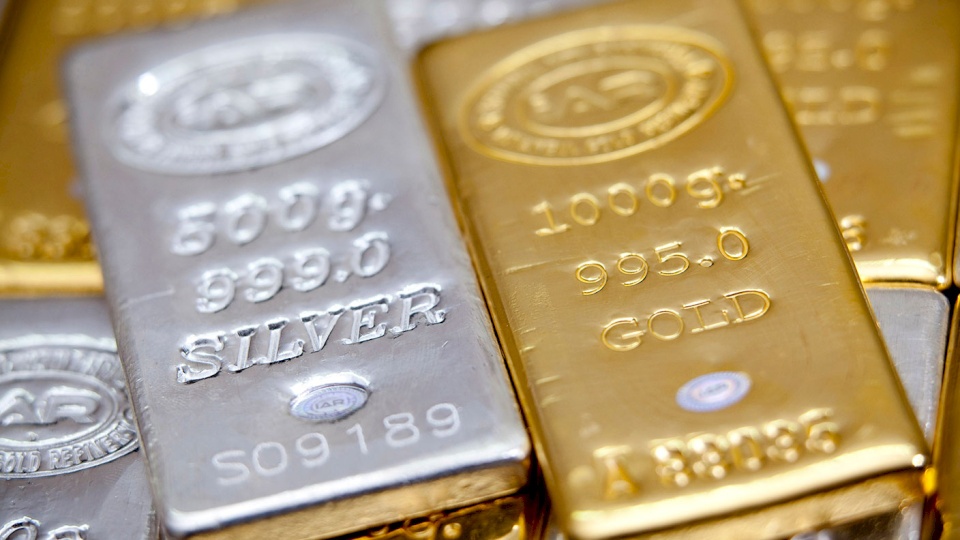
The price of an ounce of gold reached $4,955 on Friday, while silver reached $98.86.
Investors flocked to gold over the past year, especially to gold-backed exchange-traded funds, driven by the trade war initiated by President Donald Trump, his threats to the independence of the U.S. Federal Reserve, geopolitical tensions, and concerns about government debt inflation. Central banks continued to increase their gold reserves.
All these factors pushed the price of the precious metal to record levels, surpassing its inflation-adjusted peak recorded in 1980. Gold reached its all-time high as Trump's efforts to gain control of Greenland intensified, raising fears of destructive tariff wars between the United States and Europe.
Why is Gold Considered a Safe Haven?
With hundreds of billions of dollars worth of bullion traded daily across multiple trading platforms, the gold market has sufficient liquidity that allows large investors to enter and exit without sharp price fluctuations. As an asset that does not rely on a counterparty, gold is not linked to the success or creditworthiness of a company or country, unlike most securities. These two features partially explain why the metal is attractive to central banks and large fund managers.
The price of gold has always been inversely related to the dollar - it is the currency in which it is priced, so when the dollar weakens, gold becomes cheaper for holders of other currencies. Most diversified investor portfolios allocate a significant share to U.S. stocks and dollar-denominated fixed-income assets, making gold’s ability to hedge against dollar fluctuations very appealing.
Moreover, rising government debt worldwide has shaken investor confidence in sovereign debt and currencies. Therefore, many have turned to gold and silver and other precious metals, in what is known as currency devaluation trading.
Investors closely monitor inflation expectations in the United States, amidst Trump's increasing pressure on the Federal Reserve to heed his will and lower interest rates.
Gold, which does not yield interest, becomes more attractive in a low-interest-rate environment, where the opportunity cost of holding it decreases compared to interest-earning assets. Investors are betting that the incoming Federal Reserve chairman - to be appointed by Trump this year - will adopt a more accommodative approach to monetary policy than Jerome Powell.
Is Gold Ownership Limited to Investors?
Apart from market movements, gold ownership is deeply rooted in Indian and Chinese cultures - the largest markets for this metal globally - where generations inherit jewelry and other bullion as symbols of prosperity and security.
Indian families own about 25,000 tons of gold, more than five times the amount stored in the U.S. Fort Knox vault.
The demand for gold jewelry is highly influenced by prices. When gold’s appeal among financial market investors declines, jewelry and bullion buyers often resort to seizing buying opportunities at attractive prices, thereby contributing to price stabilization. In recent years, demand for gold in its decorative form has continued to decline, as prices have continued to rise.
Why Are Central Banks Buying More Gold?
The significant rise in gold prices since the beginning of 2024 is partly due to massive purchases by central banks, especially in emerging markets, as they seek to reduce their dependence on the dollar, the world's primary reserve currency.
Central banks have been net buyers of gold for over a decade, but they increased the pace of their purchases following Russia's invasion of Ukraine. With the U.S. and its allies freezing the assets of the Russian central bank deposited in their countries, the fragility of foreign assets against sanctions became evident.
The People's Bank of China continued its purchasing spree, increasing its gold holdings for the fourteenth consecutive month in December 2025.
What Could Halt the Rise in Gold Prices?
An increase in the value of the dollar, a significant reduction in tariffs imposed by Trump, or a peace agreement between Russia and Ukraine could lead to a drop in gold prices.
Moreover, easing geopolitical tensions that escalated this year could weaken demand for gold, including Trump's renewed efforts to annex Greenland and threats of further U.S. intervention in Latin America following the capture of Nicolas Maduro, the long-time Venezuelan president.
Furthermore, any decline in net purchases by central banks would remove one of the key drivers of the rising market. The rise in gold prices has led some central bank holdings to exceed target ratios, with one policymaker at the Philippine central bank recommending selling some bullion in October.
Central banks in advanced economies have sold only negligible amounts of gold in recent decades compared to the 1990s, when continuous selling led to a decline in bullion prices.
The U.S. share of gold has also dropped by more than a quarter over the past decade. Amid fears that an uncoordinated exit could destabilize the market, the first central bank agreement on gold was concluded in 1999, whereby the signing countries agreed to limit their collective sales of bullion.
Does the Fact that Gold is a Physical Asset Cause Problems for Investors?
Holding gold is usually costly because it is a physical commodity that owners must pay for storage, security, and insurance.
Moreover, investors purchasing bullion and gold coins usually pay a price premium over the spot market price. Geographical price differences may also exist, and traders exploit these arbitrage opportunities.
This was indeed the case in early 2025 when fears of Trump potentially imposing tariffs on bullion imports drove the prices of gold futures on the New York Comex to levels much higher than the spot prices in London, prompting a global rush to move the metal to the United States.
Transporting gold is usually relatively easy, as it is stored in commercial aircraft cargo holds, unbeknownst to business and tourist travelers in the upper cabin. However, it is not that simple; transporting gold from Heathrow Airport to John F. Kennedy Airport is complicated due to differing size requirements in the global gold market.
In London, 400-ounce gold bars are the standard, while on Comex contracts, traders must deliver bars weighing 100 ounces or one kilogram. This means that bars shipped to Comex warehouses must first be sent to refineries in Switzerland to be re-melted and shaped to the correct dimensions, causing bottlenecks in trading, especially when urgent changes in gold stock locations are needed.
 Follow the latest Sada News via Google News
London Stock Exchange Enters the Era of 24/7 Trading

Shamaran Petroleum: Suspension of Oil Production in Duhok Fields in the Kurdistan Region o...

Dollar Steadies Near One-Week High Amid War Developments

Trump Imposes Tariffs on Canadian Imports... Ottawa Vows to Respond

Oil Prices Drop After Reports of Mediation Efforts Between the U.S. and Iran

Gold Price Rises Supported by Increased Buying Amid Lower Prices

Due to "Hazardous and Counterfeit Products".. Europe Fines "AliExpress" $627 Million
