

Silver Supplies Heading for Greater Scarcity Amid Increased Demand from Individuals and Excluded Price Declines
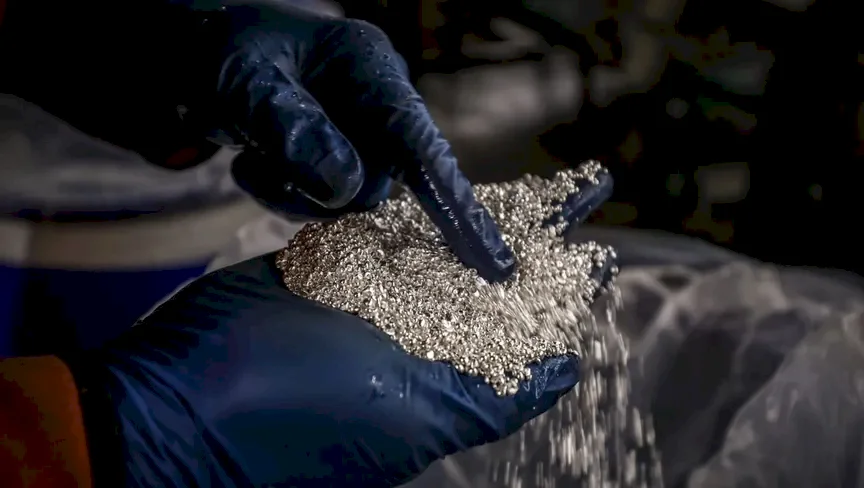
SadaNews - From the lining up of Chinese women in Shenzhen markets, to the depletion of stocks at Turkish refineries, and a South Korean mint's offering that ran out completely in less than an hour, the significant rise in silver prices is putting increasing pressure on banks and refineries struggling to meet unprecedented demand from individual investors.
After the price of the white metal surged nearly 150% last year, its gains accelerated even more in 2026, recording an increase of almost a third within a few weeks, as the administration of U.S. President Donald Trump paves the way for a new stage of imperialism, alongside renewed attacks on the U.S. Federal Reserve. China was among the first hubs of the consumer frenzy for buying silver coins and bars, but with prices reaching record levels, this frenzy has begun to spread to other regions.
Demand for Silver
Virat Shukerji, General Manager of Public Gold DMCC, a Dubai-based bullion trading company, stated: "This is the highest demand I have ever seen," and added, "Most refineries in Turkey have run out of small bars weighing 10 ounces and 100 ounces for the past ten days."
Shukerji explained that individual investors in Turkey are now willing to pay up to $9 per ounce above the global benchmark prices in London to obtain silver, while premiums remain high across the Middle East.
This has led global banks to prioritize silver shipments to Turkey and the region, resulting in less availability for India, leaving demand there unmet, according to two traders familiar with the matter, who requested anonymity as they are not authorized to speak publicly.
What is known as the short-selling pressure witnessed in the market last October illustrated how local supply bottlenecks can quickly turn into a global crisis, especially in a less liquid metal market like silver. At that time, the rush to buy from Indians ahead of the "Diwali" festival, alongside fears of tariffs keeping supplies trapped within the United States, drained liquidity in London and pushed silver prices to their highest levels since the 1970s.
Investment in Silver
Samit Gha, CEO of MMTC-PAMP India, the largest precious metals refinery in India, stated that investor demand for silver in the country has now reached even higher levels than in October, with increased interest in small bars and coins.
He explained that his company's imports of raw silver have more than doubled between October and December 2025 compared to the previous year, but it struggles to keep up with local demand and is receiving unusual requests to refine the metal for clients in South Korea, the UAE, Vietnam, and Malaysia. He added, "Everything we produce is sold. We could supply an additional 25% of coins and bars, and the market would absorb it completely."
Precious metals refineries typically produce large silver bars weighing around 1000 ounces or 15 kg, which are the standard sizes for delivery in major markets and exchanges. This exacerbates the shortage of coins and small bars preferred by individual investors.
Sunil Kashyap, CEO of bullion trading firm FinMet, which supplies refineries with silver ore, stated, "It makes no sense for refineries to increase production and invest in new lines" to raise supplies of one-kilogram bars, given the weak visibility regarding demand direction in the next phase.
Scarcity of Silver Supplies
The supply crunch witnessed in the market last October led to stock depletion in some locations, leaving the market without sufficient safety margins. Although stock associated with the Shanghai Futures Exchange saw a partial recovery in early December, it fell back again to levels reached after the October crisis. A manager at a major refinery reported that the significant increase in demand has led to reintroducing old bars of varying purity into circulation.
Silver prices in Shanghai skyrocketed last week above international record levels, even after accounting for the 13% value-added tax borne by importers.
Ziggy Wu, an analyst at Jinrui Futures, said: "Most actual silver purchases by individuals are made through fully cash transactions and not using financing, so even if prices fall, many will hold on to what they have or take advantage of any drop to increase their investment positions." He added, "Therefore, demand remains quite solid even in the event of a decline."
The growing passion for silver is not limited to major consumers of bullion, but extends to other markets. In South Korea, buyers rushed last week to seize all one-kilogram bars offered by the mint in less than an hour, while Singaporeans lined up for up to 90 minutes to obtain the metal.
Misleading information has also fueled purchases by individuals. Confusion over an update to a Chinese policy regarding export licenses issued in October—which was essentially an extension of existing rules—led some analysts, media outlets, and social media influencers to interpret it as a restriction or outright ban, enhancing perceptions of supply scarcity.
Will Silver Prices Continue to Rise?
Nikos Kavalus, General Manager at Metals Focus consulting firm, stated: "Actual demand from individuals is what keeps prices high." He added, "There is still room for more increases in retail sales, and maintaining this momentum will be a critical factor in the rise of silver."
The big question remains whether individual buying will eventually decline if prices continue to rise. As U.S. President undermines the existing rules-based international system, and with increasing economic and political risks on the horizon, precious metals have become one of the few relatively safe havens for consumers today.
Shukerji from Public Gold sees no signs of demand diminishing. He concluded: "What alternative investment options do they have? The U.S. president is causing problems, and the U.S. dollar is not holding strong. Metals are a better option."
 Follow the latest Sada News via Google News
The World Bank Warns: "The Worst-Case Scenario" for Global Growth is Approaching

Trump Prepares to Impose New Tariffs on Dozens of Economies

Gold Surpasses $4,100 as Selling Pressure Eases

Oil Rises for the Fourth Day as Supply Risks Escalate

An Additional $8 Billion.. A New Account from the Pentagon on the Cost of the War with Ira...

London Stock Exchange Enters the Era of 24/7 Trading

Shamaran Petroleum: Suspension of Oil Production in Duhok Fields in the Kurdistan Region o...
