

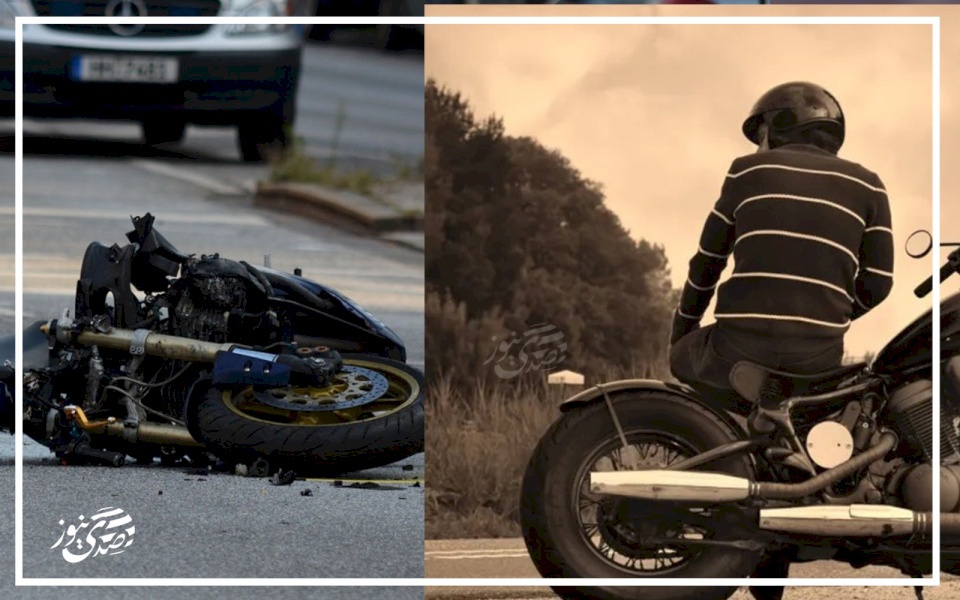
Deadly Motorcycles Outside the Insurance Umbrella: A Thorny Issue Threatening the Lives of Drivers and Pedestrians
SadaNews Exclusive: Hamza Wahdan, a young man in his thirties from Aqbat Jabr camp in Jericho, was injured in a self-accident that nearly cost him his life while riding an uninsured motorcycle, forcing him to seek a financial donation campaign to support his costly treatment, especially as his treatment required going to an Israeli hospital within the Green Line. His mother adds: "Unfortunately, what can we do? Kind people supported us to the best of their ability, but the cost of treatment is high and we cannot afford it," noting that her son, who is still in intensive care, has accumulated enormous bills, and the family, who was relatively well-off, is now in a difficult financial situation, especially since Hamza was one of its primary breadwinners. She continues that she tried to contact the responsible authorities in an effort to secure his treatment in public hospitals under government insurance, but they considered the case a result of a car accident, which required treatment at the expense of insurance. However, insurance companies refuse to insure certain types of motorcycles, even though they are bought and sold in the Palestinian market. A Thorny Issue Abdul Rahman Zidan, General Director of Licensing at the Ministry of Transport and Communications, told SadaNews that the issue of motorcycles is a complex matter with countless problems. He pointed out that in 2004, the ministry stopped allowing the import of motorcycles by decision of the cabinet until the executive regulations and public safety conditions were established. He added that in 2006, during the tenth government, the government allowed the import of motorcycles again due to their widespread use in the Gaza Strip and high demand. He noted that in later years, the occupation prevented the import of these vehicles for security reasons, and this prohibition lasted until 2012, when the occupation subsequently allowed import operations to proceed. He noted that the ministry allowed, based on Israeli approval, the import of 125 cc motorcycles, which was later increased to 400 cc and then to 750 cc, emphasizing that the restrictions on importing these vehicles are generally a precautionary measure to ensure public safety and control the chaos in this sector. He pointed out that decisions regarding whether to allow the import of specific vehicles were based on policies formed through workshops organized by the ministry, which included community dialogues that gathered the opinions of other parties such as the civil defense, motorcycle importers, various municipalities, the Ministry of Health, the Ministry of Local Government, the Ministry of Finance, traffic police, and various relevant entities. Zidan mentioned that in 2016, a decision wasissued by the cabinet to form a committee from the ministries of finance, transport, and economy, along with the Capital Market Authority and the police, to organize the import, use, and registration of motorcycles, stating that the committee held six meetings and submitted recommendations to the cabinet, which was subsequently approved through a decision issued in February 2017. Import Regulations Zidan highlighted that the import of motorcycles is regulated in terms of size, model types, and technical specifications. Registration is conditional and provides for those who obtain a motorcycle license to register, up to two motorcycles per citizen. He clarified that the decision allows companies to register such motorcycles if required by their work, such as restaurants, rapid delivery shops, and parcel delivery services, pointing out that there are conditions regarding the number of employees in each company and their licenses, as registration is done based on the number of employees in the company. Zidan confirmed that the laws, regulations, and instructions in force in Palestine regulate the import and registration of motorcycles, but there is chaos concerning the matter of deregistered, stolen, and unregistered motorcycles, indicating that insurance companies have been reluctant to insure motorcycles due to the risks and accidents they cause. He added: "However, we met with the Capital Market Authority several times about a year ago, and as a result, the cabinet issued a decision requiring all insurance companies to insure motorcycles, so they are legally obligated to do so." Companies Refusing to Insure Motorcycles An informed source told SadaNews that insurance companies generally refuse to accept the insurance of motorcycles because they are aware that accidents involving them are often fatal, which will incur substantial compensation costs and may result in large losses. The source indicated that some insurance companies accept to insure these motorcycles under specific conditions, such as them being for official entities like the police or some restaurants and that the engines meet certain specifications, noting that insurance companies recognize that insuring motorcycles is legally mandatory, but they prefer to incur a violation from the Capital Market Authority rather than providing insurance due to the high costs in the event of an accident. The Capital Market Authority Responds For its part, the Capital Market Authority confirmed to SadaNews that insuring motorcycles is subject to a special system issued by the cabinet number (2) of 2020, which includes minimum and maximum ceilings for premiums according to the regulations and instructions governing the insurance sector. An agreement was reached with the Ministry of Transport and Communications to require the presentation of a valid insurance document as part of the procedures to complete licensing. In this context, the authority issued a mandatory circular to all insurance companies requiring the issuance of insurance documents for motorcycles according to the approved regulations, and not to refuse insurance without legal justifications. In case the issuance of an insurance document is not feasible, the citizen can file a complaint for the case to be studied within the approved legal frameworks, where the authority will study the complaint and take appropriate legal actions, obligating insurance companies to issue insurance documents for motorcycles, aiming to ensure the presence of insurance for all licensed motorcycles in Palestine, rather than just issuing violations. The Capital Market Authority emphasized the importance of distinguishing between a citizen's objection to the value of a premium document, which is a legitimate right allowing them to request clarification on how the premium is calculated or to seek alternative offers from other insurance companies, and the case of a company's outright refusal to issue an insurance document, which is considered a violation if not based on justified reasons and requires the authority's follow-up.
 Follow the latest Sada News via Google News
High-level sources reveal to SadaNews: Washington seeks to hold a Gaza Reconstruction Conf...

"Mistreatment After Death".. 104 Palestinians Died or Were Killed While in Custody in Isra...

Report: Israeli Prisons Have Turned into a 'Grave' for the Living

Under the Guise of Crime Fighting: The Occupation Cuts Half a Billion Shekels from Arab Co...

SadaNews Report: Who Will Manage Gaza After the Government Follow-Up Committee's Self- Dis...

Report: The American War on Iran Has Reduced Interest in the Fate of Gaza

من سلوان إلى كفر عقب: كيف يعيد الاحتلال تشكيل خريطة القدس السكانية؟
