

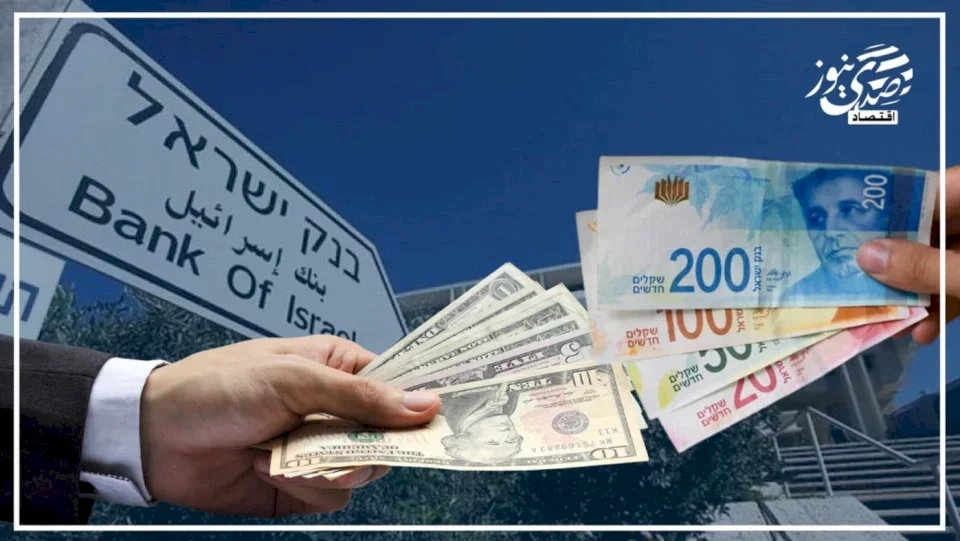
The Shekel Approaches Record Levels... The Market Awaits: When Will the Bank of Israel Intervene?
SadaNews Economics Translation - The Israeli shekel is approaching its highest level in four years against the dollar, having reached an exchange rate of 3.22. This represents an increase of more than 10% over the past year, which is considered a mitigating factor for inflation and reflects the strength of the Israeli economy. However, this rise negatively impacts the profitability of exports, as reported by the Hebrew economic website Gelus and translated by SadaNews.
The Phoenix Investment Company notes that this increase is driven by several intertwined factors: a significant influx of foreign investment into the local capital market, reduced geopolitical risks following the war with Iran and the ceasefire in Gaza, the rise of Israeli stock indexes, and strong growth in GDP during the third quarter. Additionally, the global weakness of the dollar, partly influenced by the trade wars waged by the Trump administration, plays a role.
The Nasdaq index also rose more than 20% since the beginning of the year, which adds another layer; Israeli financial institutions are investing heavily abroad, and with the rise in the index, they are forced to sell dollars to reduce their exposure to exchange rate fluctuations, strengthening the shekel.
However, the flip side of this strength, as translated by SadaNews, is the erosion of export profitability, which could prompt exporters to call for intervention from the Bank of Israel. Although the bank rarely intervenes, its precedents are clear: in 2020, it injected dollars through SWAP transactions to rescue financial institutions, and then returned after less than a year to buy dollars when the exchange rate fell to 3.11. In the October 2023 war, it announced a plan to sell 30 billion dollars, of which less than a third was executed, as well as selling 300 million dollars during the "Kalavi Year" campaign to prevent a sharp drop in the value of the shekel.
Intervention Tools: Not Just Interest Rates
The Bank of Israel possesses multiple tools to influence the foreign exchange market, including a sharper reduction in interest rates, which decreases the attractiveness of shekel-denominated assets. This comes at a time when the consumer price index recorded a decrease of 0.5%, and annual inflation stabilized at 2.4% within the targeted range (1%-3%).
Despite this improvement, economists expect that inflation will not be the decisive factor in the upcoming monetary committee's decision, especially after the recent interest rate cut of 0.25%. Reasons for caution include expectations of rising inflation in the upcoming index, a tight labor market with low unemployment and increased vacancies, in addition to a high fiscal deficit of 3.9% that raises doubts about the government’s ability to reduce the debt-to-GDP ratio.
Is It Time for Intervention?
According to a report from Bank Hapoalim, translated by SadaNews, the rise of the shekel has not significantly impacted exports yet, despite declining profitability in industrial companies. Additionally, the lack of orders in the manufacturing sector remains low, indicating that exporters have a good backlog of orders.
However, the assessment from the investment firm Mitaf is less optimistic; exports are experiencing stagnation, and advanced technology companies are beginning to feel a decline in profitability. The firm expects that if this trend continues, pressure will increase on the Bank of Israel to intervene by lowering interest rates more rapidly or returning to buy dollars.
Metaf's chief economist, Alex Zbrzyzhynski, explains that the fundamental issue is not a lack of orders but a decline in the actual revenue value with each new rise of the shekel, making companies less capable of competing in new tenders.
On the other hand, Mody Shafrir from Bank Hapoalim sees a clear recovery in the advanced technology sector, and that the decline in profitability remains historically limited despite the strength of the shekel.
Between Currency Strength and Exporter Concerns
Data shows that exporters are facing real pressures, but they are still able to cope, especially in the technical services sector. Furthermore, goods and services exports have seen an increase in recent months. Conversely, the shekel remains one of the key factors helping to bring inflation back to its targeted level, positively impacting domestic consumption.
Shafrir offers a clear guideline for intervention: "If the exchange rate reaches 3 shekels to the dollar, the bank's intervention becomes more likely, whether through lowering interest rates or other measures, depending on the prevailing inflation environment," according to SadaNews translation.
The Unwritten Equation: The Stronger the Currency, the Lower the Interest
Zbrzyzhynski emphasizes that analyzing the last decade reveals a direct relationship between currency strength and falling interest rates (the stronger the currency, the lower the interest rate), reflecting central banks' concerns about the decline in export profitability, especially amid global trade wars.
With inflation expected to drop to 2% within two months, the Bank of Israel may find itself compelled to deal more seriously with the strength of the shekel. Zbrzyzhynski does not rule out direct intervention in the foreign exchange market in the next six months, noting the sensitivity of the United States towards such interventions.
The most important question today is: at what exchange rate level will the Bank of Israel act? As the shekel strengthens and companies' complaints increase, the pressure on the bank rises. If the rate reaches 3.1 shekels to the dollar, it is likely that exporters' voices will become clearer, which may prompt the bank to take a decisive step.
 Follow the latest Sada News via Google News
Soaring Oil Prices Burn the Pockets of the Palestinian Citizen "The Poor"

Millions of Dollars in Losses.. "SadaNews" Reveals Shocking Figures for Traders from Pales...

The Problem of Shekel Overcrowding Worsens.. Fuel Station Owners Threatened with Closure o...

The Palestinian Economy at a Crossroads: 4 Files Awaiting Resolution

The National Economy and the Food Trade Syndicate: Food Stock Will Not Increase

Palestine Stock Exchange General Assembly Approves Dividend Distribution of 10% to Shareho...

Currency Exchange Rates Against the Shekel on Thursday (April 2)
