

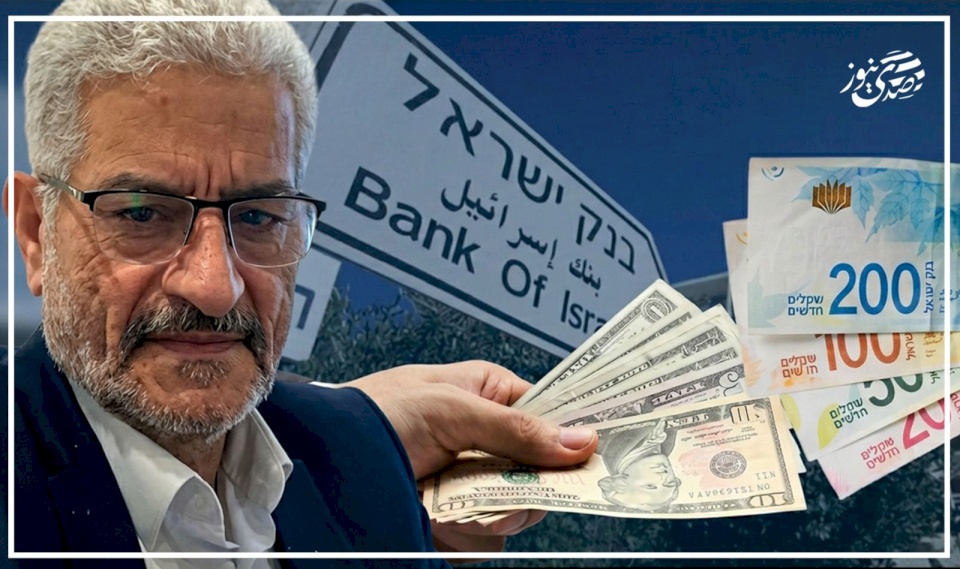
The Shekel Defies Expectations: Where Did the Israeli Currency Draw Its Strength From?
Special SadaNews - Contrary to expectations, the shekel has risen against the dollar despite Israel and the United States entering a war with Iran. Many analysts expected the shekel to decline against the dollar in the first sessions of the week, but the opposite happened; the dollar fell to an exchange rate of 3.07 after rising to 3.13 on Friday. So, where did the Israeli currency derive its strength?
Banking expert and financial advisor Mohamed Salama told "SadaNews": "What happened today was expected regarding the rise in gold prices due to increased geopolitical risks in the world because of the war in the Gulf region, which has led to rising oil prices, hindering global economic growth.
He added that the disruption of oil tanker movements through the Strait of Hormuz will certainly affect oil prices upwards, pointing out that oil prices reacted to the risks that increased after the bombing of an "Aramco" refinery this morning, as the price of a barrel of oil continued to rise to about 80 dollars.
He adds: "Disruptions in supply chains will undoubtedly impact oil prices, and the price per barrel may exceed 120 dollars. Noting that some expect a shock with the price of the barrel rising to a higher ceiling, depending on field developments, the disruption of the Strait of Hormuz, and OPEC's ability, specifically Saudi Arabia, to address the shortages resulting from supply disruptions."
Regarding the relationship between the dollar and the shekel, Salama says that markets absorbed the effects of war before it occurred, as investors, especially in Israel, anticipated the outbreak of war based on information they received from their government confirming an impending attack. Thus, the exchange rate was absorbed before the strike took place.
He notes that experts in Israel are setting prices related to the outcome of the war rather than the military escalation, as they expect that the results will lead to undermining or weakening the Iranian regime, which will benefit "Israel" in the medium and long term and will reduce the strategic risks threatening Israel's future.
He adds: "There is a balance of risks currently and a tendency towards accepting the idea of stability returning after a certain period, along with the entry of Britain and France into the war, which may shorten its duration and lead to weakening Iran more quickly, benefiting the shekel."
Salama expects the shekel to stabilize around exchange rates of 3.10 shekels based on the current data, but if the battle indicates an impending collapse of the Iranian regime or the end of the battle with its weakening and the removal of a strategic threat, the shekel will experience further appreciation. However, if the tables turn, the Israeli currency will see a reverse trajectory.
Salama anticipates further increases in gold prices due to geopolitical tensions, as rising energy prices and a declining global economy will lead to further appreciation of gold. A clear trajectory for the rise of the precious metal can only be drawn by understanding the extent of the current war," explaining that if the war remains confined to Iran and does not expand, gold will test levels of 5600 per ounce.
The Tel Aviv Stock Exchange also showed a different performance from all global bourses, rising by 3.25%. Salama pointed out that the stock exchange has also absorbed the effects of the strike before it occurred, in addition to investors' conviction that the Israeli economy would be stronger with the collapse or weakening of the Iranian regime.
The strength of the Israeli currency comes at a time when most global currencies have experienced declines, such as the euro, yen, Australian dollar, Chinese yuan, and Turkish lira, with only the currencies of some energy-exporting countries, such as Norway and Canada, maintaining stability, while the dollar index rose by 0.27 percent.
For his part, economic expert Dr. Nasr Abdul Karim believes that the shekel's performance today, contrary to expectations, can be explained by three main reasons: first, Israel has a huge foreign currency reserve; second, it has not been significantly affected in this war up to this point; and third, markets absorbed most of the effects of the strike before its occurrence during the Friday session.
 Follow the latest Sada News via Google News
Soaring Oil Prices Burn the Pockets of the Palestinian Citizen "The Poor"

Millions of Dollars in Losses.. "SadaNews" Reveals Shocking Figures for Traders from Pales...

The Problem of Shekel Overcrowding Worsens.. Fuel Station Owners Threatened with Closure o...

The Palestinian Economy at a Crossroads: 4 Files Awaiting Resolution

US Charges Palestinian with Raising Funds for Hamas and "Gaza Now" Platform

Exchange Rates of Currencies Against the Shekel on Thursday (June 18)

Watermelon Season in Danger: Virus Affects About 20% of Agricultural Areas in Israel
