

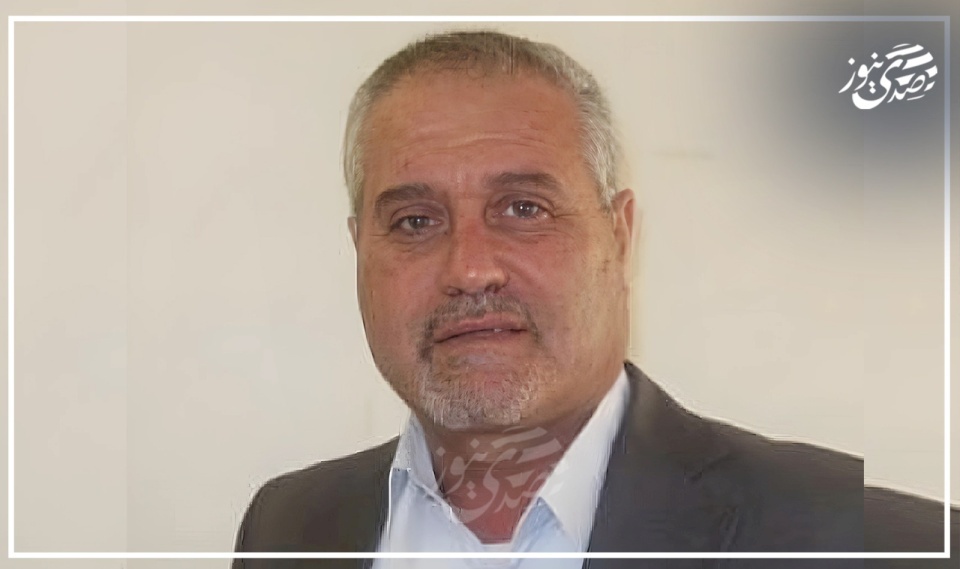
The Joint List: Deeper than an Electoral Alliance
The disintegration of the Joint List was not merely a collapse of an electoral alliance; it was a breakup of a broader idea... the idea of Arab joint work to the fullest extent possible with unity of rank. This disintegration negatively reflected on the morale of large segments of the public and on the way they interacted with events that affect their daily lives, especially the ongoing demolition issues and the rise in violent crimes.
When the Arab parties unified under the Joint List in 2015, voter turnout increased and parliamentary presence was strengthened. But more important than the numbers was the general feeling that the voice of the Arab citizen was not futile, and that party disagreements could be managed and set aside when there was a clear compass and common denominator that takes precedence over sectarian calculations.
The Joint List was not an ideal project, but it proved a fundamental truth: when we organize, we become more confident in ourselves and in our power. Under its umbrella, partisan quarrels diminished, mutual accusations largely disappeared, and tensions among staff decreased during election seasons that usually turn into struggles and mutual attacks to win votes.
The disintegration of the Joint List brought frustration back to the forefront and entrenched a general feeling of a lack of project, a closed horizon, and a loss of hope for the ability to change and influence. The parties did not fail to see the common denominator; rather, they stumbled over the details of arranging the list and distributing positions. The result was a decline in voter turnout, a decrease in influence, but the most dangerous consequence was the widening gap between the street and the leadership, a gap that has become tangible and clear in recent years.
It is easy to accuse the public of apathy and indifference; it is also easy to hold the parties entirely responsible and reduce disagreements to calculations of seats and budgets.
However, the reality is more complex than that. What we are experiencing is a mutual crisis of trust: a public that sees parties preoccupied with themselves, and parties that see a public hesitant, withdrawn, and lazy waiting for salvation to come from elsewhere. In this vortex, energies are wasted and political power evaporates.
The existence of the Joint List did not end ideological disputes, but it succeeded in managing them within a unifying framework. However, after its disintegration, disputes returned without a ceiling, without management, and without a collective compass.
This all comes in the context of one of the most racist and extremist Israeli governments: exclusionary legislation, public incitement, systematic marginalization of anything Arab, legitimization and justification of violence (Arab culture), and protection for criminals while turning a blind eye to them, along with the increasing squeezing of the Arab political space and freedom of expression (arrests for a like).
In such a context, partisan division becomes a dangerous luxury that the public cannot accept under any pretext.
What is required is not the reproduction of the Joint List in its previous form, nor polishing the experience, but understanding its essence, which means organizing the strength of the masses and investing it with a clear vision and honest discourse, not promising what cannot be achieved, nor hiding behind vague slogans.
Conversely, the public also has a fundamental responsibility. To stop waiting for a savior from within the Knesset, to activate popular pressure, accountability, and actual participation. Politics is not built only from above, but from the ground up. Popular initiatives that have emerged from the field, such as in Sakhnin recently, have proven that action from below can have a more profound impact than top-down decisions that only concern the partisans.
We are a massive popular force, but it is fragmented. This dilemma cannot be solved without pressure from the public itself, which has repeatedly proven that it can punish those who obstruct unity of rank. At the same time, it should be clear that any newly formed unifying framework is not a magic wand to solve all problems. The Knesset is not a welcoming arena for Arab representation, and Arab lawmakers, no matter how many, may find themselves isolated in the face of racial exclusion from both the coalition and the opposition.
Nonetheless, the unifying framework remains the clearest one that has proven our unity can turn anger into action, and guide the latent power in the street for the benefit of the people themselves, especially in a long and complicated battle against crime and violence, which is a battle that is not expected to receive genuine authoritative support, and may face attempts to obstruct and frustrate.
The Joint List, in its concept not its form, provides a unified popular base, eases the rhetoric of skepticism, betrayal, and exclusion, and opens up a horizon for more mature collective organization. This is not a nostalgia for the past, but a political and moral necessity in a highly precarious present, locally and inseparable from what is happening across the entire Palestinian arena in general, and from what is happening in the region and the world.
 Follow the latest Sada News via Google News
The Tale of a People Who Refused to Believe the Well

What Does the Supreme National Interest Mean for Palestinians? And How Can It Be Achieved?

The Wronged Ramallah

Between Pragmatism and Survival Management: Where Does Hamas Go After the Election of Khal...

Khalil Al-Hayya as President of Hamas.. Continuation of the Founders' Approach

The Annihilation of Sportsmanship

Until When Will the Palestinian Citizen Pay the Price of an Endless Phase?
