

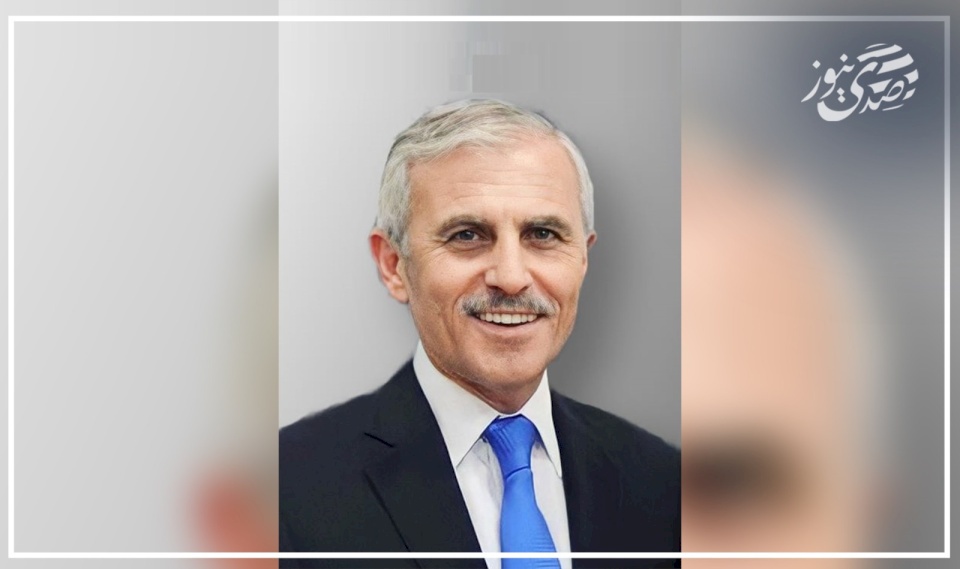
Palestine: How Can the Hellish Cycle Be Broken?
The Palestinian situation is experiencing one of the most dangerous moments in its modern history, not only due to the fascism of the Israeli occupation alone, nor merely as a result of internal divisions, but because of the convergence of two deadly factors: the arrogance of Israeli power supported by a structurally biased international community, particularly the United States, and an internal Palestinian incapacity to produce a political and social alternative capable of breaking this hellish cycle. The occupation is not merely a project of temporary control but has transformed into an integrated system for managing Palestinians as a demographic burden that must be subjugated or eradicated, not as a people with rights. On the other hand, the Palestinian political structure is no longer capable of transforming suffering into strength, nor pain into a project, but has begun to consume itself in managing its own impotence.
When power becomes politics, and bias becomes systematic
Today, Israel is not merely waging a war of extermination; it imposes a one-sided vision for the Palestinian future: a fragile entity stripped of sovereignty, a community governed by security, a dependent economy, and a political horizon indefinitely postponed. This project would not have continued with such blatant arrogance and rudeness without clear or silent international bias that justifies killing in the name of "security" and treats international law as a selective tool rather than a binding reference. This bias has not only failed to protect Palestinians, but has also contributed to the reproduction of the conflict. As accountability wanes, power extends. As politics recedes, war advances. Thus, Palestine enters a closed hellish loop, where violence breeds violence.
Gaza today is not just a battlefield, but a mirror reflecting the failure of the international system. Even when a ceasefire is announced, it carries no real political or moral significance, except to reduce the daily death toll for a limited time. There is no serious reconstruction, no political path, or accountability. Just temporary management of a perpetual catastrophe. In this sense, Gaza has become a laboratory for managing human pain, not for ending its causes.
The Palestinian Authority: Impotence as Policy
In the West Bank, the Palestinian Authority is critically eroding. It is politically besieged, financially suffocated, and functionally constrained. But the most dangerous aspect is that it is losing its social base. An authority that cannot secure the minimum salaries for people, and has abandoned its history stemming from the legitimacy of resistance led by the national movement. Simultaneously, it lacks a vision to confront economic and social disintegration, meaning it has begun to lose its practical legitimacy regardless of its legal reference. In this context, it is insufficient to explain Palestinian impotence solely through external factors; the absence of reform based on consensual legitimacy, the erosion of resistance legitimacy, and the postponement of democratic entitlements, all of which deepen the crisis instead of containing it.
Hamas and the Authority: Different Responsibilities
Political equality between Hamas and the Palestinian Authority is incorrect, as each has a different position, function, and responsibility. However, this does not absolve either from direct criticism.
Hamas bears significant responsibility for linking the fate of the Gaza Strip to military options that were not built on national consensus, nor on sufficient assessment of the community's cost. Resistance, no matter how legitimate, does not grant an open mandate to manage the lives of more than two million people without political or civil accountability.
Conversely, the Palestinian Authority bears an even more complex responsibility: it is the internationally recognized entity demanding representation of the entire nation, yet it has chosen, due to impotence or narrow calculations, to manage the crisis rather than confront it, and to remain institutionally preserved rather than renewing popular legitimacy by devising governance tools capable of restoring confidence and mobilizing popular energies.
The problem is not the existence of political pluralism, but the absence of any unifying national framework that imposes accountability, employs plurality as a strength, and prevents unilateral decision-making on fateful matters.
Can this hellish cycle be broken?
Breaking this hellish cycle will not come from isolated international initiatives, nor from betting on a sudden change in the balance of power. It begins from one indispensable condition: a realistic national consensus that rearranges priorities based on protecting the community. This consensus does not necessarily mean resolving major issues all at once but rather agreeing on a minimum program: First, protecting people from extermination and the terrorism of settlers, and from economic and social collapse, secondly, unifying the moral and political discourse before the world, and thirdly, restoring the role of civil society in all its components as a lever for national steadfastness and safeguarding the social fabric from disintegration, all of which requires national incubators in unified frameworks within both the organization and authority.
Can life be managed apart from the occupation?
The experience of the first intifada is not a myth, but its rich lessons show that managing life under occupation is relatively possible when society has organization, serious leadership attached to national concerns and people's interests, a sense of participation and responsibility, and active networks for social solidarity. This in addition to clarity about who the enemy is. The occupation at that time was not less brutal, but internal trust was higher, and popular legitimacy clearer. Today, the challenge is not limited to the occupation; it manifests itself in the disintegration of the internal fabric. If this disintegration is not addressed, nothing will remain that can be defended politically.
How can collapse be prevented?
Preventing collapse does not start from outside, nor from anticipated international decisions, but rather from three interconnected internal circles:
First: Restoring the national function of the authority
Not as an illusory sovereign authority, but as a tool for social protection, public service, and managing the capacity for resilience. An authority unable to pay salaries and protect society from economic chaos practically loses its legitimacy regardless of its political reference.
Second: Real, not ideological, unity; unity built on a minimum program: protecting people, preventing chaos, and unifying the national discourse before the world, which constitutes a solid lever for addressing the major questions. Unity today is a condition for survival, not a political luxury.
Third: A decisive role for civil society networks and frameworks. When politics fails, society does not automatically collapse. Palestinians have proven that society, if its latent energies are mobilized rather than marginalized, can organize itself and mitigate the effects of occupation and the repercussions of division together.
Today, yes, the occupation is harsher. But what we lack is not just conditions, but internal trust, leadership legitimacy, and organizational capacity. Managing life apart from the occupation is not a withdrawal from the conflict but a redefinition of it: from an uneven military confrontation to a battle of resilience, organization, survival, and effective alignment with the sweeping changes in international public opinion.
A call to the world… Who hears the pain of Palestine?
It is no longer possible to continue viewing the Palestinian tragedy as a "chronic conflict" without solutions, or as an equal struggle between two parties "failing together." This description is not only misleading but also morally comforting, as it absolves power of its responsibilities and empties international law of its meaning. Policies justified in the name of stability or security, whether unconditional support for Israel or calculated silence on gross violations, or merely managing humanitarian crises, do not prevent an explosion but delay it and make it more destructive. The absence of accountability does not produce moderation, and depriving a whole nation of hope does not lead to submission, but to more desperate and dangerous forms of escalation. If the West is serious about defending an international system based on rules, values, and humanitarian principles, then Palestine is not an exception but the clearest test of the credibility of this system. Continuously addressing humanitarian outcomes without confronting political causes will only reproduce the same hellish cycle that everyone claims to wish to break.
- Palestine faces today two options no third exists:
Either a national consensus that reproduces politics as a saving tool, or a gradual decline in which the national cause turns into a humanitarian file with no political horizon. The occupation seeks to impose this decline by force, and international bias facilitates the task through silence. But collapse will only become fate if accepted by Palestinians. And history, so far, has not said its final word.
 Follow the latest Sada News via Google News
Between Pragmatism and Survival Management: Where Does Hamas Go After the Election of Khal...

Khalil Al-Hayya as President of Hamas.. Continuation of the Founders' Approach

The Annihilation of Sportsmanship

Until When Will the Palestinian Citizen Pay the Price of an Endless Phase?

7-10 Billion Shekels.. The Bill for the Absent Worker from Brussels

Why Does Marwan Barghouti Remain the Key to Unity and Settlement?

The Joy That Passes Through Barriers
