

Ahmadinejad's Appearance at Khamenei's Funeral Dispels Uncertainty Surrounding His Fate
SadaNews - Former Iranian President Mahmoud Ahmadinejad participated on Monday in the funeral procession of former Supreme Leader Ali Khamenei in Tehran, marking his first public appearance since the recent war between the United States, Israel, and Iran, and following weeks of conflicting reports and rumors about his status and whereabouts.
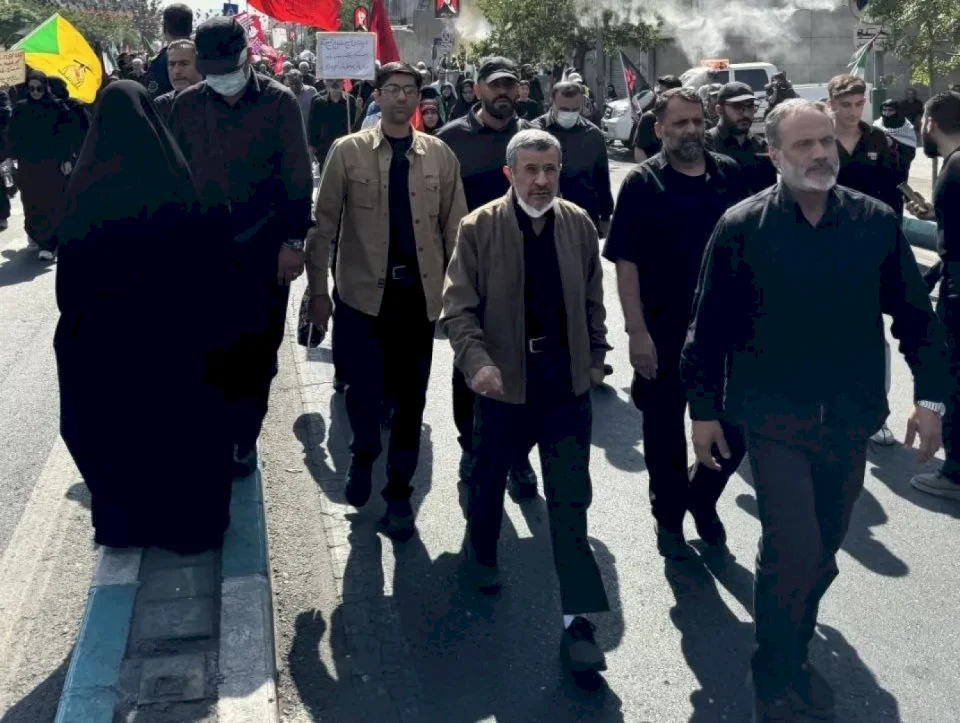
Iranian media quickly published a photo of Ahmadinejad during his participation in the procession, after the "Dolat Bahar" website, which serves as a spokesperson for his office, was the first to publish a photo and video of his attendance at the ceremony.
This controversial politician's appearance came after he had been absent from the public scene since the early days of the war, when strikes targeted areas near his residence in Tehran. This absence sparked speculation about his fate, especially after reports circulated at the time about his death, followed by other reports indicating he survived a strike that hit the vicinity of his home.
Ahmadinejad issued a new condolence statement on Thursday, just before the start of the funeral and burial ceremonies, mourning Khamenei and offering condolences to the new Iranian leader and "the Iranian people in general." He signed the statement with the phrase "the humble servant of the Iranian people," without indicating his whereabouts or circumstances since the strike that hit the area around his home.
Ahmadinejad marched wearing a black shirt and surrounded by a tight security team in the funeral procession that traversed the streets of Tehran as part of the multi-day ceremonies for Khamenei’s burial, who was killed on February 28 by Israeli-American strikes targeting his residence. Khamenei's coffin, along with coffins of family members, was transported by truck amid extensive security and organizational measures.
Ahmadinejad's appearance coincided with the continued absence of new Supreme Leader Mojtaba Khamenei from the funeral ceremonies. Mojtaba has not appeared publicly since his selection as his father's successor, amidst reports of his injury in the strike that killed Khamenei and several family members.
Criticism arose following the absence of former presidents Mohammad Khatami, Hassan Rouhani, and Mahmoud Ahmadinejad from the funeral prayer held on Sunday at Tehran's prayer hall, which was attended by high-ranking state officials, military leaders, and Khamenei's sons, Mostafa, Masoud, and Meysam. However, Ahmadinejad’s image in Monday's procession showed that he attended a part of the ceremonies and reopened the question regarding what happened to him since the start of the war.
On May 20, the "New York Times" published a report stating that the United States and Israel entered the war with Ahmadinejad in mind as a potential name to lead a "replacement government" following Khamenei's death. According to the newspaper, the plan devised by the Israelis, which Ahmadinejad was consulted on, veered off course quickly after a strike targeted his home in Tehran on the first day of the war.
The newspaper quoted U.S. officials who were aware of the plan, and a person close to Ahmadinejad, stating that the former Iranian president was injured in that strike. They claimed the airstrike was not aimed at killing him but rather at targeting the individuals who were monitoring him, in an attempt to remove him from a situation described by the newspaper as house arrest.
The "New York Times" reported that Ahmadinejad survived the strike but was disappointed with the regime change plan following its failure. The report published at that time stated that he had not appeared publicly since then and that his whereabouts and status were unknown.
According to the "New York Times" report, Ahmadinejad’s selection was unusual even for some U.S. officials, given his political record during his presidency from 2005 to 2013, when he was known for his highly antagonistic rhetoric against Israel and the United States and his defense of Iran's nuclear program. The newspaper said that some U.S. officials doubted the viability of betting on him, despite his increasing disagreements with the system's leaders in recent years.
The newspaper noted that before the war, Ahmadinejad was under tight surveillance, and his movements were restricted in his home in the Narmak neighborhood in northern Tehran. According to the report, the strike did not cause significant damage to the house itself but destroyed a security checkpoint at the entrance of the street. Days later, official news agencies clarified that he survived while security personnel who were guarding and monitoring him were killed.
The "Atlantic" magazine had published a similar account in March, stating that the strike near Ahmadinejad's home re-raised the question of his political role, after he moved from being the former president considered part of the system to a figure criticizing its institutions and accusing officials of corruption and mismanagement in recent years.
The report noted that the chaos following the strike allowed Ahmadinejad and his family to leave the house and disappear at a time when some circles believed he had been killed. It also indicated that authorities had tightened restrictions on his movements before the war, confiscated his phones, and increased the number of personnel assigned to monitor him.
Over the past few years, Ahmadinejad attempted to return to the presidential elections multiple times, but the "Guardian Council" excluded him from the race. Nevertheless, through the "Dolat Bahar" website and close associates, he maintained a political and media presence that was relatively independent of the traditional conservative stream.
 Follow the latest Sada News via Google News
Netanyahu Urges Washington Not to Sell Turkey F-35 Aircraft or Engines for Local Fighter J...

Ahmadinejad's Appearance at Khamenei's Funeral Dispels Uncertainty Surrounding His Fate

Fourth Meeting Between Trump and Al-Shara: A New Syrian Role in the Region?

10 killed in Russian attack on Kyiv and Ukraine strikes Sevastopol

UN Orders Urgent Investigation into Violations in El-Obeid, Sudan

19 Deaths from Heatwave in New Jersey as Hurricane "Bavi" Strikes Rota Island

85 Minutes Between Trump and Putin.. What Happened in the Call?
