

Behind the Scenes of the Switzerland Negotiations: A 'Word' from Trump Almost Ended Everything!
SadaNews - Iranian Parliament Speaker Mohammad Baqer Qalibaf did not have his phone within reach while in the negotiation room in Switzerland last Sunday when U.S. President Donald Trump issued threats via his platform "Truth Social" to resume attacks on Iran if it failed to curb Hezbollah's capabilities in Lebanon.
At that moment, one of Qalibaf's aides informed him of Trump's public threats, prompting the Iranian official to confront U.S. Vice President J.D. Vance inside the negotiation room, according to the "Wall Street Journal" citing informed sources.
According to the sources, Qalibaf calmly informed Vance that his president's threats constituted a violation of the opening clause of the memorandum of understanding electronically signed between Washington and Tehran just a few days prior, which stipulates that neither party shall attack the other.
In this regard, Qalibaf said in an interview with Iranian state television on Tuesday: "I told Vance that your president issued threats today. Understand that we never negotiate under threat or pressure," adding that "the American side sought to hold another meeting through intermediaries, but we refused."
The sources told the "Wall Street Journal" that the Switzerland talks were on the verge of collapse at that moment due to Trump's post, as the Iranian negotiating delegation withdrew from direct negotiations after Vance justified the U.S. president's actions as a clarification of what might happen if Tehran violated the agreement.
An American official told the paper that Vance pushed for a break in the talks to give the Iranians time to consider the proposals, denying that Trump's post had any relation to that.
Vance publicly defended Trump, stating that the post was in response to Iranian "verbal sparring" to "set the record straight," without going into details.
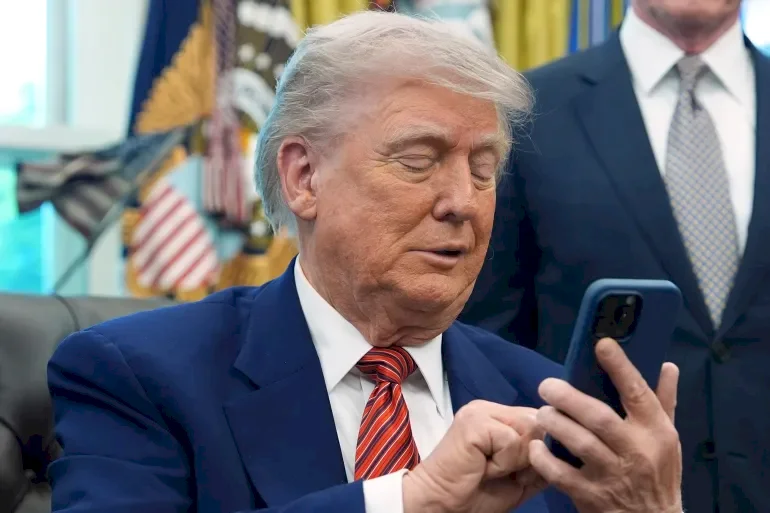
This is not the first time that Trump's social media posts have confused the diplomatic path between Washington and Tehran, as intermediaries have repeatedly warned that the president's tweets threaten efforts to reach an agreement. They also tried to convince Iran to ignore what he says publicly and focus on what his negotiators say in private sessions.
After Iran announced it was ending the talks over the weekend, Qalibaf and his delegation left the luxurious negotiation venue for the small hotel where they were staying. Informed sources stated that discussions continued indirectly through Pakistani and Qatari intermediaries.
The "Wall Street Journal" reported that Trump's unconventional negotiating style led Iranian negotiators to read his book "The Art of the Deal," published in 1987 in collaboration with journalist Tony Schwartz, regarding the President's negotiating tactics as a real estate mogul.
In his book, Trump advises negotiators to use tough and unexpected demands to create anxiety and force opponents to make concessions.
Intermediaries reported that Iranian negotiators informed them that they had enlisted a team of psychologists to understand Trump's mindset, while a knowledgeable source denied the presence of any psychologists in Iran's negotiating delegation, asserting that Tehran focuses on facts away from psychological speculations.
Political analysts and intermediaries believe that the U.S. president's media noise and repeated threats have not extracted any additional concessions from the Iranian side, as sources told the paper that Iran succeeded in obstructing U.S. efforts to include references to the International Atomic Energy Agency, while Washington insists that the agency's role must remain a separate track.
The coming days are expected to reveal the success or failure of Trump's negotiating style with Iran regarding critical issues that form points of contention between the two parties, including the Hormuz Strait dilemma, Tehran's nuclear program, and its ballistic missiles.
 Follow the latest Sada News via Google News
A Martyr and Injuries in the Occupation's Shelling of Al-Mawasi Khan Younis

Unprecedented Decline.. A Colonial Plan Targeting Al-Aqsa Mosque Guards

Settlers Open Two Settlement Roads in Ramallah and al-Bireh Governorate

Aoun: Our negotiations with Israel are separate from the talks in Switzerland

Behind the Scenes of the Switzerland Negotiations: A 'Word' from Trump Almost Ended Everyt...

Settlers Attack Burin, Injuring a Citizen and His Children, and Damaging Two Vehicles

Qatar's Prime Minister Talks About Understandings on Hormuz, Lebanon, and the Investment F...
