

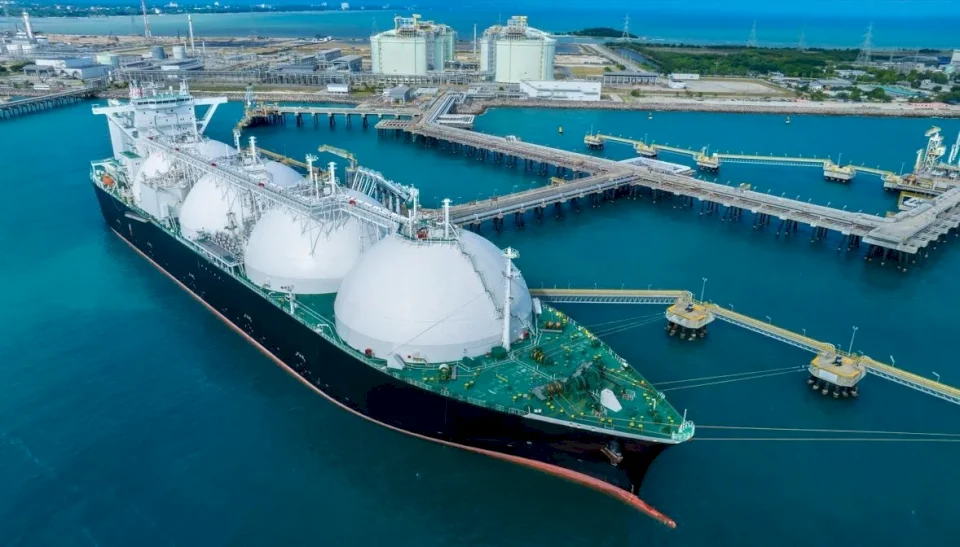
Qatar Expects to Resume LNG Production Normally Within Weeks
SadaNews - Qatar expects to resume liquefied natural gas (LNG) production normally within weeks, as maritime traffic gradually begins to return through the Strait of Hormuz, while Doha relies on a hot line between the United States and Iran to prevent any uncontrolled parties from disrupting the reopening of the vital maritime corridor.
Qatari Prime Minister Sheikh Mohammed bin Abdulrahman Al Thani told the Financial Times that the hot line agreed upon by Washington and Tehran during talks in Switzerland is essential to counter "disinformation" and ensure coordination during the demining of the strait, adding that the purpose is to verify any threats faced by vessels and ensure their safe passage.
QatarEnergy Mobilizes Its Teams to Return Operations to Normal
He added that QatarEnergy is preparing to return its operations to normal as soon as the situation in the strait stabilizes, stating: "In a few weeks, production will return to normal, except for the affected facility," noting that the company's teams have been mobilized for several weeks.
However, Sheikh Mohammed warned that the state-owned QatarEnergy will not lift the force majeure status until "the company sees that all issues have been addressed, and operations have become safe."
Production had halted at the Ras Laffan complex, the world's largest LNG facility, since the first week of the war following an Iranian attack, leading to canceled shipments and delayed plans to increase the North Field's production capacity from 77 million tons to 126 million tons per year by 2027. Facilities that were producing about 17% of Qatar's LNG exports were also damaged in missile attacks in March, and QatarEnergy predicted that repairs would take between three to five years.
Qatari Tankers Moving Through Hormuz
Despite an explosion that occurred on Sunday at the "Barzan" local gas supply facility in Ras Laffan, resulting in the deaths of 13 people and injuries to 66 others, Qatar stated that it does not expect its LNG exports to be affected. Vessel tracking data compiled by Bloomberg showed that four tankers owned by Qatar’s shipping arm, or operating under long-term contracts with the state, were en route to Ras Laffan through the Strait of Hormuz without concealing their locations, as part of preparations to resume shipments.
Doha expects shipping traffic through the strait to return to pre-war levels by the thirtieth day following the signing of the memorandum of understanding between the United States and Iran, although Sheikh Mohammed acknowledged that "restoring trust will take time," according to the newspaper's report. He also emphasized that his country would oppose any Iranian plans to impose fees on vessels passing through the strait, stating: "This contradicts international protocols. For a country like Qatar, this is our only waterway."
 Follow the latest Sada News via Google News
European stocks fall as investors assess US-Iran talks

Qatar Expects to Resume LNG Production Normally Within Weeks

Oil Prices Near New Low as Tanker Traffic Improves Through Hormuz

Gold Falls for the Second Day Under Pressure from Strong Dollar and Tech Stock Sell-Off
Oil Continues to Decline Amid Signs of Progress in Peace Talks and U.S. Exemption for Iran
Gold Drops as Inflation Fears Rise and U.S. Rate Hike Prospects Loom

أميركا تصدر ترخيصا لمدة شهرين يجيز توريد وبيع النفط الإيراني
