

Why are the Rapid Support Forces Intensifying Bombardment of Al-Obaid City?
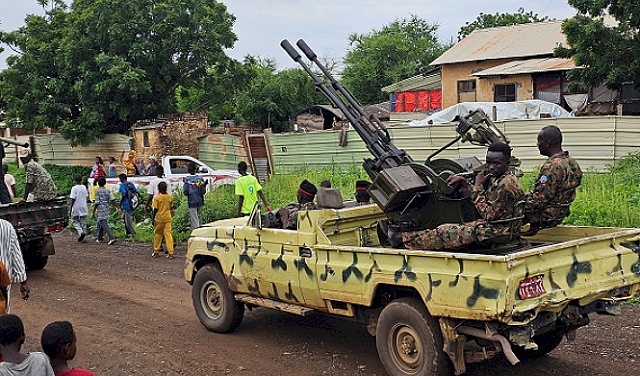
SadaNews - For over a week now, the Rapid Support Forces have been bombarding the city of Al-Obaid, the capital of North Kordofan State in western Sudan, with drones, resulting in dozens of casualties and the destruction of civilian facilities. This development, regarded by military experts as a tactical shift to achieve military and political objectives.
Al-Obaid city holds strategic importance due to its geographic location connecting Khartoum and central Sudan with the west, and it is the largest urban center in the Kordofan region, which consists of three states, serving as a main gateway to the Darfur region.
It has also become a refuge for hundreds of thousands of displaced people from West Kordofan and its south, as well as from the Darfur region, alongside its residents, whose number exceeds 600,000.
Targeting
The number of people arriving in Al-Obaid - referred to as "Bride of the Sands" by its locals - has increased after more than a year since the Sudanese army succeeded in breaking the siege imposed by the Rapid Support Forces on the city, and the direct artillery bombardment has declined. However, in recent days, it has continued to face repeated aerial attacks by drones, the deadliest of which last week resulted in 23 deaths and dozens of injuries.
Notably, the Rapid Support Forces' drones focused during the week on targeting six fuel stations in Al-Obaid, oil tankers that were on their way to the city, fuel stations in Umm Rawabah, the second largest city in the state, and trucks carrying food supplies near Al-Rahad in the southeastern part of the state.
Alongside the air campaign, platforms close to the Rapid Support Forces and activists from Nyala circulated footage and recordings of military crowds on their way to Al-Obaid, threatening to invade the city.
Last Sunday, the army announced in a statement, "significant victories in the Kordofan axis resulting in the destruction of 91 combat vehicles belonging to the Rapid Support Forces and the elimination of dozens of their elements since the beginning of June, thwarting their attempts to destabilize security and stability in the region."
Military sources that spoke to Al Jazeera Net revealed that the Rapid Support Forces had moved fighters - "many of whom are mercenaries from South Sudan, Chad, the Central African Republic, and Colombia" - from Darfur to North Kordofan, but the army's drones inflicted heavy losses on them and destroyed dozens of combat vehicles.
The sources, who requested anonymity, confirmed that there is no serious threat to Al-Obaid from the Rapid Support Forces, and that the army is monitoring their movements and supply lines from outside the country, and that what they are doing by intensively spreading information about re-sieging or controlling the city is a "psychological war broadcast by media rooms affiliated with the militia."
"Cowardly Step"
In response to the movements of the Rapid Support Forces, the Governor of North Kordofan State, Abdul Khaliq Abdul-Latif, and the commander of the fifth army division "the Camelry," Major General Al-Siddiq Al-Jili, toured the main market in Al-Obaid last Wednesday.
Abdul-Latif stated while addressing citizens at the market that "their city is safe and stable," and that the army "is preparing to launch from there to liberate all areas controlled by the Rapid Support Forces in Kordofan and Darfur."
He described the targeting of residential neighborhoods and civilian sites by the Rapid Support Forces as a "cowardly step because they could not confront the army, so they targeted civilians," reaffirming that spreading rumors about Al-Obaid aims to "break the will of citizens and displace them."
As for General Al-Jili, he confirmed that the army and its supporting forces "completely control the situation and fulfill their duties in securing the city, and are ready to expel the Rapid Support Forces from all areas they are present in the states of Kordofan and Darfur."
Local organizations warn that the continuation of these aerial attacks, coinciding with rising commodity prices, the decline in the purchasing power of the national currency "the pound," scarcity of fuel, and a seasonal water crisis for drinking in Al-Obaid, will lead to exacerbated humanitarian conditions and push thousands to flee again in a city "that is already suffering from great pressures due to the influx of displaced persons and the decline in services."
Fasher Scenario
For his part, military expert Abu Bakr Abdel Rahim stated that the Rapid Support Forces have now "effectively applied the Libyan model in the Darfur region and parts of Kordofan through practical steps after establishing a parallel authority in Nyala, circulating an old version of the pound, holding secondary school exams, and adopting a parallel economic and educational system."
According to the expert's statements to Al Jazeera Net, the leadership of the Rapid Support Forces seeks to secure the Darfur region through tactical aerial operations to disrupt army movements and push advancing ground forces into Kordofan, while covering up for waves of defections and internal fractures within their ranks after bloody conflicts between supporting tribal components, lifting the morale of their fighters after their advance halted since their control of Fasher about eight months ago.
The Rapid Support Forces, he added, aim to implement the Fasher scenario in Al-Obaid by besieging it for a long time, creating a crisis in living conditions, draining the army's capabilities, and cutting off military supplies to constrain it, thereby enabling them to impose a new administrative, military, and political reality in Darfur.
Since the army regained control of Khartoum and the states of Al-Jazeera and Sinnar in central Sudan, Al-Obaid has turned into a major logistical and military center for the armed forces and its supporting brigades, hosting the command of the fifth infantry division, and has become an advanced command center for military operations heading towards northern, western, and southern Kordofan, in addition to the frontlines in Darfur.
The army controls the southern parts of North Kordofan State, which includes the cities of Umm Rawabah and Al-Rahad and the national road extending from Kosti in the White Nile State to Al-Obaid, linking it to the port of Port Sudan.
In contrast, the Rapid Support Forces control the northern parts of North Kordofan State, including the export road leading to Omdurman north of Al-Obaid city, where the forces are stationed in Bara, the third largest city in the state, and several areas along this road, in addition to the localities of Jabra Sheikh, Sudri, and West Bara.
Source: Al Jazeera
 Follow the latest Sada News via Google News
Why are the Rapid Support Forces Intensifying Bombardment of Al-Obaid City?

Initiatives Despite Scarcity of Support: Sudanese Women Manage the Refugee Crisis in Chad

Explosions Rock Kyiv as Ukrainian Drone Targets Children's Bus in Belarus

Guterres Warns Against Including Settlers on the UN Blacklist for Violations Against Child...

Yemen Calls on the Security Council to Include Aidros al-Zubaidi on the Sanctions List

The US Administration Approves the Use of "Grok" in Strikes Against Iran

Trump urges Russia to end the war, G7 brandishes the weapon of sanctions
