

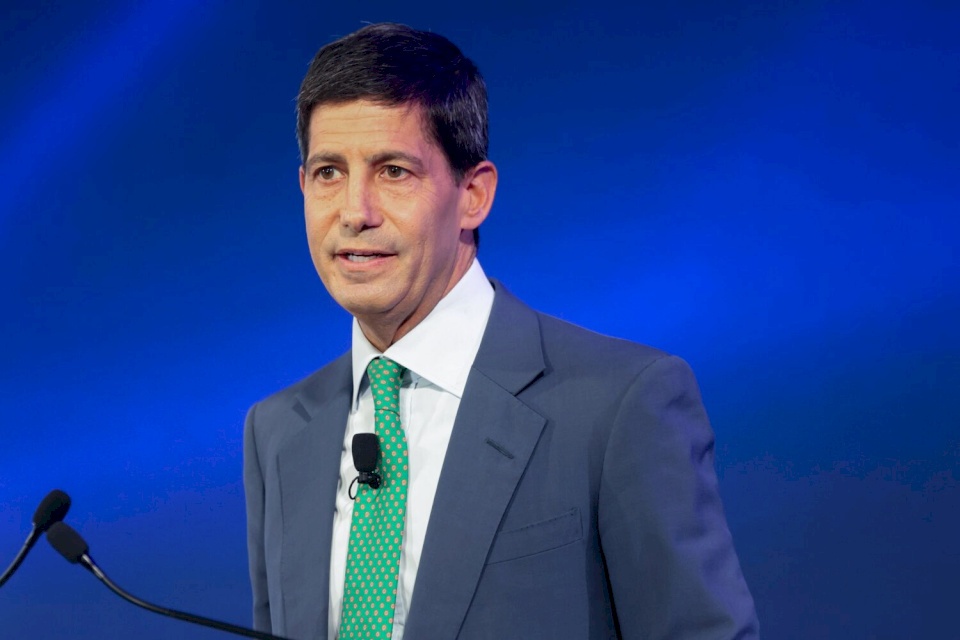
Warsh Takes the Oath as Chair of the U.S. Federal Reserve Amid Trump Pressures and Inflation
SadaNews - Kevin Warsh, who pledged to implement the most significant change within the U.S. Federal Reserve in decades, took the oath of office today, Friday, during a ceremony at the White House as the seventeenth chair of the Federal Reserve Board.
Warsh's assumption of the position comes at a time when the economy and the Federal Reserve face increasing challenges. Inflation has surged again due to the impact of the ongoing war in the Middle East on energy supplies, while the Federal Reserve has faced repeated criticisms from President Donald Trump for not lowering interest rates quickly enough.
Who is Kevin Warsh, chosen by Trump to lead the Federal Reserve?
These circumstances, combining ongoing inflation and political pressures, have raised concerns among investors and analysts about the independence of the Federal Reserve being at risk. During his confirmation hearing, Warsh repeatedly vowed to act independently, despite criticizing the central bank for what he described as a "mission creep" and its handling of the post-pandemic inflation surge.
Support to Keep Rates Unchanged
Some allies of President Donald Trump are seeking to help Warsh avoid the same fate faced by outgoing Chair Jerome Powell, who has been one of Trump’s primary targets for criticism since his first term. Officials considering market sensitivity and bond volatility, such as Treasury Secretary Scott Pruitt and Fox Business host Larry Kudlow, have made public statements that provide Warsh with cover to keep interest rates unchanged for a time.
According to individuals familiar with the matter, similar messages have been relayed privately, and these efforts may have begun to bear fruit, at least for now.
When asked by the Washington Examiner in an interview on Tuesday whether he believes Warsh will lead the Federal Reserve to lower interest rates, Trump said he would leave it to the new chair of the central bank "to do what he wants to do."
Warsh is not the first Federal Reserve chair to be sworn in with the president in attendance. Former President George W. Bush attended Ben Bernanke's oath in 2006 at the central bank’s headquarters, while Ronald Reagan hosted Alan Greenspan's swearing-in at the White House in 1987.
The U.S. Senate approved Warsh’s appointment as chair of the Federal Reserve by a vote of 54 to 45 earlier in May. This result represents the lowest level of support for a Federal Reserve chair ever, reflecting the partisan divide in Congress and Democrats' fears that Warsh may respond to Trump's pressures regarding interest rates.
"Systemic Change"
Warsh has vowed to implement a "systemic change" within the central bank, which includes reducing the Federal Reserve's balance sheet of $6.7 trillion, creating a new framework for analyzing inflation, and altering how the institution communicates with the public.
Monetary policy may be the most pressing challenge ahead for Warsh. Before receiving Trump's nomination for the Federal Reserve chair, Warsh presented justifications for lowering interest rates. However, central bank officials show little desire to lower them in the near term amid concerns about inflation, which intensified in April at its fastest pace since 2023.
U.S. Monetary Policy Path
Monetary policymakers held interest rates steady last month within the range of 3.5% to 3.75%, but the decision revealed an increasing division regarding how to describe the monetary policy path amid ongoing energy market disruptions due to the Iran War. Four officials voted against the decision, with three objecting to the wording of the meeting's final statement, which suggested that the central bank would resume rate cuts later.
A vote of 8 to 4 marks the first time since October 1992 that four officials have opposed a decision by the Federal Open Market Committee. Minutes from the meeting indicated that most officials warned they might have to consider raising interest rates if inflation continues above the target level of 2%.
Powell Remaining at the Federal Reserve
The leadership transition within the Federal Reserve also takes on an unusual character due to Jerome Powell’s decision to remain on the Board of Governors, marking a departure from the approach of previous chairs who left the institution upon the completion of their terms. Powell’s term as governor extends until January 2028.
Powell stated that the ongoing legal threats against him and the central bank left him no choice but to stay. The last Federal Reserve chair to remain on the board was Mariner Eccles, who continued as a policymaker until 1951 after his term as chair ended in 1948.
Trump had sought to remove Federal Reserve Governor Lisa Cook, while the Justice Department opened a criminal investigation into the $2.5 billion renovation project for the Federal Reserve's headquarters in Washington, a probe that stalled Warsh's appointment until U.S. Attorney Janine Puro announced the investigation's cessation.
Powell stated he would remain in his position to support the Federal Reserve's independence from political interference and not to undermine his successor.
 Follow the latest Sada News via Google News
Strait of Hormuz Approaches Maritime Paralysis After American and Iranian Strikes

Oil Prices Surge as US Airstrikes on Iran Renew

Gold Holds Steady Near $4080 Amid Middle East Escalation

The IMF Forecasts a Contraction in the Middle Eastern Economy This Year and a Faster Recov...

6000 Sailors Still Stranded in the Gulf

Floating Iranian Oil Faces Uncertain Fate After U.S. Exemption Cancellation

Brent Surpasses $76 After U.S. Strikes on Iran