

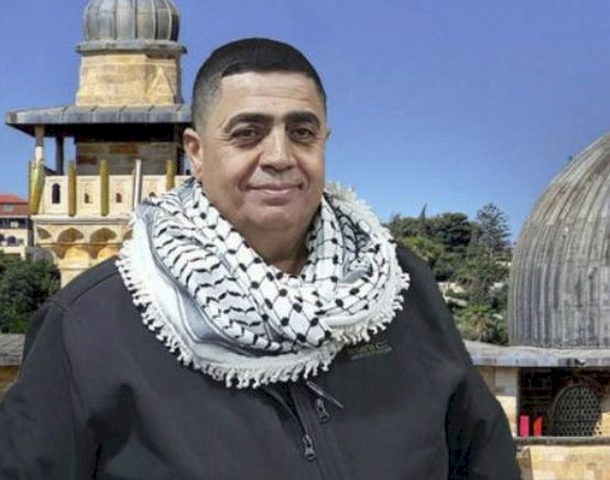
Al-Natshe: The upcoming "May 14" is a historic opportunity awaiting the "Fatah" movement for renewal and revitalization of the national project
SadaNews - Major General Bilal Al-Natsheh, Secretary-General of the Popular National Conference for Jerusalem, affirmed that the eighth general conference of the Fatah movement, scheduled for May 14, represents a pivotal station in the history of the Palestinian national movement, carrying profound political and organizational implications amidst the accelerating challenges facing the Palestinian cause, both regarding occupation and its policies, and concerning the internal Palestinian reality.
Al-Natsheh explained in press statements that the importance of this conference is not limited to being a periodic organizational obligation but extends to being a real opportunity to renew the structure of the "Fatah" movement and strengthen its pioneering role in the national project, emphasizing that the movement has been and continues to be the backbone of the Palestinian struggle, and that any improvement in its performance will positively reflect on the overall national situation.
He pointed out that among the most prominent expected outputs of the conference should be a re-confirmation of the Palestinian national constants, foremost of which is the right of the Palestinian people to self-determination and the establishment of their independent state with Jerusalem as its capital, alongside a clear political vision to confront regional and international challenges, and to enhance the steadfastness of the Palestinian people in all places of their presence.
Regarding national unity, Al-Natsheh emphasized that the eighth conference represents an important opportunity to repair the internal Palestinian situation, calling for the adoption of a comprehensive unifying discourse that strengthens national partnership and ends the state of division, asserting that the strength of the "Fatah" movement and its internal unity constitute a fundamental pillar for achieving comprehensive national unity.
He also stressed that the unity of the "Fatah" movement itself must be a top priority by overcoming internal differences and enhancing the principle of collective and institutional work, noting that the movement needs to inject new blood capable of keeping pace with developments, without neglecting the historical role of the leaderships that built up struggle and organizational experience.
In this context, Al-Natsheh emphasized the importance of integrating competencies and organizational leaders into the Central Committee, especially those who played a prominent role during the first Intifada in 1987, due to their deep field experience and rooted struggle vision, affirming that the blending of historical experience and youthful energy forms a real guarantee for the continuity and development of the movement.
He added that the current stage requires leadership characterized by competence, integrity, and decision-making ability, capable of restoring the importance of organizational work and enhancing communication with the grassroots, ensuring the restoration of the Palestinian street's trust in the movement.
Al-Natsheh also affirmed that the success of the eighth general conference of the "Fatah" movement will send a strong message to the Palestinian people and the world, indicating that the movement is capable of renewing itself and continuing its historical role in leading the national project, calling for collective efforts to ensure the success of this historical obligation in service of the unity of the people and the cause.
The Secretary-General of the Popular National Conference for Jerusalem, a member of both the National and Central Councils and the Advisory Council of the movement, stated that the latter has formed, since its inception, and still is, the backbone of the Palestinian national project, leading the struggle through various stages, from armed struggle to political and diplomatic work, preserving the national identity and consolidating the inalienable rights of the Palestinian people.
He added that the historical role of the "Fatah" movement does not only pertain to the past but extends to be a renewed responsibility in confronting current challenges, foremost among them ending division, enhancing the steadfastness of the Palestinian people, and countering plans targeting the national cause.
Al-Natsheh emphasized that what is required during the conference is a comprehensive review of the organizational and political experience to strengthen the unity of the movement and renew its leadership structure on democratic foundations, granting a wider role to youth and active cadres. He also called for developing organizational performance to align with the accelerating changes.
Regarding the political vision, he clarified that the "Fatah" movement is demanded to enhance its international presence, activate political and legal struggle tools, and continue to defend a fair solution based on ending the occupation and establishing an independent Palestinian state with Jerusalem as its capital.
Al-Natsheh stated that the current stage requires genuine national unity and a clear strategic vision that restores the national project and mobilizes the energies of the Palestinian people in facing upcoming challenges.
He stressed that the eighth conference must be a pivotal station that restores the movement's pioneering role, not just a mere administrative procedure or a formal organizational obligation, clarifying that the challenges facing the Palestinian cause impose that the conference turns into a genuine lever for renewing the national project through formulating a clear political vision, enhancing organizational performance, and strengthening internal unity of the movement.
He added that what is required is to adopt qualitative decisions that restore trust in the ability of the "Fatah" movement to lead the phase, activate its popular role, and open up to youthful energies, thereby enhancing its presence in various fields.
He emphasized that the success of the conference is measured by its ability to achieve a qualitative leap in political and organizational performance, not just by completing elections or administrative procedures, calling for the conference to be a platform for serious review and strategic planning to confront current changes.
He concluded by affirming that the "Fatah" movement is required today more than ever to take the initiative, and that its eighth conference reflects this role through practical outcomes that enhance the steadfastness of the Palestinian people and serve their just cause.
 Follow the latest Sada News via Google News
More than 37,000 travelers crossed the Al-Karama crossing last week

Weather Conditions: Extremely Hot Weather

Civil Defense Reinforces Its Field Crews to Support the Villagers of South Nablus

Third Assault by Settlers in a Week Temporarily Halts Water Pumping from Ein Samia Wells

Tens of thousands of worshippers perform Friday prayer at Al-Aqsa

"Fatah" and "Hamas" and Other Factions: What Happened in Nablus is a Bloody Massacre

SadaNews Publishes the Results of the General Secondary Education Exams in Palestine 2026
