

Is the Global Economy Heading Toward the Worst-Case Scenario with the Blockade of Iran's Ports?
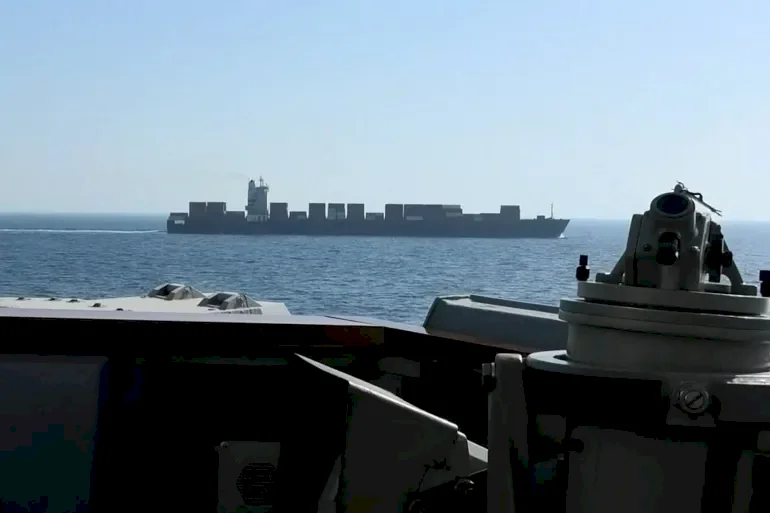
SadaNews - The blockade imposed by American forces on Iranian ports has heightened concerns about its negative effects on the global economy, especially after the U.S. Navy seized an Iranian cargo ship attempting to breach the blockade, with Tehran vowing to respond.
The International Monetary Fund (IMF) warned in its latest report on global economic prospects of a series of crises that could follow disruptions in shipping through the Strait of Hormuz, which carries about 20% of global oil and gas supplies. Energy prices have surged, along with inflation levels.
The IMF believes that the global economy may face the "worst-case scenario" if the average oil price reaches around $110 per barrel in 2026 and $125 per barrel in 2027 if the war extends, which would lead to a 2% decline in economic growth and inflation rising to about 6%.
IMF chief economist Pierre-Olivier Gourinchas stated in comments reported by the Financial Times that the blockade imposed by Washington on Iranian ports "will make the situation worse, as it will lead to more oil being piled up inside the Strait of Hormuz instead of allowing it to flow to the market."
A report by CNN indicated that U.S. President Donald Trump aims to intensify economic pressures on Tehran to soften its positions during negotiations through the blockade of Iranian ports, but this blockade will also increase pressures on the global economy from various angles, potentially steering it toward the scenario warned by the IMF.
Some of the key pressures on the global economy resulting from the blockade of Iranian ports are as follows:
Pressure on China
Bloomberg reported that Trump is also targeting China with the blockade of Iranian ports, as China purchases about 95% of crude Iranian oil transported through a shadow fleet and unknown brokers.
Bloomberg added that the Trump administration aims to burden Tehran with significant economic costs due to the blockade, while seeking to have Beijing shoulder part of the cost, pushing it to pressure Tehran in ongoing negotiations in Pakistan.
Before the war, China sourced about 11% of its oil needs from Iran, making it the third-largest oil supplier after Russia (20%) and Saudi Arabia (14%).
However, China has lost about 20% of its oil supplies due to the closure of the Strait of Hormuz and will lose more if Iranian oil exports to it are halted.
In this context, Sadiq Al-Rakabi, the director of economic research at the Global Development Studies Center in London, told Al Jazeera Net that China is a major consumer of Iranian oil and that Chinese firms do not prefer to risk increasing their reliance on Russian oil at present due to sanctions, even if temporarily lifted. Hence, they may look for other alternatives for Iranian oil, which will increase demand in the oil market and raise prices.
China has described the U.S. blockade of Iranian ports as "dangerous and irresponsible," and Chinese President Xi Jinping emphasized the importance of keeping the Strait of Hormuz open for maritime navigation, highlighting the significance of energy supplies from the Gulf for Beijing.
Pressure on Asian Economies
Al-Rakabi added that most major Asian economies, such as India and Japan, heavily rely on importing oil and gas from the Gulf. Thus, further disruptions in supplies from the Gulf will compel them to seek alternatives, which will increase pressure on global energy markets.
As for Iran itself, Al-Rakabi clarified that it has long sought to diversify its economy and rely on domestic production to cover many of its needs, developing various modern production methods in agriculture and industry, creating what it calls the "Resistance Economy."
However, targeting Iranian industrial facilities during the war, along with the maritime blockade, "will make the cost of the blockade exorbitant for the Iranian economy," he stated.
Widening Energy Shock
He added that the U.S. blockade on Iranian ports will lead to a significant increase in oil prices due to the halt of Iranian exports, which were about 1.5 million barrels per day before the war, often conducted through shadow fleets to evade sanctions or via Chinese vessels.
This drop in oil supply in the already tight global market will contribute to rising prices, especially since major oil producers in the Middle East currently cannot increase production.
The closure of the Strait of Hormuz has caused oil prices to soar by more than 50% from their levels before the onset of the war on February 28, while natural gas prices in Europe have risen by more than 60%.
EU energy commissioner Dan Jørgensen warned of a long-term energy shock, even if the war ends quickly, as returning to normal in energy markets will take a long time.
Jørgensen urged EU member states to take steps to reduce energy consumption, including remote work on some weekdays and promoting the use of public transport.
Worsening Government Debt Crisis
Jørgensen also cautioned that the energy crisis could turn into a financial crisis if EU member states expand support programs for citizens to cope with rising fuel prices, leading to increased deficits in public budgets.
In this vein, the IMF warned that the war might exacerbate the government debt crisis if governments are forced to support their citizens in facing the increased cost of living by borrowing more, leading to accumulating debts and their interest.
The IMF stated in its report, as reported by the Guardian, that the energy crisis is forcing governments to choose between protecting their people from rising prices and maintaining financial solvency.
Rising inflation rates, due to increased transportation and manufacturing costs alongside higher energy prices, are expected to prompt both the European Central Bank and the Bank of England to raise interest rates.
Higher interest rates will increase the cost of bonds issued by governments to finance budget deficits, leading to higher public spending, and will also raise the cost of mortgage and personal loans for individuals.
 Follow the latest Sada News via Google News
U.S. House of Representatives Approves Budget Plan to Fund War on Iran

Gold Retains Gains Despite Rising Concerns Over U.S. Interest Rate Hikes

Oil Prices Surge Amid Growing Supply Disruption Risk from the Region

The World Bank Warns: "The Worst-Case Scenario" for Global Growth is Approaching

Trump Prepares to Impose New Tariffs on Dozens of Economies

Gold Surpasses $4,100 as Selling Pressure Eases

Oil Rises for the Fourth Day as Supply Risks Escalate
