

Chemistry Reveals the Secret of the "Fur" Surrounding Brain Proteins
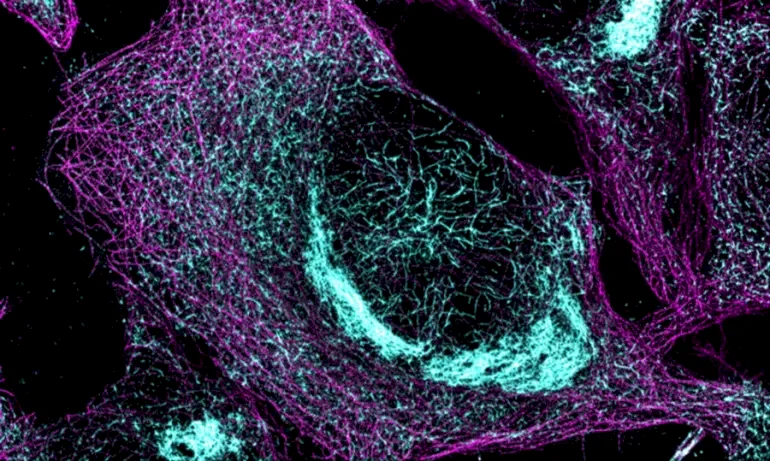
SadaNews - One of the most prominent indicators of Alzheimer’s disease is the aggregation of "tau" proteins in the brain, which cluster to form tangled threads, and as this aggregation increases, the severity of the disease worsens.
While studying this protein in its normal state poses no problem, as it takes a flexible form, in the pathological state, it transforms into a solid, well-organized central shape, surrounded by flexible parts called mysterious fur. This fur is not static; it changes continuously and plays a role in the protein's interaction with other molecules.
Current available techniques like cryo-electron microscopy and X-rays can study the solid part, but they cannot see the mysterious fur because it is flexible and changes shape considerably. Here comes the breakthrough achieved by chemists at the Massachusetts Institute of Technology in America, as they were able to use nuclear magnetic resonance to study the mysterious fur in its entirety for the first time.
What is the philosophy behind the new method?
Nuclear magnetic resonance is a scientific technique that uses the natural magnetism of atomic nuclei to study the structure and motion of molecules. As revealed by the researchers in a study published in the "Journal of the American Chemical Society", the new method relies on tracking magnetization between the solid and flexible parts of the protein, specifically how magnetic signals transfer from the solid parts to the flexible parts and vice versa, which provides insight into the proximity of these parts and their movements.
This method allowed researchers to study both the solid core and the mysterious fur together, rather than focusing solely on the core.
To explain the technique used by the researchers, imagine you have a set of small magnets, each representing the nucleus of a hydrogen atom in the protein. In its natural state, each magnet rotates randomly, but when you place these magnets in a very strong magnet, they all start to align in the direction of the magnet. Afterward, these magnets are struck with a small amount of energy, causing them to vibrate, and each magnet vibrates differently depending on its location in the protein and the surrounding parts. Researchers capture these vibrations and translate them into a map showing the positions of the atoms and their relationships to one another.
Developing New Drugs
Mi Hong, a professor in the chemistry department at the Massachusetts Institute of Technology and the lead researcher in the study, stated in a report published on the institute's website that "understanding the mysterious fur aids in developing small molecule drugs that can reach this fur and dismantle the threads of tau protein, thereby potentially preventing or reducing the accumulation of proteins in the brain".
She adds that "this represents an important step towards future treatments for Alzheimer’s disease and similar neurological disorders".
Source: Various news websites
 Follow the latest Sada News via Google News
After Deschamps' Departure... Zinedine Zidane Tops the Candidates to Lead France

Mbappe Surpasses Messi and Becomes the All-Time Top Scorer in the World Cup

England Defeats France and Achieves Largest World Cup Achievement Since 1966

Messi Refused to Play for Spain and Missed 3 World Cups

Publishers Sue Google for Allegedly Using Books to Train Artificial Intelligence

Google Expands Capabilities of Google Search Console to Support Social Media Accounts

The Mediterranean Table... An Ancient Diet Revealing Its New Secrets for Health and Longev...
