

Financial Times: Gulf Countries Lost $15 Billion in Energy Revenues
Sada News Economy - The Financial Times reported that Gulf countries have lost about $15 billion in energy revenues since the start of the American-Israeli war on Iran.
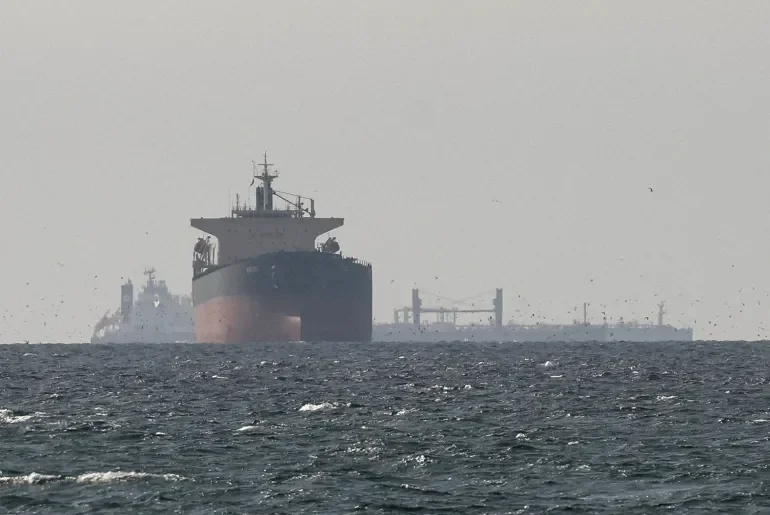
The newspaper relied on data provided by the company "Kpler," which specializes in analyzing commodity markets, as part of its estimate of the losses incurred by Gulf countries since the beginning of the war, which led to a near-total halt of navigation in the Strait of Hormuz.
According to Kpler's data, oil, refined products, and liquefied natural gas worth $1.2 billion are transported daily through the strait, based on average prices in 2025.
However, movement in the Strait of Hormuz has almost stopped since the outbreak of the war on February 28, preventing Gulf countries from exporting a significant portion of their oil and liquefied gas production.
According to Kpler's data, about $10.7 billion worth of oil, refined products, and liquefied natural gas remains on ships in the Strait of Hormuz after being loaded, but they are unable to proceed to importing countries.
Recently, four Arab countries—Saudi Arabia, Kuwait, the UAE, and Iraq—announced a production cut of approximately 6.7 million barrels per day, according to Bloomberg.
Bloomberg noted that these cuts are the most impactful since the war on Iran began, as the four countries reduced their production by about one-third, which means a 6% decrease in global oil supply.
Qatar Energy also declared a state of force majeure on March 4 and halted liquefied natural gas exports, of which it is one of the largest producers worldwide.
The Financial Times quoted Peter Martin, head of the economics department at consultancy firm Wood Mackenzie, stating that Iraq is the hardest hit by the oil production cuts, as the Iraqi government relies on oil exports for about 90% of its revenues.
According to estimates from Wood Mackenzie cited by the newspaper, Saudi Arabia, the largest oil exporter, has lost about $4.5 billion since the war began.
With the halt of oil exports through the Strait of Hormuz, Saudi Aramco announced it may redirect about 70% of its crude oil exports to the port of Yanbu on the Red Sea.
The company's CEO, Amin Nasser, warned that the disruption's impact on oil markets is not limited to the shipping and insurance sectors but also threatens severe ripple effects on aviation, agriculture, automotive, and other sectors.
 Follow the latest Sada News via Google News
The World Bank Warns: "The Worst-Case Scenario" for Global Growth is Approaching

Trump Prepares to Impose New Tariffs on Dozens of Economies

Gold Surpasses $4,100 as Selling Pressure Eases

Oil Rises for the Fourth Day as Supply Risks Escalate

An Additional $8 Billion.. A New Account from the Pentagon on the Cost of the War with Ira...

London Stock Exchange Enters the Era of 24/7 Trading

Shamaran Petroleum: Suspension of Oil Production in Duhok Fields in the Kurdistan Region o...
