

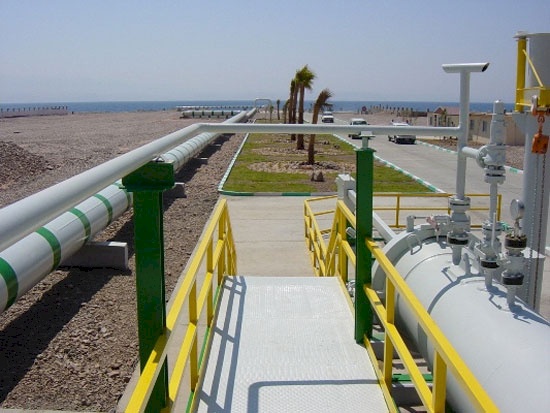
Dispute Over Gas Price Between Egypt and "Eni" Delays Expansion in "Zohr" Field
SadaNews - The Egyptian government rejected the request of the Italian company "Eni" to increase the price of purchasing new gas from the "Zohr" field by 54% to over $10 per million British thermal units, a level that exceeds the average prices for importing liquefied natural gas, according to a government official revealed to "Asharq".
"Eni" produces gas from the depths of the Mediterranean Sea, where operations require massive investments and high production costs. The company and its partners currently receive an average price ranging between $5.7 and $6.5 per million thermal units.
"Eni" justified its request for the increase by stating that operating costs have risen; however, this increase was not accepted by the state-owned Egyptian Natural Gas Holding Company (EGAS) and the Egyptian Ministry of Petroleum, prompting the Italian company to postpone drilling two new wells in the field until a new agreement on the gas price produced from them is reached, according to the official.
"Eni" did not respond to requests from "Asharq" for comment.
$360 Million Delayed
"Eni" was considering drilling the two wells this year, at an estimated cost of $360 million, as part of an expansion plan confirmed by its officials to Egyptian Prime Minister Mostafa Madbouly in April 2025, but the price dispute has stalled this step.
The production from the Zohr field currently amounts to about 1.3 billion cubic feet per day, which represents approximately 25% of Egypt's daily gas production. Current production from the field is much lower than its peak production in 2019, which was 3.2 billion cubic feet.
Offshore Unit and $2 Billion Investments
The dispute coincides with ongoing negotiations between "EGAS" and "Eni" to implement an offshore processing unit at Zohr, in addition to a land-based facility for processing gas-associated water, with investments that could reach $2 billion.
The Egyptian government aims to increase production amidst a gap between local production of 4.2 billion cubic feet per day and demand that reaches 6.2 billion, forcing it to import liquefied gas. The state aims to raise production to 5 billion cubic feet per day by the end of the year.
Egypt has offered new incentives to foreign energy companies, including allowing them to export a share of the new production and using the revenues to pay off dues, in addition to raising the price of companies' share of the production, in an effort to expedite drilling and discovery operations.
 Follow the latest Sada News via Google News
London Stock Exchange Enters the Era of 24/7 Trading

Shamaran Petroleum: Suspension of Oil Production in Duhok Fields in the Kurdistan Region o...

Dollar Steadies Near One-Week High Amid War Developments

Trump Imposes Tariffs on Canadian Imports... Ottawa Vows to Respond

Oil Prices Drop After Reports of Mediation Efforts Between the U.S. and Iran

Gold Price Rises Supported by Increased Buying Amid Lower Prices

Due to "Hazardous and Counterfeit Products".. Europe Fines "AliExpress" $627 Million
