

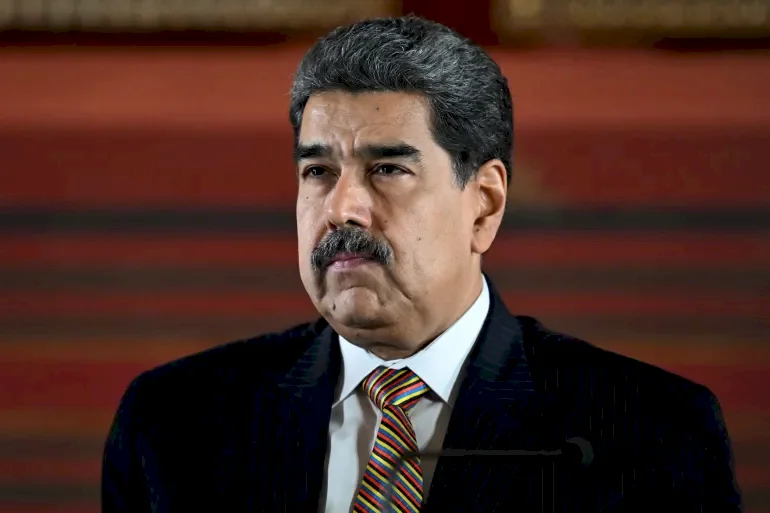
Thomas Friedman: Venezuela has now become Trump's "Political Property"
SadaNews - It is still too early to get clear answers about what will happen next in Venezuela following the arrest of President Nicolas Maduro by the administration of U.S. President Donald Trump in preparation for his trial in the United States, but there are many questions based on such interventions carried out by the United States in other regions.
With these words, the American writer Thomas Friedman began his article in The New York Times, warning of the long-term consequences of this act, considering that this step, no matter how decisive or popular it may seem to some Venezuelans, places Washington before a heavy historical responsibility that cannot be evaded.
Friedman started from historical comparisons, most notably the Western intervention in Libya in 2011, when the regime of Muammar Gaddafi was overthrown solely through air power, without a coherent plan for managing the post-fall phase.
The result, as the article states, was a sustained chaos and political division, along with militia wars, which has made Libya to this day a "fragile" state and a source of regional instability and irregular migration. The writer fears that this same dynamic could be repeated in Venezuela if the United States is satisfied with removing the head of the regime without a realistic vision for building a stable alternative system.
Friedman recalled an article he had written at the time, in which he stated, "I do not know Libya, but my instincts tell me that any kind of decent outcome there will require troops on the ground, either as military assistance to the rebels to overthrow Gaddafi as we wish, or as peacekeeping forces and mediators after Gaddafi among the tribes and factions to assist in any transition to democracy. Those forces cannot be ours; we can never afford their costs."
In Friedman's estimate, Trump's own statements - at the press conference he held yesterday (Saturday) - reflect an implicit awareness of the dangers of the "lightning strike" in international politics, as the president spoke about his country's readiness to manage Venezuela directly and did not rule out the "presence of troops on the ground".
However, the writer questions whether the Trump administration, with its "improvised" approach and heterogeneous structure, is actually capable of managing a massive project to build a state, the largest since the experiences in Iraq and Afghanistan.
He also pointed out in his article that Maduro, despite his downfall, left behind an armed network of loyalists, traffickers, and drug gangs, which heralds an internal conflict that could take the form of a total collapse or regional explosion, similar to models experienced in the Middle East.
In this context, Friedman warns of the worsening crisis of Venezuelan refugees, which is already among the largest globally, and what this may result in further destabilization of Latin American and Caribbean countries.
The concern does not only extend to the Venezuelan interior, but also to the international arena, as the "kidnapping" of a head of state from his capital without international cover - according to the article - could serve as a dangerous precedent for other major powers, chief among them China, in their regional conflicts, especially towards Taiwan.
Friedman also believes that Washington's preoccupation with the Venezuela file will give Moscow and Beijing a wider margin for maneuvering in Ukraine and Asia.
Moreover, the issues of oil and debts arise, where China is the main importer of Venezuelan oil, which warns that any upcoming conflict there could directly clash with China's major economic interests.
At the end of his article, the writer returns to his famous rule that he formulated before the invasion of Iraq, which states "If you break it, you own it." From his perspective, Venezuela has now become "Trump's political property" in terms of responsibility, not control.
If the United States succeeds in helping the Venezuelans build a better system, it will be considered a historic achievement for Trump. However, if the country slips into deeper chaos, Trump's name will remain attached to that chaos for many years, according to Friedman's analysis.
It is worth noting that Maduro was brought to the United States on Saturday evening local time after being arrested by American forces during a military operation in the capital Caracas, and he is expected to appear tomorrow before a federal court in Manhattan, New York City.
Source: The New York Times
 Follow the latest Sada News via Google News
High-level sources reveal to SadaNews: Washington seeks to hold a Gaza Reconstruction Conf...

Iraqji Reveals Details of the Attack on the Iranian Supreme Leader's Headquarters

صراع على إرث خامنئي وسط غياب مجتبى.. والمتشددون يتهمون قادة إيران بـ«الانقلاب»

The European Union Reiterates Its Call for Israel to Refrain from Expanding Settlements in...

"Mamdani Berlin".. The German Left Bets on a Politician of Turkish Descent to Lead the Cap...

Hebrew Channel: Kushner Pushing to Enhance Communication Between the United States and the...

SadaNews Report: Israeli Elections with a Settlement Flavor!
