

Despite the trade truce.. China's exports to the US decline by 29% in November
Economy SadaNews - Chinese exports to the United States have declined for the eighth consecutive month, despite the recent trade agreement between the world's two largest economies, during a time when China's total exports exceeded market expectations in November as factories intensified shipments to other markets.
Chinese customs data released on Monday showed a year-on-year increase in exports of 5.9% in November, measured in US dollars, exceeding analysts' expectations in a "Reuters" poll of 3.8% growth. This increase marks a rebound from the surprising contraction of 1.1% in October, which was the first export decline since March 2024.
In contrast, imports rose by 1.9% last month but fell short of expectations that indicated a 3% increase, as the ongoing real estate market stagnation and growing job-related concerns continued to pressure domestic consumption levels. This growth was higher compared to an increase of 1% in October.
Chinese officials have renewed their commitments to boost imports and work towards achieving a better balance in trade amid widespread international criticism of Beijing’s export expansion policy.
Chinese exports to the US
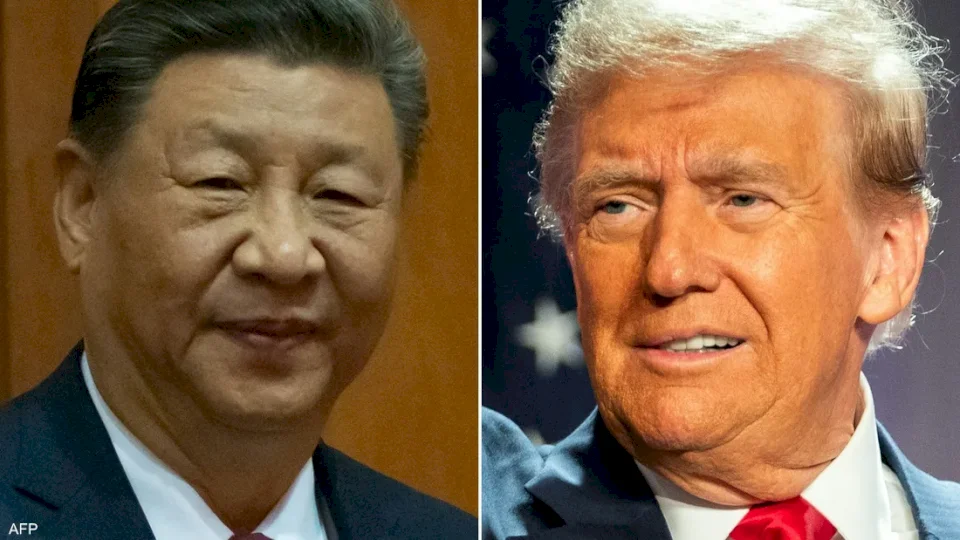
Chinese exports to the United States fell by 28.6% in November, marking the eighth consecutive decline, despite reaching a trade agreement between Chinese President Xi Jinping and his US counterpart Donald Trump in South Korea in late October. Chinese imports from the United States also decreased by 19% year-on-year.
Gary Ng, chief economist at "Natixis", stated that "the trade truce has not changed the reality that the US still imposes higher tariffs on China compared to many other countries," adding that Chinese exporters often continue to use their facilities in third markets to re-export to the United States. He added, "This may become a permanent pattern in the future."
According to the Peterson Institute for International Economics, US tariffs on Chinese goods remain at about 47.5%, while Chinese tariffs on US goods are about 32%.
Cumulatively, since the beginning of the year, China's exports to the US have declined by 18.9%, while its imports of US goods decreased by 13.2%.
However, this decline has been offset by a strong increase in shipments to other markets, particularly the European Union and the Association of Southeast Asian Nations (ASEAN), where Chinese exports to them rose by more than 8% and nearly 15%, respectively.
In the first 11 months of the year, China's total exports increased by 5.4% compared to the same period in 2024, while imports fell by 0.6%, raising its trade surplus to $1.076 trillion by the end of November, an increase of 21.6% year-on-year.
Slow start after the trade truce
Following the trade truce reached in October, Beijing and Washington agreed to ease mutual high tariffs, relax restrictions on exporting critical metals and advanced technologies, while China committed to purchasing more US soybeans and working with Washington to stop the flow of the opioid "fentanyl".
China's exports of "rare earth" elements accelerated in November, registering 5,494 tons, a 24% year-on-year increase, compared to 4,343.5 tons in October. The Chinese Ministry of Commerce is working on a new export licensing system for these metals to expedite shipments.
China's soybean imports also increased by 13% to 8.1 million tons in November, although this was below October levels, indicating a slow start in implementing its commitment to purchase 12 million tons of US soybeans by the end of the year.
Upcoming economic meeting
Policymakers in China are expected to meet later this month during the annual "Central Economic Work Conference" to discuss growth targets, budgets, and policy priorities for next year, although the targets will not be officially announced until the "Two Sessions" in March.
Chui Chang, head and chief economist at "Pinpoint Asset Management", stated that a rebound in export growth will help mitigate the impact of weak domestic demand, putting the economy on track to achieve the growth target of "around 5%" this year.
Goldman Sachs expects to keep the growth target for 2026 at "around 5%", which will require further easing of policies early next year to compensate for the weak reading expected in the fourth quarter of 2025.
An official survey showed that factory activity in China contracted for the eighth consecutive month in November, with new orders continuing to decline. A private survey focusing on exporters also indicated a surprising drop in industrial activity.
The US bank expects Chinese authorities to raise the expanded fiscal deficit ceiling by about one percentage point of GDP and for the central bank to lower interest rates by about 20 basis points, alongside boosting stimulus measures to curb the downturn in the real estate sector.
 Follow the latest Sada News via Google News
The World Bank Warns: "The Worst-Case Scenario" for Global Growth is Approaching

Trump Prepares to Impose New Tariffs on Dozens of Economies

Gold Surpasses $4,100 as Selling Pressure Eases

Oil Rises for the Fourth Day as Supply Risks Escalate

An Additional $8 Billion.. A New Account from the Pentagon on the Cost of the War with Ira...

London Stock Exchange Enters the Era of 24/7 Trading

Shamaran Petroleum: Suspension of Oil Production in Duhok Fields in the Kurdistan Region o...
