

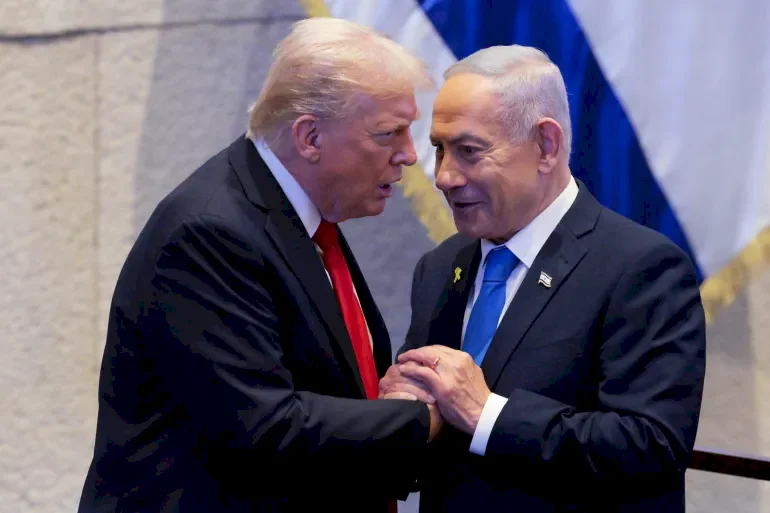
Foreign Affairs: The Exceptional Relationship Between America and Israel Is Unsustainable
SadaNews - The bond between the United States and Israel has remained an exceptional one for three decades, during which the United States maintained complete harmony with Israel in times of peace and war, providing it with unconditional diplomatic and military support.
Building on this idea, Foreign Affairs magazine presented a comprehensive analysis of the crisis in this relationship, noting that it developed over the decades as exceptional, based on unconditional support and unprecedented preference; however, it is no longer sustainable due to the political, security, and humanitarian damages inflicted on three parties: the Americans, Israelis, and Palestinians.
The magazine - in a lengthy article by Andrew Miller - traced this relationship back to the 1990s when Washington believed that its unconditional support for Israel would encourage it to take steps towards peace, stating that the American approach to the relationship with Israel was based on four fundamental assumptions.
The first assumption, according to the article, is that American and Israeli interests mostly align, if not identical. The second is that Israel understands its interests and the threats it faces. The third is that resolving any disagreements between them should not be public. Lastly, that Israel responds to major American concerns.
However, according to the author, the relationship has gradually morphed into a system that grants Israel political and military immunity and ensures massive aid regardless of its policies, with the United States protecting it diplomatically at the United Nations and ignoring its own laws that apply to other countries, especially regarding human rights violations.
High Costs
The war in Gaza that followed the October 7, 2023 attack revealed that maintaining this type of bilateral relationship comes at a high cost, as Washington failed to recalibrate Israel's management of the war due to the "exceptional" nature of the relationship it has with Israel, according to the magazine.
Indeed, Washington continued to avoid exerting any real pressure on Israel despite its concern over the rising numbers of Palestinian civilian casualties and the methods of the Israeli army. According to the author, Washington did not impose American laws preventing military assistance to countries hindering humanitarian relief, nor did it tie aid to clear conditions.
The relationship, built on a specific approach between Washington and Tel Aviv, transitioned over time into a system that grants Israel political and military immunity and ensures it massive aid regardless of its policies.
This exceptionalism has harmed the interests of both countries and inflicted severe damage on the Palestinians, as the author states. Instead of helping to ensure the "survival of Israel," which is the public goal of this policy, unconditional American support has allowed the worst instincts of Israeli leaders to thrive.
The results have been a continuous increase in illegal Israeli settlements and settler violence in the West Bank, as well as large numbers of civilian casualties in Gaza, in addition to the spread of famine there, as the author notes.
This policy has also led Tel Aviv to engage in reckless military actions across the Middle East and greater regional tensions, as it has conducted military operations in Syria and Lebanon and ignited a swift war with Iran, exacerbating the existential dangers it faces.
Ethical Risks
Although Washington helped contain the escalation, its hesitant relationship with Israeli Prime Minister Benjamin Netanyahu's government has rendered its influence limited. In fact, Israel's freedom of action has increased, according to the author, with former President Donald Trump's return to the White House and his adoption of supportive positions for all of its decisions in Gaza, leading to a worsening humanitarian catastrophe.
However, Israel faces, in addition to the damage inflicted on the Palestinians, dangerous outcomes represented by rising international isolation, unprecedented decline in American popular support especially among the youth, rising internal tensions due to Netanyahu's government's policies, and strategic risks related to Iran, Gaza, and the West Bank.
Just like Israel and the Palestinians, the United States has - according to the author - paid a hefty price for its international status and internal political stability, as its adversaries, such as China and Russia, have exploited its declining image, and American partisan division has increased due to the war.
Unconditional support, according to the magazine, has led to ethical risks for both countries, as Israel no longer has a reason to address American concerns and interests because ignoring them incurs no cost, encouraging it to adopt hardline stances that often contradict American interests and at times even Israel's own interests.
Based on these outcomes, the author concludes that the continuation of the relationship between Israel and the United States in its current exceptional form encourages more dangerous Israeli policies, obstructs access to political solutions, and threatens American interests globally.
Strategic, Political, and Ethical Necessity
Therefore, the article proposes a new model based on "normalizing" the relationship, imposing clear conditions on aid, applying American and international laws to Israel as they are applied to others, setting mutual red lines, and preventing interference in each other's internal policies.
The author sees this potentially late adjustment as a strategic, political, and ethical necessity for the United States, especially since a normal American-Israeli relationship could yield better results than an exceptional one that often encourages hazardous Israeli behavior and drains American global influence.
Such a shift, as the author believes, could prevent dangerous Israeli actions such as the annexation of the West Bank; it also opens the door for more effective coordination regarding Iran and contributes to rebuilding a political track for the Palestinians.
Miller warns that failing to undertake this review will result in escalating losses for all parties, and that the future may witness the collapse of the foundations of the relationship if it continues without reform, especially with a hardline Israeli government and a wavering American administration.
Andrew Miller concluded that re-calibrating the relationship between the two countries is not an antagonism but a necessity to protect the interests of Americans and Israelis and to begin a path that grants Palestinians a chance for a sustainable political life.
 Follow the latest Sada News via Google News
Al-Hayya: Our Priority is to Completely End the War and Restore National Unity

A Citizen Martyred by Occupation Forces in Khan Younis

Government Media in Gaza: The Occupation Controls 65% of the Gaza Strip Area

Unusual... The US Embassy Warns Its Citizens About Organized Crime in Israel

Palestinian and Islamic Welcome to the Decisions of the Netherlands and Belgium to Ban Set...

Tehran Warns Against Targeting 'Mount Afs' as US Strikes Intensify

Rubio: We Want to Reach a Diplomatic Solution with Iran
