

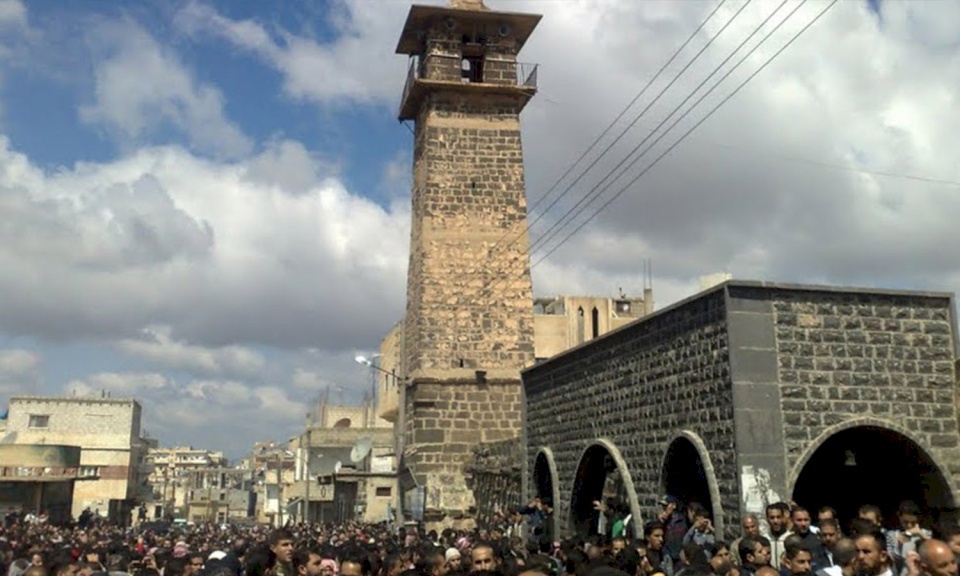
From Omar Ibn Al-Khattab to the Syrian Revolution.. The Omari Mosque on UNESCO's Lists
SadaNews - The Omari Mosque in the city of Daraa in southern Syria stands as a witness to more than 13 centuries of history, having remained one of the oldest mosques in the Levant. Its name is linked to the rightly-guided caliph Omar Ibn Al-Khattab, before it transformed in recent decades into a religious and national symbol bearing the scars of war. Today, it returns to the forefront of attention after being listed on the heritage lists of the Islamic World Educational, Scientific and Cultural Organization (ISESCO).
The mosque was established in the first half of the 7th century AD, during the reign of Caliph Omar Ibn Al-Khattab, whose name the mosque bears as a tribute to that era. Over the centuries, it remained a prominent religious and historical landmark in the Hawran region, attracting the local people of Daraa and its visitors.
The inclusion of the mosque on the Islamic heritage lists is part of efforts aimed at preserving Syrian cultural heritage and enhancing its presence within historical Islamic landmarks, in addition to opening the space for restoration, documentation, and rehabilitation programs to maintain this historical edifice.
A Special Status
Imam of the Omari Mosque, Sheikh Bassam Al-Masri, stated in an interview with Al Jazeera that the mosque holds a special place in the hearts of Syrians in general and the people of Daraa in particular. He pointed out that it was not merely a place of worship, but played a pivotal role during the early days of the Syrian revolution, as it became a gathering point for demonstrators and hosted the first field hospital dedicated to treating the wounded.
Al-Masri added that the mosque suffered extensive damage during the years of war, affecting its minaret and large parts of its structure, before restoration efforts commenced later. He emphasized that the mosque still requires further care to complete the rehabilitation processes and maintain its historical and architectural value.
For his part, Islamic history researcher Mousa Al-Masalma confirmed in his conversation with Al Jazeera that the Omari Mosque possesses exceptional significance as one of the earliest mosques built in the Levant, granting it a prominent status in the history of Islamic architecture.
Al-Masalma added that the listing of the mosque on the heritage lists reflects the Islamic world's interest in preserving this historical landmark and solidifies its status as one of the most prominent religious and cultural symbols in the region. He noted that the mosque represents, for the people of Hawran, an intrinsic part of their history and identity, as well as being a national landmark that holds a special place in the collective memory of the residents.
Between its ancient walls that withstood the test of time and the traces of destruction left by years of war, the Omari Mosque in Daraa continues to narrate the story of a city that has condensed pages of Islamic and modern history, awaiting the restoration efforts to return it to its status as one of the most significant cultural witnesses in the Levant.
Source: Al Jazeera
 Follow the latest Sada News via Google News
From Omar Ibn Al-Khattab to the Syrian Revolution.. The Omari Mosque on UNESCO's Lists

"He didn't tell me" .. A mysterious statement from Scaloni regarding Messi's participation...

"Those who do not feel for them are not human".. Hossam Hassan: The West rises for animals...

A Turkish Child's Wave to a Police Helicopter Turns into an Official Tribute.. What’s the...

Pressing "Confirm Payment" but Nothing Will Arrive.. Why Do "Dopamine Sites" Attract Gener...

Fass Morocco crowned Moroccan league champions after 41 years

Half Arab.. Infantino's Daughter Wears Morocco Jersey at the World Cup
