

Why Did Jordan Bomb Sites in Sweida, Syria?
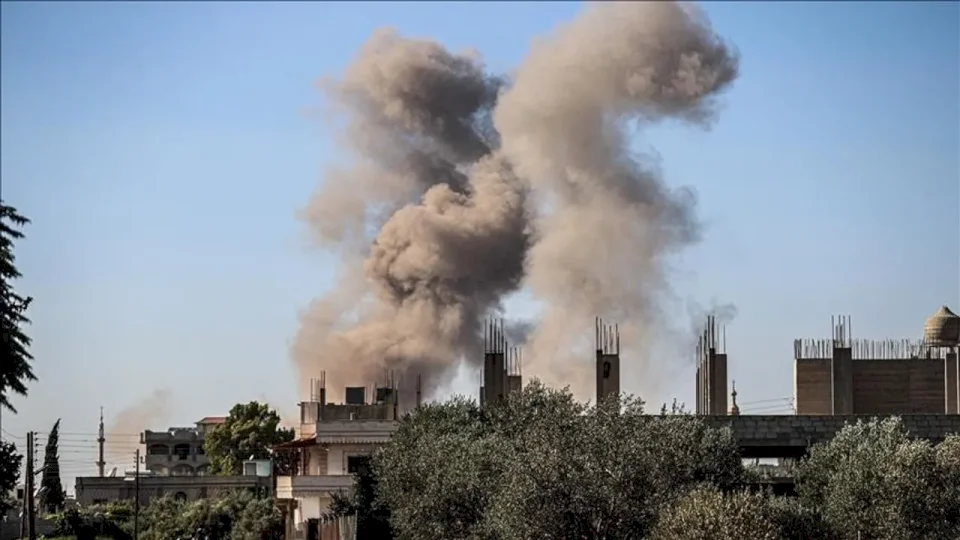
SadaNews - Jordan announced that its armed forces carried out airstrikes early Sunday targeting several sites belonging to arms and drug dealers on the northern border of the kingdom, as part of the "Jordanian Deterrence Operation." Syrian sources reported that the strikes targeted Sweida in the south of the country.
The Jordanian News Agency stated that the armed forces bombed the locations of factories, workshops, and warehouses that arms and drug dealers use as launch points for their operations towards Jordanian territory, without providing further details about the exact location of these sites.
It confirmed - quoting the Jordanian armed forces - that the airstrikes destroyed these sites, indicating that targeting operations were carried out with the highest levels of precision, in order to prevent the arrival of narcotic substances and weapons to the kingdom.
Why the Targeting?
The Jordanian armed forces indicated that these groups adopt new patterns of activity, exploiting the weather conditions and the current regional circumstances to carry out their operations, according to the Jordanian News Agency.
They pointed out that the number of attempts to smuggle weapons and narcotic substances has seen a significant increase, which poses a major challenge to the border guard forces and the formations and units supporting them in carrying out their duties.
The Jordanian armed forces also confirmed that they will continue to deal proactively with any threat that affects the kingdom's security and sovereignty in a "decisive and deterrent" manner.
What Did the Strikes Target?
On the Syrian side, the official Syrian News Channel reported local sources saying that warplanes, presumably Jordanian, targeted a headquarters containing weapons and drugs controlled by what they described as "rebel gangs" in the village of Shahba in Sweida.
It also reported that the airstrikes targeted the area around a former State Security branch in the city of Shahba, coinciding with intensive flying of combat drones, noting the sounds of ambulances in the area.
Similar strikes targeted drug warehouses in the village of Boussan east of Sweida, and a warehouse belonging to the known drug trafficker Fares Saymoua in the village of Arman, as well as several hideouts for storing narcotics near the villages of Um al-Rumman and Malah in the southern and southeastern countryside of Sweida, according to the "Sweida 24" network, from which the Syrian channel reported.
The "Sweida 24" network reported that heavy gunfire was heard from heavy machine guns in the Shahba area as the "National Guard" targeted drones presumed to belong to the Jordanian army.
In this context, the French news agency quoted local sources saying that a series of airstrikes targeted several sites in at least 5 towns in Sweida, one of which included warehouses in the town of Arman.
What is the Relationship to the "National Guard"?
The locations of the strikes in Sweida reopen the file of armed factions controlling parts of the province, especially after the formation of what is described as the "National Guard" following events in July 2025, although the Jordanian army did not announce targeting any specific group, affirming the targeting of arms and drug dealers.
According to Syrian sources, the Jordanian airstrikes included sites in Shahba, Boussan, Arman, Um al-Rumman, and Malah, areas where fighters of what is described as the "National Guard" are present.
The so-called "National Guard" is considered the military wing of Sheikh Hakmet al-Hijri and his tool to impose his control over the general decision inside Sweida.
It was formed last August from a group of retired officers, remnants of the former regime, and armed militias that were involved in kidnapping, theft, and drug trafficking.
The "Sweida 24" network had confirmed on April 25 that an armed conflict broke out within factions affiliated with the "National Guard" over the smuggling of a drug shipment in the vicinity of the town of Qaryah in southern Sweida.
At that time, the network mentioned that the armed conflict was part of the spread of drug trafficking in areas controlled by the so-called "National Guard" in Sweida, amidst accusations of involvement of some of its factions in drug smuggling networks across the southern border, and reports of the existence of several factories for producing narcotic substances in the area.
Why Does Smuggling Continue?
The problem of drug smuggling across the Syrian-Jordanian border did not end with the fall of the Assad regime, despite its relative decline.
During the years of war, Syria became a major center for the manufacturing and smuggling of Captagon, via networks linked to the former regime and military and security influencers, while Jordan was one of the most prominent routes for smuggling drugs from Syria to the world.
After the fall of the Assad regime, the new Syrian authorities pledged to cooperate with Jordan to combat drug and arms smuggling.
The two countries formed a joint security committee in January 2025, amid ongoing work to dismantle smuggling networks that had accumulated routes, warehouses, and local intermediaries during the years of war.
Specifically in Sweida, an investigation by "Forbedin Stories" indicated that the province remained a hot spot for Captagon smuggling near the Jordanian border, and smuggling attempts continued after Assad's fall.
The Jordanian army continues to target smuggling groups. Last December, it carried out several airstrikes targeting drug smuggling networks and storage farms in the southern and eastern countryside of Sweida.
 Follow the latest Sada News via Google News
High-level sources reveal to SadaNews: Washington seeks to hold a Gaza Reconstruction Conf...

Sources: Tight Measures on King Hussein Bridge After Uncovering Black Ticket Networks

How Smotrich is Redrawing the Geography of the West Bank to Undermine the Two-State Soluti...

"بتسيلم": الاحتلال قتل 54 طفلاً وفتىً في الضفة الغربية خلال عام 2025

SadaNews Clarifies the Truth Behind Israeli News on Military Operations in the West Bank

US Investigation: Over $400 Million in Damages to the Fifth Fleet Base in Bahrain

Hebrew Channel: Committee in the Israeli Knesset to Discuss "Violations" by the Palestinia...
