

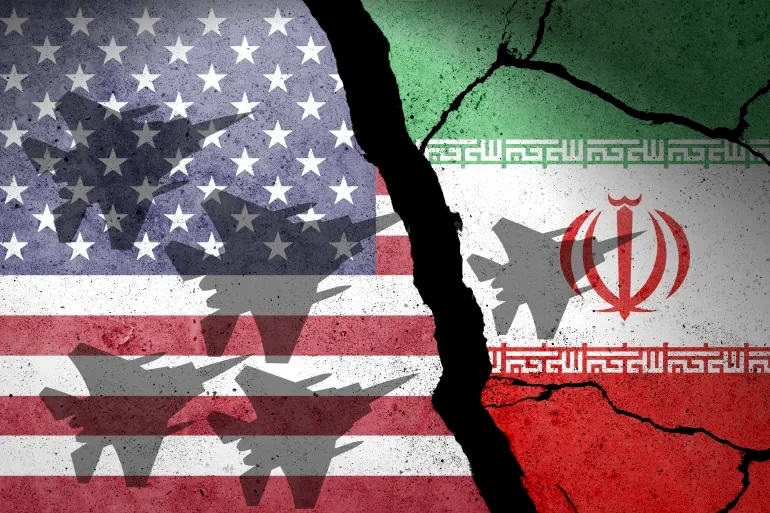
American officials: Division among Iranian negotiators and the Revolutionary Guard
SadaNews - American officials revealed that some members of President Donald Trump's administration believe there is a division in Iran regarding negotiations with the United States.
In a conversation with the American news network "CNN", the officials pointed out a split between the Iranian negotiating team led by Parliament Speaker Mohammad Baqer Qalibaf and Foreign Minister Abbas Araqchi on one hand, and the Revolutionary Guard, which is believed to be more hardline on the other.
According to sources, this division raises questions about who is authorized to sign off on any potential agreement, should a second round of negotiations take place between Washington and Tehran.
Some Trump administration officials have also acknowledged that the American president's public statements have harmed the negotiations, pointing to their sensitivity and the deep mistrust of Iranians towards the United States.
A source familiar with the negotiations told "CNN": "The Iranians were not pleased with Trump's use of social media to negotiate, portraying them as if they had agreed to terms they had not yet settled on, and that are unpopular among the Iranian public."
He elaborated that "the Iranians are particularly concerned about appearing weak".
Trump has spoken extensively about the negotiations through the media and social platforms, indicating that Iran had agreed to a set of terms that sources familiar with the discussions say are still unresolved.
Trump also asserted that Tehran agreed to many controversial American demands, including the handover of enriched uranium, announcing that the war is nearing its end.
Among Trump's statements, he told Bloomberg that "Iran has agreed to an unlimited suspension of its nuclear program," and he told CBS News that Tehran "has agreed to everything, and will cooperate with the United States to abandon enriched uranium," further clarifying to the American news website Axios that a meeting "is likely to be held over the weekend. I believe we will reach an agreement within a day or two."
However, Iranian officials publicly rejected many of these statements, denying their readiness for another round of negotiations, which dampened optimism about the possibility of reaching an agreement.
On Monday night, Qalibaf made new statements that reinforced doubts about Tehran's involvement in new negotiations with Washington, amid the continued American blockade of Iranian ports.
Qalibaf stated that Tehran "does not accept negotiating with the United States under threat", indicating that Trump "is seeking to turn the negotiation table into a table of surrender."
 Follow the latest Sada News via Google News
Weitkov and Kushner Meet Secretly with Nuclear Experts to Discuss Iran File

3 Injuries in a Family Including an Infant in Critical Condition from Occupation Gunfire S...

Khamenei's Advisor: Agreement with America Conditional on Frozen Funds

A Hamas Delegation Led by Al-Hayya Arrives in Cairo to Begin a New Round of Negotiations

UN Official: 1.4 Million People in Lebanon in Need of Urgent Humanitarian Assistance

Ireland bans Israeli ministers Smotrich and Ben Gvir from entering its territory

Lebanese President: Naim Qassem Does Not Represent Lebanon, and Iran Exploits Us for Negot...
