

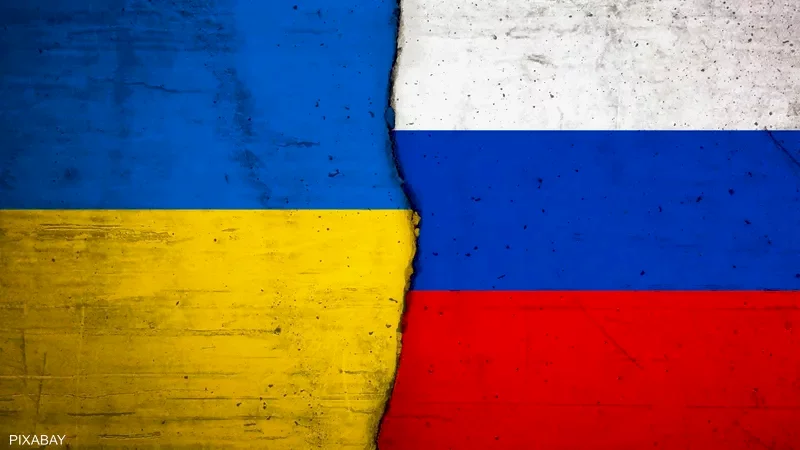
American Military Analyst: Resilience and Attrition Are Ukraine's Winning Strategy in the War with Russia
SadaNews - American military analyst and expert on Russian armed forces, Michael Kofman, stated that Ukraine aims to make the war futile for Russia by raising the number of Russian casualties beyond Moscow's capacity to compensate, thereby increasing its economic costs while minimizing Ukrainian territorial losses, making the war unsustainable, according to an analysis published by the American magazine "Foreign Affairs."
The 2022 invasion began as a Russian attempt to quickly subdue Ukraine, but it turned into the largest conventional conflict in Europe since World War II. Initially, Russian forces sought to exploit speed and surprise but shifted to solid defensive warfare, with advances measured in meters and long-term sieges. Since 2023, the war has taken on a strategic and attritional character.
Now, it has become a more complicated and exhausting war, with each side striving to demonstrate maximum resilience to push the other into despair and seek an exit away from the battlefield.
With the progress Kyiv has made in its long-range strike capabilities and its intensified attacks on Russian energy export infrastructure, Ukraine aims to make this year a year of financial collapse for Russia, forcing it to reconsider its demands at the negotiating table.
In contrast, Moscow hopes that its ongoing offensive pressure on Ukraine will yield breakthroughs or exhaust the Ukrainian economy through its strategy of bombing critical infrastructure while forcing residents to flee Ukrainian cities.
However, Russian attacks have consistently failed to achieve their goals. Although Moscow hoped to exhaust Western political will, Western support for Ukraine has proven to be enduring.
Kofman, the director of the Russian Studies Program at the U.S. research and defense analysis firm "CNA Corp," believes that Kyiv began this year in a difficult but not catastrophic position, as Russia cannot achieve its political objectives through military means alone. It requires a long time to control small parts of new territories, incurring exorbitant costs.
Fighting revolves around reinforcing negotiating positions. However, ending the conflict on terms acceptable to Ukraine will not be easy. It will require targeted Western support to provide Ukrainian superiority in intelligence and technology, neutralizing Russian advantages and increasing Western economic pressure on Moscow.
While the early phase of the Russo-Ukrainian war was characterized by speed and maneuvering, the ongoing extended conventional war is more marked by cycles of adaptation, attrition, and rebuilding.
From a distance, it may not seem that much has changed in the past two years, but due to technological innovation and new tactics, the battlefield is changing and evolving every three to four months.
Ukraine has leveraged intelligence, western equipment, capital, and technology to help balance Russian advantages. Moscow has mobilized its resources, including a significant reserve of equipment inherited from the Soviet Union. Additionally, support from China, North Korea, and to a lesser extent Iran, has contributed to Russia's continuation of the war.
The current battlefield dynamics feature unsteady defensive lines; the front positions of Ukrainian forces are barriers separated by wide gaps that Russian forces attempt to infiltrate.
This complicates the determination of who controls what, and the lines of contact have become more like gray areas of overlapping combat zones, about 16 to 19 kilometers from the frontline, referred to by both sides as the "kill zone."
The name is accurate; given the high density of reconnaissance and attack drones, robotic assaults can be easily repelled, and the few infantry attempting to infiltrate the area face fierce pursuit from drones.
Amid this relative stalemate, 2025 has witnessed fierce struggles for control of the "kill zone". The year began with Ukrainian forces better stationed in this area than Russian forces, giving them a significant advantage.
However, over time, elite Russian drone units, such as Rubicon, along with expanded drone units with vast numbers, managed to balance the realities in the area more evenly across the battlefield, thereby reducing Ukraine's advantage in it.
This year is expected to see a repetition of that confrontation, as superiority in drone capabilities has become the primary driver of initiative on the ground.
At the same time, the Russian approach to combat, using small groups of infantry or light mechanized forces to bypass Ukrainian positions, does not provide sufficient momentum to convert any breakthroughs into decisive victories.
As a result, the Russian army has been unable to exploit instances when it achieved local superiority in drone units. The Russian offensive has become more like a nearly year-long struggle, not leading to the depletion of Russian capabilities while being unsuitable for achieving rapid progress.
In contrast, Ukrainian strikes on Russian energy infrastructure have proven effective in disrupting refined fuel supplies and limiting Russia's ability to generate revenue from energy exports. Ukraine has intensified its drone production, and despite the majority being intercepted, increasing numbers manage to slip through the system, putting increasing pressure on Russia's short- and medium-range air defenses tasked with intercepting drones, which are running low on ammunition.
By transferring the appropriate technologies from Western nations, such as guidance systems and rocket engines, Ukraine can significantly boost its cruise missile production.
Ukrainian strikes focus on undermining Russia's ability to fund the war in the medium term, as Russia faces economic stagnation, increasing deficits, regional budget crises, falling oil prices, and declining export revenues. Although Russia is not on the brink of bankruptcy, the economic foundations of its war efforts appear increasingly fragile.
Both Russia and Ukraine face challenges in 2026. Despite the tactical adjustments made by Russia, its combat efficiency has not improved. The Russian army, at its core, maintains its equipment but suffers far greater human losses.
From 2022 to 2024, it managed to withstand increasing losses while continuing to expand its forces, as recruitment was strong enough to utilize 30% of new personnel in building new formations. However, most Russian recruitment in 2025 (between 30,000 and 35,000 recruits monthly) was to compensate for combat losses.
By December, the unrecoverable losses (from killed and wounded) began to exceed monthly recruitment, which itself began to decline. The result is that the Russian army cannot expand at the current rate of offensive operations.
Although previous predictions that indicated Russia would exhaust its manpower, munitions, and equipment stocks have proven incorrect, continued current loss rates could force Moscow to scale back its offensive intensity or the number of fronts it attempts to advance on in 2026.
Without significant changes in Russian fighting methods or mismanagement of Ukrainian defense, Moscow's hopes of achieving military breakthroughs will diminish.
Ukraine enters the fifth year of its war with some modest offensive successes after developing some units into an effective and systematic approach that uses drones to isolate an area and gradually weaken Russian forces within it, allowing infantry to reclaim the area bit by bit.
A prime example of this approach is the slow counteroffensive in Kupiansk, in the Kharkiv region last fall, where Ukrainian forces eventually reclaimed territory and cleared most of the city.
The challenge facing Ukraine is maintaining its combat force size on the front, especially since the increase in drone units comes from recruitment within the army, not from outside it, putting pressure on the manpower of the army at a time when Ukraine needs to enhance its resilience to make Russia realize its inability to achieve any of its strategic goals through armed force, thus forcing it to accept a peace settlement.
 Follow the latest Sada News via Google News
Jordanian Army Intercepts 4 Iranian Missiles and 4 Drones

Death of a Moroccan Man During His Arrest in Italy Sparks Calls for Investigation

Due to Trump's Sanctions.. Canada Cancels Joint Ceremony with the US for Bridge Opening

Trump: We will make great progress with Beirut.. Aoun: It is time for Lebanon to be stable

The Lebanese Army Deploys in the South and Comes Under Gunfire; Israel Clarifies

Bezhkian: Directives from the Leader to End the State of No War, No Peace

Meeting Between Aoun and Trump Expected Alongside 'Experimental Areas'
