

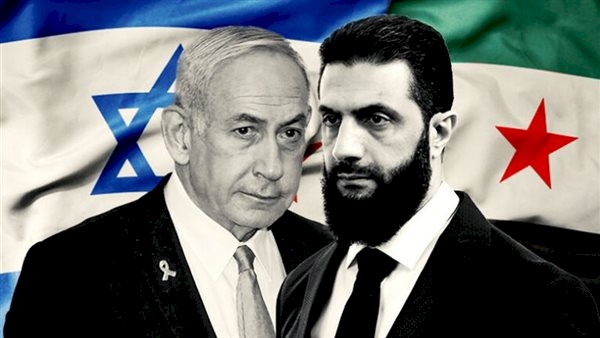
Report: Israel Uninterested in Agreement with Syria and Seeks an Exit that Pleases Trump
SadaNews: At this stage, Israel does not see an urgent necessity to reach a security or political agreement with Syria, as deep doubts dominate Tel Aviv regarding the Damascus authorities, their stability, and their ability to impose complete control over Syrian territory. In this context, an analysis by the newspaper "Yedioth Ahronoth" indicates that Israeli doubts primarily revolve around the personality of Syrian President Ahmad Shara, who is viewed in some Israeli circles as unclear, with questions raised regarding how different he is from Abu Muhammad al-Julani, given his past leadership of "Jabhat al-Nusra," which later transformed into "Hay'at Tahrir al-Sham," despite his current moderate rhetoric and civilian appearance.
The second doubt relates to the reality of ground control, as Shara is not considered capable of imposing stable governance over Syria, with Israeli assessments indicating that he controls less than 60% of the country's area, facing difficulty in managing hardline jihadist groups within his loyal forces, which are dissatisfied with his moderate Islamic tendencies and pro-Western policies.
In light of this information, Israel believes it is in its interest to maintain its army's deployment in the buffer zone within Syrian territory, where it keeps nine advanced positions extending several kilometers into Syrian depth, distributed between the summit of Mount Sheikh to the north and the border triangle with Jordan to the south. It is also working on establishing additional site systems that grant it optimal fire control and intelligence monitoring capabilities, not only around Damascus but also in northeastern Lebanon, where Hezbollah and Palestinian organizations are active. Additionally, Israel has established a barrier against the movement of vehicles and individuals to slow down or thwart any sudden attack from the Golan, reflecting on the experience of October 7, 2023.
This situation intersects with U.S. President Donald Trump's desire to push for a permanent settlement or at least a security arrangement between Israel and Syria, for two main reasons: the first is related to his wish to enhance his image as a maker of stability and peace in the Middle East, and the second concerns his response to the demands of regional countries like Saudi Arabia, Qatar, and Turkey, which see the reconstruction of Syria as an economic and political opportunity. Turkey, in particular, emerges prominently in this context, as it seeks to play a central role in rebuilding the Syrian army and civil infrastructure with Gulf financial support, granting it extensive influence and allowing it to confront the Kurds, whom it considers a direct threat.
Although Israel does not see an urgent interest in an agreement with Damascus, it does not wish to enter into a confrontation with Trump, especially after his meeting with Prime Minister Benjamin Netanyahu in Mar-a-Lago and following the U.S. operation in Venezuela. Therefore, Israel participated in the trilateral talks that took place in Paris with a low level of representation, contrasted with a high-level Syrian delegation and a broad U.S. delegation. While the Americans spoke of resolving 90% of the issues, Netanyahu's office statement merely referred to the need for further negotiations to achieve stability and meet security requirements.
Israel defines three central demands in any potential agreement: preventing any surprise attack from Syrian territory toward the occupied Golan, keeping armed forces out of direct fire range from settlements and main roads, and preventing the transfer of weapons and equipment to Hezbollah via Syria. Israel also rejects any Turkish military presence in southern Syria due to concerns that it may restrict the operational freedom of its air force, and it affirms its commitment to protect the Druze in Sweida should they face an actual threat.
In contrast, Shara insists on Israel's withdrawal from the buffer zone and a return to the lines of the 1974 disengagement agreement, so he can claim that he has restored sovereign lands, without at this stage demanding a withdrawal from the occupied Golan. However, Israel rejects this proposition, considering the 1974 arrangements insufficient to confront new threats. Hence, the Americans proposed in Paris the idea of creating a coordination mechanism based in Jordan that includes Israel, Syria, and the United States, to exchange intelligence warnings and subsequently open a path for civil and economic dialogue.
 Follow the latest Sada News via Google News
Axios: Proposal for a 10-day Ceasefire Between Washington and Tehran and Two Options for M...

In a Rapid Pace.. The Occupation Builds a Huge Earth Barrier Inside Gaza

Meeting Between Aoun and Trump Expected Alongside 'Experimental Areas'

Gaza Health Warns of Collapse of Oncology Services Due to Depletion of Treatments and Susp...

The Occupation Demolishes a House in the Town of Sa'ir near Hebron

Israel Reveals Details of Secret Iranian Nuclear Facility in Mount Fas

A Mother, Her Child, and Her Three Daughters Martyred in Israeli Shelling on Gaza City
