

Concerns, Welcomes, and Condemnations: What Does the World Say About the U.S. Military Operation in Venezuela?
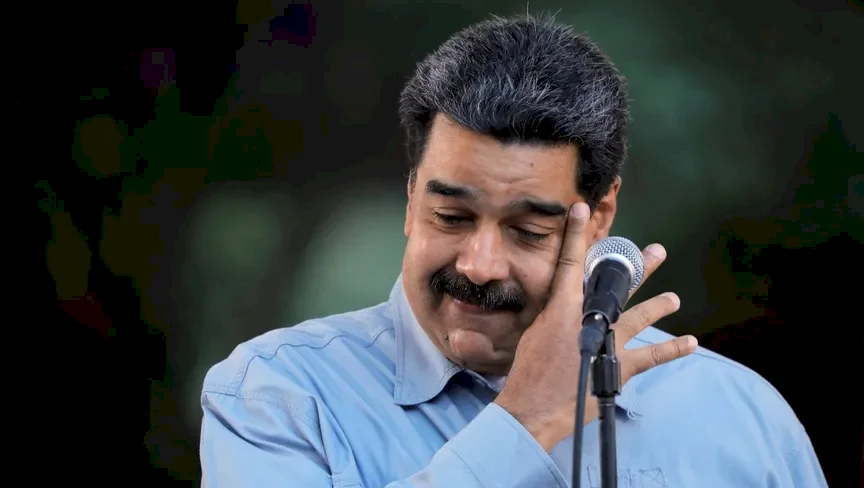
SadaNews - The United States, led by Donald Trump, announced a military operation in Venezuela and the arrest of President Nicolas Maduro and his wife, which has provoked varied international reactions. Iran, Russia, and Cuba condemned the attack and considered it a violation of sovereignty, while Israel welcomed it. European countries such as Spain, Germany, and Italy are monitoring the situation cautiously, calling for calm and respect for international law.
On Saturday, U.S. President Donald Trump stated that the United States launched a military strike on Venezuela and arrested its president, who was airlifted out of the country.
The United States has not undertaken such direct intervention in Latin America since the invasion of Panama in 1989 to depose military leader Manuel Noriega.
Trump wrote in a post on Truth Social: "The United States has successfully executed a large-scale strike against Venezuela and its president Nicolas Maduro, who has been captured along with his wife and airlifted out of the country."
The U.S. accused Maduro of running a "drug state" and of election fraud. Meanwhile, the Venezuelan leader, who succeeded Hugo Chavez in 2013, accused Washington of seeking control over his country's oil reserves, the largest in the world.
Iran
Iran, Venezuela's close ally, quickly condemned the U.S. military attack, deeming it a "blatant violation of its national sovereignty and territorial integrity".
The Iranian Foreign Ministry, in a statement, called on the United Nations Security Council to "immediately act to stop the unlawful aggression" and hold those responsible accountable.
The statement highlighted that the U.S. military attack on Venezuela represents a gross violation of the fundamental principles of the United Nations Charter and the basic rules of international law, particularly Article 2, paragraph 4, of the Charter, which prohibits the use of force and represents a clear example of aggressive action that the United Nations and all governments concerned with the rule of law and international peace and security must condemn immediately and unequivocally.
It added that "the U.S. military aggression against an independent UN member state is a serious violation of regional and international peace and security, and its consequences will affect the entire international system, further exposing the UN Charter-based system to erosion and collapse".
Israel
Israeli Foreign Minister Gideon Sa'ar stated that his country welcomed the ousting of Venezuelan President Nicolas Maduro after the U.S. arrested him and removed him from office.
Sa'ar added on X: "Israel welcomes the ousting of the dictator who led a network of drugs and terrorism, and hopes for the return of democracy to the country and the establishment of friendly relations between the two countries."
Spain
The Spanish Foreign Ministry, in a statement, said that Madrid calls for calm and respect for international law in Venezuela and has offered to mediate to help find a peaceful solution.
Russia
Meanwhile, Moscow expressed deep concern and condemned the U.S. "armed aggression" against Venezuela, calling for "ensuring Venezuela's right to self-determination without any destructive military interference from abroad".
The Russian Foreign Ministry added in a statement: "In the current situation, it is essential... to prevent further escalation and focus on finding a way out of the crisis through dialogue".
Russia, in a statement, called on the United States to release Venezuelan President Nicolas Maduro and his wife.
The Russian Foreign Ministry stated: "In light of confirmed reports of Maduro and his wife being in the United States, we strongly urge the American leadership to reconsider its position and release the legally elected president of a sovereign state, along with his wife".
Cuba
Cuban President Miguel Díaz-Canel said on X: "Cuba condemns and calls for an urgent response from the international community to the criminal attack launched by the United States against Venezuela".
He emphasized that the region is under "brutal attack" and described the strikes as "state terrorism against the brave Venezuelan people and against America".
Colombia
Colombian President Gustavo Petro also expressed concern over reports of explosions and unusual air activity in Venezuela, which have resulted in heightened tensions.
He rejected "any unilateral military action that would worsen the situation or endanger civilians".
Italy
Italian Prime Minister Giorgia Meloni announced in a statement that she is "closely monitoring the situation in Venezuela" in order to "gather information about our citizens" residing there.
Italian Foreign Minister Antonio Tajani stated that Rome and its diplomatic representation in Caracas are closely tracking developments in Venezuela, with special attention to the Italian community there.
Tajani added in a post on X that Prime Minister Giorgia Meloni is continuously updated on the situation, and that the Crisis Management Unit of the Foreign Ministry is operating at full capacity.
In a statement made by the Italian ambassador to Venezuela on the Italian state channel RAI, he noted that about 160,000 Italians currently reside in the country, most of whom hold passports, alongside a number of residents there for work and tourism.
Germany
For its part, the German Foreign Ministry announced that it is following the situation in Venezuela with great concern.
A written statement obtained by Reuters noted that the ministry is in close contact with the embassy in Caracas, and a crisis team will meet later on Saturday.
Belgium
Belgium stated that it is coordinating with its European partners to closely monitor the situation in Venezuela.
Belgian Deputy Prime Minister and Foreign Minister, Maxim Prevoo, posted on X: "Our embassy in Bogotá, responsible for Venezuela, and our agencies in Brussels are on high alert. The situation is being closely monitored in coordination with our European partners."
European Union
The European Union announced that it is closely following the situation in Venezuela, emphasizing that the safety of the bloc's citizens in Venezuela is the top priority.
EU foreign policy chief Kaja Kallas stated that she spoke with U.S. Secretary of State Marco Rubio regarding the situation in Venezuela.
Kallas added: "The European Union has repeatedly confirmed the lack of legitimacy of (Venezuelan President Nicolas) Maduro and called for a peaceful transition," also urging for restraint and respect for the principles of international law and the UN Charter.
 Follow the latest Sada News via Google News
High-level sources reveal to SadaNews: Washington seeks to hold a Gaza Reconstruction Conf...

Iraqji Reveals Details of the Attack on the Iranian Supreme Leader's Headquarters

صراع على إرث خامنئي وسط غياب مجتبى.. والمتشددون يتهمون قادة إيران بـ«الانقلاب»

The European Union Reiterates Its Call for Israel to Refrain from Expanding Settlements in...

"Mamdani Berlin".. The German Left Bets on a Politician of Turkish Descent to Lead the Cap...

Hebrew Channel: Kushner Pushing to Enhance Communication Between the United States and the...

SadaNews Report: Israeli Elections with a Settlement Flavor!
