

Condemnation of Its Actions: Israel Seeks to Impose "Political Control" Over Humanitarian Organizations Operating in Gaza
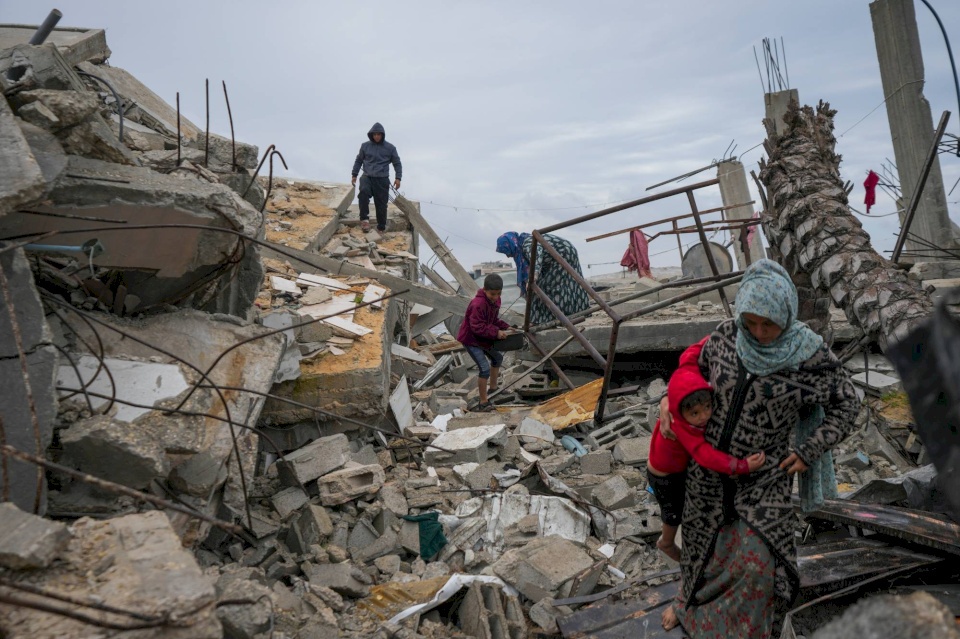
SadaNews - Many officials from international humanitarian organizations condemned on Thursday Israel's attempt to impose "political control" over their activities in Gaza, following the ban of 14 organizations from entering the territory, a development that confirmed concerns about the new strict Israeli registration procedures.
Amid the humanitarian disaster in the Palestinian territory devastated by war, deprived of water and electricity, there is a significant amount of uncertainty surrounding the future of international organizations' activities in Gaza after December 31, the deadline for deciding on registration applications under the new Israeli rules.
Insufficient Aid Access
The "Ministry of Diaspora Affairs and Combatting Antisemitism," which has been managing the new mandatory registration procedures since March, stated in a message sent to "Agence France-Presse" that out of almost a hundred registration applications submitted in recent months, "only 14 applications were denied" by the end of November.
It added, "The other applications have been approved or are under review," stressing that "Israel encourages humanitarian work but will not allow any hostile entity or any supporter of terrorism to operate... under the guise of humanitarian aid."
This decision comes at a time when the aid entering Gaza remains largely insufficient.
Although a ceasefire agreement effective since October 10 stipulates the entry of 600 trucks daily, the number of trucks crossing into the territory carrying humanitarian aid ranges from only 100 to 300, according to non-governmental organizations and the United Nations, while the remaining trucks mainly carry commercial goods that the vast majority of Gaza's population cannot afford.
Among the NGOs that Israel rejected for registration is "Save the Children," one of the most recognized and oldest organizations present in Gaza, helping 120,000 children, and the American Friends Service Committee (AFSC), according to an initial official list published recently.
The rejection of registration means that the organization has 60 days to withdraw all its international staff from Gaza and the occupied West Bank and Israel, and it will thereafter be unable to provide any direct aid, not to mention the difficulties in accessing the Israeli banking system on which it relies to pay rents and salaries.
Condemnation of "Ambiguous" Standards
UN agencies and many NGOs condemned in a joint statement on Thursday a registration process "based on ambiguous, arbitrary, and highly politicized criteria."
They emphasized that "the UN will not be able to compensate for the collapse of international NGOs" that provide over a billion dollars in aid annually and critical support for Palestinian NGOs.
For example, "Doctors Without Borders" currently manages about a third of the 2,300 hospital beds in Gaza. Additionally, all five centers treating children suffering from acute malnutrition are supported by international NGOs.
Almost 70 percent of hot meal distribution points "rely directly on international NGOs for staff, supplies, or operations," according to the statement.
"A Suffocating Bureaucratic Grip"
Israel refuses to register organizations it deems "hostile" or involved in "terrorism" or "antisemitism," as well as those it accuses of working to "delegitimize the State of Israel."
Israeli lawyer Yotam Ben Hillel, who assists many organizations with registration procedures, affirms that these terms are vague, noting that he has already filed appeals to the Supreme Court.
He tells "Agence France-Presse": "We do not even know what delegitimization means. The authorities provide no evidence for their claims; therefore, it is extremely difficult for NGOs to respond to these allegations."
For his part, Jean-François Corti, head of "Doctors of the World," states: "If NGOs that relay testimony from the population, conduct fieldwork, and report what is happening are deemed harmful to Israel's interests and thus should be banned from working, this is very problematic."
NGOs that have spoken to "Agence France-Presse" confirm that they have complied with most of Israel's requirements by submitting a comprehensive file. However, some have rejected going past the "red line" of providing sensitive information about their Palestinian staff.
The head of one NGO says: "Because we spoke about genocide, and condemned the circumstances under which the war was waged, as well as the restrictions on aid access, all those descriptions apply to us," pointing out that he expects his organization’s application for a permit to be rejected.
He adds: "Once again, the suffocating bureaucratic grip is used for political control purposes, which will have catastrophic consequences."
"Starting from Scratch"
All these actors in the humanitarian field in Gaza express their concerns about what will happen at the beginning of 2026, with the risk of limiting registration to NGOs that do not possess the capacity or experience that organizations long active in the Palestinian territory have.
Corti says: "If there are screenings of beneficiaries, and if there are conditions for distributing aid... this is worrying, especially as all of this will be managed entirely by military personnel."
Many humanitarian workers have confirmed to "Agence France-Presse" that they have "never heard" of some of the approved NGOs that currently have no presence in Gaza, but are said to be included in former President Donald Trump's plan for the territory.
An European diplomatic source working in the region points out that "the United States wants to start from scratch (regarding humanitarian coordination), and with the new registration procedures, NGOs will leave," warning that they "may wake up on January 1 to find they have no alternative."
 Follow the latest Sada News via Google News
Washington Investigates Possible Russian Role in Iranian Attacks on Its Sites

Mossad Chief Visited Washington to Discuss Iran and Its Nuclear Program

Report: Washington Informed Israel It Is Preparing to Intensify Attacks on Iran and Use St...

Organization of Islamic Cooperation Condemns Nauru's Decision to Open an Embassy in Occupi...

Video:: Nablus: Settlers Evict Tubasi Family from Their Home in Jaloud and Take Over It

Netanyahu: I Intend to Form a Broad National Unity Government

Syrian Foreign Minister Meets with Yasser Abbas in Damascus
