

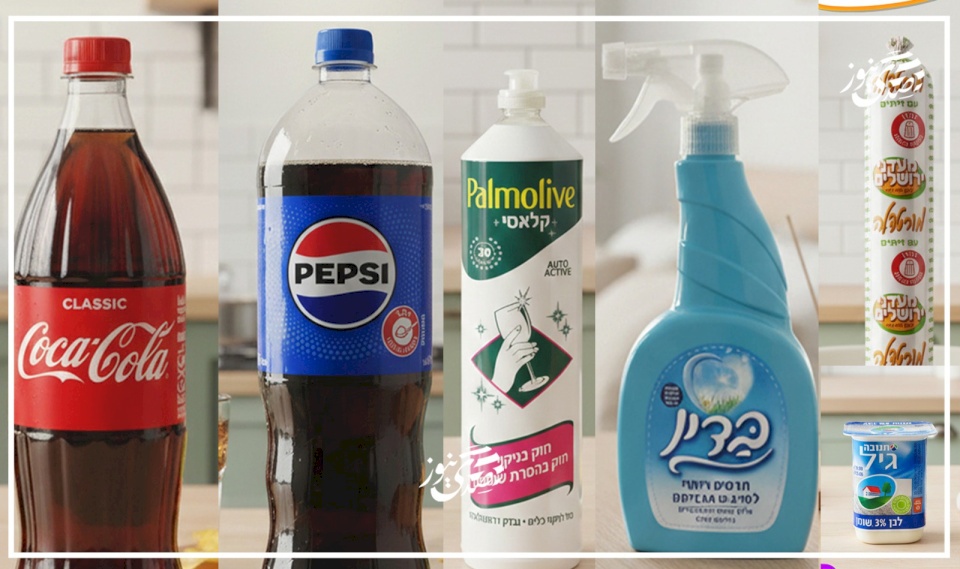
Exclusive: Israel Fights Gaza with One Hand and Takes Its Money with the Other
Exclusive Economy SadaNews - While Israel continues its war in various forms against the Gaza Strip, killing and injuring citizens daily in a clear violation of the ceasefire and tightening the life of the residents, it is also trying to take their money in different ways.
On many occasions, the extremist Israeli Finance Minister Bezalel Smotrich, sometimes accompanied by his ally Itamar Ben Gvir, threatened and refused to allow any food supplies to enter the Gaza Strip, asserting that Israel should specifically have a hand in transferring any goods from the region, claiming that all the inhabitants of the territory should be killed or displaced as a revenge operation for October 7th.
After the ceasefire on October 10, 2025, goods began to flow gradually into the territory, with astronomical prices remaining until the beginning of this month.
In the past two weeks, "SadaNews" observed a change in the types of goods on one hand, as well as a noticeable and appropriate entry of goods at significantly lower prices than before. So what has changed?!
For example, the price of a 330 ml can of cola used to reach 50 shekels at times, then it decreased to 15, and now its price is 5 shekels. Meanwhile, the price of a 1.5-liter bottle, which reached 100 shekels, is currently 16 shekels, while frozen chicken that once cost 120 shekels per kilogram is now priced at 20 shekels per kilogram. Meat prices have also slightly decreased but are still not affordable for everyone, and many goods have followed suit, including chocolate that was priced at 30 or 50 shekels for a piece at certain times, now costing between 6 to 1 shekel depending on the type.
After continuous monitoring, it became apparent that Israel allowed 10 traders from the Gaza Strip to import goods, and instead of bringing them from the West Bank or Egypt, they are now permitted to import them directly from Israel. Previously, only certain types from the West Bank and Egypt were allowed, and only two traders were overseeing the import of goods for the benefit of the infamous American Gaza Humanitarian Institute.
In the past few days, goods of various types have again increased at low and acceptable prices for the residents of the strip, despite the harsh economic conditions. However, it can be said that the situation has improved significantly compared to before, especially for certain food items, soft drinks, and some basic materials.
A senior trader, speaking to "SadaNews" on the condition of anonymity, revealed that this is due to Israel expanding the list of traders allowed to import from abroad to more than 10, now exceeding 17, and the list may grow further after the ban was lifted.
The trader indicated that Israel primarily requires that goods are purchased from Israeli traders, and has begun to reduce goods from the West Bank and Egypt, suggesting that this goal is, in one way or another, to drain the remaining funds in the strip and, on the other hand, because the sector generates significant financial profits, even before the war, for the original goods owners.
According to the trader, the Gaza Strip market, being extremely consumer-oriented, is preferred by many parties and generates massive income that numerous external markets, including Israeli ones, have competed for over the years, highlighting that Israel currently wants to control it significantly.
It is noticeable that huge malls and commercial stores have opened in the Gaza Strip selling everything a family needs, such as food, frozen products, beverages, cheeses, and dairy products. Even though Israel struggles with the availability of the latter two items, the strip has filled up with these Israeli products.
Another trader stated that Israeli traders have contacted them, confirming that the door has opened for importing Israeli goods into the strip, and that they prefer the Gaza market over others.
Both traders do not hide Israel's aspirations to drain the remaining funds to further worsen the economic conditions in the strip, especially since Israel does not allow the reconstruction of the area, nor does it permit Palestinians to work, such as fishermen at sea or to engage in other jobs like sewing, which raises questions in light of the severe poverty and economic decline in the sector. At the same time, some believe that Israel is interested in having complete control over the strip, including by supplying and providing it with Israeli goods, to present a better image to the world through what is marketed on social media by the owners of large stores who compete in prices of these goods, a strategy that Israel exploits to polish its image amid the ongoing war, even as its intensity has somewhat diminished.
Amid all this, residents of the strip hope that more goods will be allowed in and that prices will return to their pre-war levels in light of the harsh economic conditions they are experiencing. They express hope that prices for vegetables and fruits will improve after experiencing significant declines recently.
 Follow the latest Sada News via Google News
Soaring Oil Prices Burn the Pockets of the Palestinian Citizen "The Poor"

Millions of Dollars in Losses.. "SadaNews" Reveals Shocking Figures for Traders from Pales...

The Problem of Shekel Overcrowding Worsens.. Fuel Station Owners Threatened with Closure o...

The Palestinian Economy at a Crossroads: 4 Files Awaiting Resolution

A Severe Blow to the Economy of the West Bank.. New Israeli Measures at the Karama Commerc...

Exchange Rates of Currencies Against the Shekel (24 July)

The United States Imposes New Sanctions on Network Linked to the Muslim Brotherhood and Ha...
