

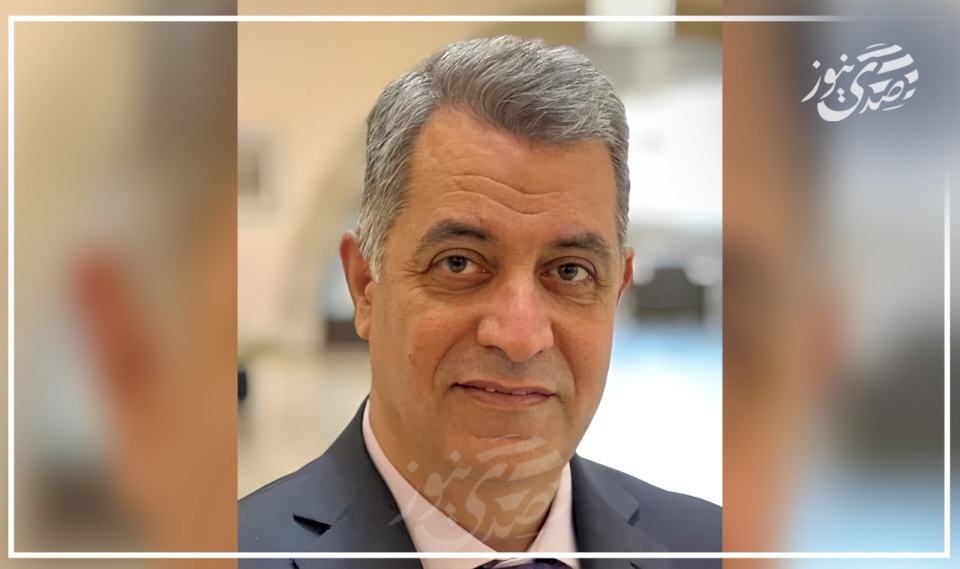
The Upcoming War on Iran
The most frequently asked and concerning question among Palestinians lately, in the streets, at condolence gatherings, during friends' meetings, and even in closed rooms, relates to the possibility of the United States launching a military strike against Iran or the occurrence of a new war in the region. Especially since everyone sees the repeated American threats and the military build-up of U.S. forces pouring into the region, along with the Israeli media's tragic portrayal of an impending military strike.
In my opinion, there are two options and three scenarios within the framework of predicting political events at a global level, but the caveats of scientific prediction consider multiple uncontrollable variables and conflicting interests tied to the behavior of states on one hand, the leaders driving domestic policy on the other, the whims of influential "powerful" individuals affecting political decisions on a third hand, and the behavior of ordinary individuals on a fourth hand. Altogether, these factors have unlimited influences on the development of events or are specifically defined in shaping them, with one often outweighing the others depending on each case and the extent of this variable's impact in time and place.
The first option is for the U.S. administration not to carry out a military strike against Iran but rather to use the military build-up, media noise, and Trumpian threats to pressure the Iranian regime regarding the nuclear program and ballistic missiles. This option is supported by what was stated in the strategic security document announced by the U.S. administration at the end of last year about not being preoccupied with the Middle East and focusing on prosperity in the region and investment without entering into military adventures that repeat the U.S. experience in Iraq, along with the U.S. president's behavior in extorting countries through additional tariffs and his escalating threats of using force to maintain control over Greenland.
The second option involves the United States resorting to military force against Iran, either in partnership with Israel or independently. This option carries three scenarios: First, the execution of a kidnapping/assassination of the Supreme Leader or prominent figures of the Iranian regime similar to what happened in Venezuela. This scenario implies some arrangements between this U.S. administration and part of the regime in Iran on one hand, and on the other hand, there is a desire from the U.S. administration to keep the ruling regime in Iran while making long-term changes in Iranian policies. This scenario is supported by the recent success of this experience in Venezuela and the recent U.S. strategic security document.
As for the second scenario, it concerns a military strike similar to what occurred last June, focusing on the weapons manufacturing related to missiles and remaining nuclear facilities and weakening Iran's economic structure, putting the Iranian regime in front of the choice of entering a broader war encompassing the region and oil trade routes, or opting to enter negotiations concerning the nuclear program and missile manufacturing as Israel desires, with the nature of the ruling system in Iran aiming to bring about medium-term changes.
The third scenario involves the U.S. administration embarking on a new adventure in the region by attempting to topple the political system in Iran through armed force, similar to what happened in Afghanistan in 2001 and Iraq in 2003. This scenario brings with it years of instability in Iran and the region on one hand, and U.S. involvement for many years in a military operation inside Iran on the other hand. This scenario is supported by varying desires from Israeli politicians across different party lines and political orientations, whereas regional countries do not wish for further chaos and aspire towards stability, prosperity, investment, and development.
These two options, with the second option carrying three scenarios, are contingent on the mood of U.S. President Donald Trump and his emotional and political fluctuations; making predictions difficult and limiting the forecasting in light of sudden shifts in his policies, the contradictory nature of his statements, his recklessness, the absence of balance in his actions, and his ardent desire to upend the principles of international law and the rules of international relations that have been stable over the past eighty years.
 Follow the latest Sada News via Google News
When Indicators Fail to Narrate the Palestinian Economy

The Tale of a People Who Refused to Believe the Well

What Does the Supreme National Interest Mean for Palestinians? And How Can It Be Achieved?

The Wronged Ramallah

Between Pragmatism and Survival Management: Where Does Hamas Go After the Election of Khal...

Khalil Al-Hayya as President of Hamas.. Continuation of the Founders' Approach

The Annihilation of Sportsmanship
